
Maritime
NSW may undermine Fed Govt economic gains – clearing agent

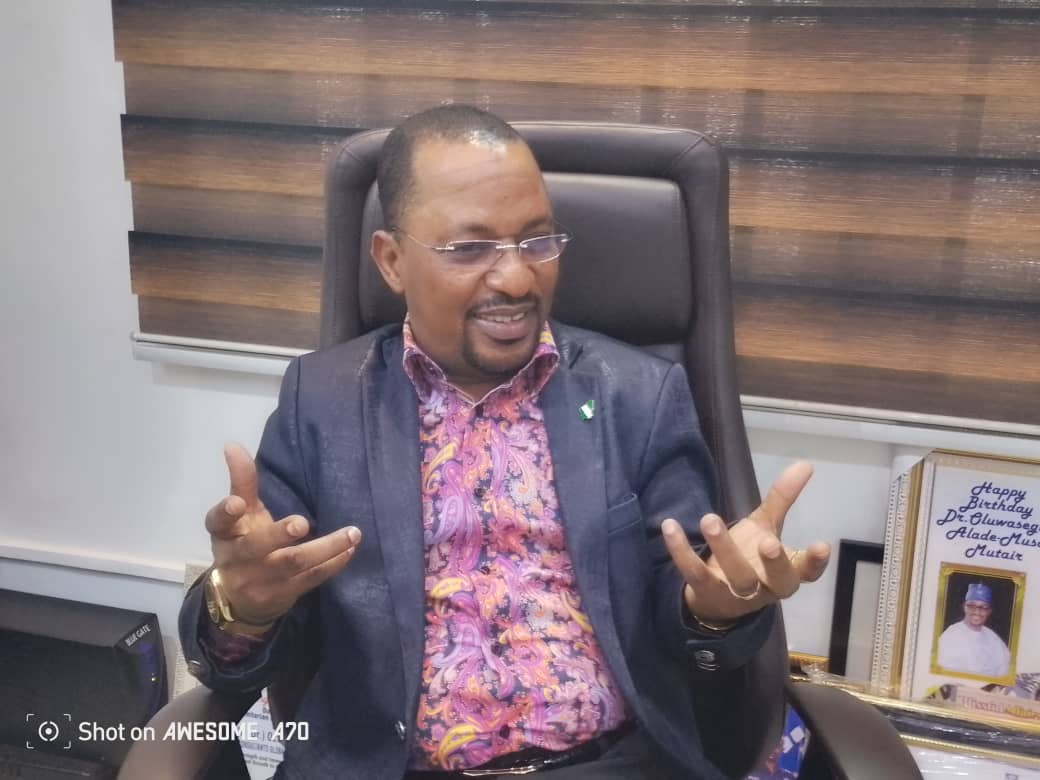
By Daud Oluwalogbon
A frontline clearing agent, Dr. Segun Musa, has cautioned that the ongoing implementation of the National Single Window (NSW) at Nigeria’s seaports could undermine the Federal Government’s economic gains if executed prematurely.
Speaking with reporters, Musa, who is Chairman and Chief Executive Officer of Widescope Group, argued that Nigeria is not yet prepared for the project, citing inadequate infrastructure, weak institutional capacity, and the absence of uniform ethical standards among industry operators.
Musa, who also serves as National Deputy President (Air Logistics) of the National Association of Government Approved Freight Forwarders (NAGAFF), warned that a hasty rollout of the Single Window system could force many importers and manufacturers out of business.
“This National Single Window will frustrate a lot of people out of business. It has no significance for now,” he said. “Who are the operators? Are they ready? Is the infrastructure available? Do we have a uniform ethical standard? A lot of importers and manufacturers will shut down if we proceed like this.”
He questioned the urgency surrounding the project, suggesting that some stakeholders may be driven by the desire to claim credit for its launch due to the significant budgetary allocation attached to it.
“I have raised concerns about this for almost 15 years because I knew this is where we were heading,” Musa said. “Why the rush? We are still struggling with individual agencies that are not effective. Why move to a Single Window when the foundation is weak? It is risky for the economy.”
Musa explained that for the NSW to function effectively, all stakeholders in the trade ecosystem—including freight forwarders, shipping companies, terminal operators, airlines, and government agencies—must first achieve operational efficiency and data uniformity.
He stressed that agencies such as the Nigeria Customs Service, NAFDAC, Standards Organisation of Nigeria (SON), and the Plant Quarantine Service must harmonise their processes and improve efficiency before integration.
“You must first ensure that each operator and agency is efficient in data collection and input. Their systems must be tested for effectiveness before integration,” he said. “Only then can you begin to think about automation and, ultimately, trade facilitation.”
According to him, the absence of synchronisation among agencies could render the entire system ineffective, even if some components function optimally.
“It’s possible for Customs to complete inspection, collect revenue, and release cargo, only for another agency like NAFDAC or SON to delay the process due to system failures or incomplete documentation. At that point, all prior efforts become wasted,” he noted.
Musa maintained that automation remains central to the success of the Single Window initiative, warning that implementing the system without full automation would lead to failure.
“National Single Window without automation will not work. And you cannot achieve optimal results if even one component in the chain is inefficient,” he said.
On the way forward, he recommended a phased approach, beginning with automation at all operational levels, alongside the enforcement of strict performance benchmarks and ethical standards.
“We must introduce deterrents and enforce accountability. Operators should be given performance targets, not just revenue targets,” he said. “If delays occur due to negligence or bad faith, those responsible should bear the cost, including demurrage, and face appropriate sanctions.”
He emphasised that careful planning, institutional strengthening, and gradual implementation are critical to ensuring that the National Single Window delivers its intended benefits without disrupting trade or harming businesses.


Cabotage Enforcement is My Priority: DG NIMASA

Customs Renovates Ife Girls’ School, Pledges University Scholarships

Tinubu Applauds Coca-Cola’s Planned $1b Investment

2027: Northern Muslim Women Declare Support for President Tinubu

Dakuku Peterside: Weak Institutions Stall Nigeria’s Wealth, Prosperity

Inside Nigeria’s Sea Power: The Rise of NPA as a Maritime Powerhouse

Adebayo Williams At 75: A Missing Honour — By Femi Macaulay

High Hopes as Dangote Launches ₦2.15 Trillion IPO

2027: LP chieftain sues WAEC, UNN, NYSC over Obi’s credentials

Tension in Osun as Masked Gunmen Kill Adeleke’s Ally ‘Emir’ at Peace Meeting

Tribute to a Colossus: The Eternal Legacy of Alhaji Bamanga Tukur (1935–2026)

US Praises Nigeria for Ending 12-Year Maritime Restrictions; Oyetola Credits President Tinubu

Environmental sanitation resumes in Lagos tomorrow

Tribute to a Legal Icon and Master Administrator: Alhaji Yahaya Bukar-Gana

Panel recommends 60-month timeline on State Police inauguration

Customs smashes smuggling ring at Tin-Can port, seizes illicit drugs worth ₦18.9b

Customs nets ₦178b at PTML, Miko resumes office

NIMASA Calls on The Media to Help Drive Blue Economy Growth

NIMASA Partners Malta to Fast-Track Full Automation of Nigerian Ship Registry

History as Customs CG Adeniyi bags First NIJ alumnus fellowship

“A Blueprint for Prosperity: How Amb. (Engr.) Omar Suleiman Will Transform Adamawa State”

Apapa Customs Intercepts ₦12.7b ‘Canadian Loud’, Expired Drugs in Lagos

Misclassified Levies: Senate Clears Customs of ₦62.2bn Under-Remittance Claim
