
Business & Economy
Federal Government Unveils 65 Investment Opportunities in Nigeria

By Lateepha Eniola, Assistant Editor
The Federal Government of Nigeria has presented over 65 investment opportunities to global investors, reaffirming its dedication to structural reforms that foster inclusive growth and long-term development.
The International Monetary Fund (IMF) has also advised Nigeria against reintroducing broad petrol subsidies, suggesting targeted relief for vulnerable households instead.
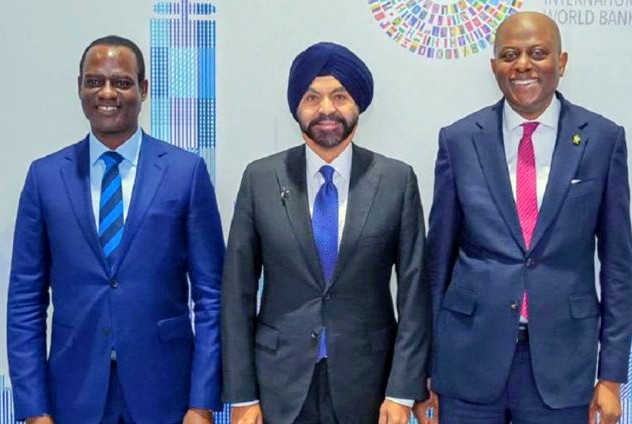
Simultaneously, the Minister of Finance and Coordinating Minister for the Economy, Taiwo Oyedele, and Central Bank of Nigeria (CBN) Governor, Olayemi Cardoso, urged global investors to back Nigeria’s economy during an investors’ forum at the IMF–World Bank Annual Meetings in Bangkok, Thailand.
They said nothing less than 65 investment opportunities are available for foreign investors in key sectors of the domestic economy.
They further reaffirmed the Federal Government’s commitment to bringing inflation rate down to a single digit, assuring that Nigeria was on the verge of achieving seven per cent economic growth.
Oyedele said government wanted to attract more long-term investment into productive sectors rather than depend excessively on short-term portfolio flows into financial markets.
He said changes in inflation and investment returns could affect the relative attractiveness of different asset classes, while the government’s priority remained attracting capital into activities that expand production and support economic growth.
He said Nigeria needed decent jobs, not merely an increase in the number of people employed. He referred to an official unemployment rate of about five per cent alongside a poverty rate above 50 per cent.
Cardoso said being able to bring down inflation would affect the ordinary person.
The CBN governor said inflation which is everyone’s nightmare is already on the decline, adding that what the government has been able to accomplish in terms of having very robust external reserves.
“The highest in 18 years, was also something that affects the ordinary person, because without that, a lot of the headwinds that other countries face, we will be facing them, in fact, in perhaps worse way,” Cardoso said.
He said that the good thing was that the reforms and the policies were things that were thought through.
He listed the projects for investment to cover oil and gas, power, transport, maritime services, agriculture and food processing, manufacturing, mining, technology, healthcare and urban services.
On the investment drive, government said investors could access information about the transactions through a deal room and a digital platform linked to a QR code.
The information included funding requirements, financing structures, proposed use of funds, minimum investment amounts and possible credit support needs. The platform, he said was designed to give prospective investors access to project details and provide updates as the opportunities develop.
The presentation also formed part of the government’s efforts to attract long-term investment into productive businesses, infrastructure and other activities capable of expanding the economy and creating jobs.
The government used the engagement to outline planned reforms in the power sector, a new tax-credit incentive for investors and other measures to improve the business environment.
The government said it was working towards reforms to improve the electricity market, following concerns raised by investors about power supply and the cost of doing business in Nigeria.
Reliable electricity remains a major concern for businesses, many of which depend on generators and other expensive alternatives to sustain operations. The proposed reforms are intended to address some of the challenges affecting businesses and investment in the sector.
The government also plans to introduce a framework to reduce excessive regulation and make it easier for businesses to operate.
Oyedele told investors that regulatory burdens, compliance costs and unclear requirements could cost businesses more than the combined revenue from corporate income tax, personal income tax and value-added tax.
The proposed framework is expected to address regulatory obstacles and improve the environment for investment.
The government presented the Economic Development Incentive (EDI) as an alternative to traditional tax holidays for businesses investing in Nigeria.
The finance minister said the incentive would have to be earned by investors who meet the prescribed conditions. Investors planning to establish factories can obtain further information and support through the investment deal room.
They said the scheme is intended to support qualifying economic activities through tax credits, with the government linking the incentives to the requirements investors meet.
The presentation also covered the government’s broader tax reforms, which are expected to improve revenue collection and strengthen public finances.
Cardoso outlined medium-term economic targets, including raising real gross domestic product (GDP) growth to seven per cent by 2027 or 2028.
The targets also included increasing oil production to three million barrels per day, expanding gas production and raising infrastructure stock to 75 per cent of GDP from about 40 per cent.
He said the targets reflected the government’s ambition to expand economic activity, strengthen infrastructure and increase production in key sectors.
He also discussed the relationship between monetary policy and inflation, explaining that the latest policy adjustment was a “reset” rather than a conventional interest-rate cut.
He said market interest rates had been trading substantially below the monetary policy rate, weakening the transmission of the CBN’s policy decisions through the financial system.
He said the central bank would maintain a tight monetary policy stance until inflation declined further, adding that single-digit inflation remained a medium-term objective.
Oyedele said achieving single-digit inflation and creating conditions for single-digit interest rates could save the government more than $10 billion, based on 2026 figures.
He linked the potential savings to the effect of lower inflation and borrowing costs on government finances.
The government also announced plans to improve the availability and consistency of economic and fiscal data to help investors make informed decisions.
Oyedele cited differences in tax-to-GDP ratios reported by various sources and said the government wanted to make fiscal information and policy updates more accessible through the Ministry of Finance’s website.
He said government was working with the National Bureau of Statistics to improve economic information, including employment data and the development of a producer price index to complement the consumer price index.
Investors raised concerns about electricity costs, tax treatment of financial investments, liquidity and the ability to exit naira-denominated investments.
Oyedele said the government could not guarantee that investments would be free from tax but recognised the need for clearer information about applicable rules. He added that the government was working with monetary authorities on liquidity-related issues.
A representative of the Dangote Group cited monetary-policy credibility, regulatory changes and incentives in export-processing zones when discussing the investment environment for the group’s refinery project, valued at about $17 billion.
Another investor spoke about investing more than $1 billion in Nigeria and expanding operations into 10 African countries.
Also, the IMF Director Fiscal Affairs Department, Rodrigo Valdés said blanket petrol subsidies were expensive, often benefited higher-income consumers disproportionately and could worsen fiscal pressures amid rising borrowing costs. He spoke during a press briefing on the fund’s fiscal monitor at the 2026 annual meetings of the IMF and World Bank in Bangkok, Thailand.
The Fund said petrol subsidies were expensive, benefiting mainly higher-income consumers disproportionately and could worsen fiscal pressures amid rising borrowing costs. His comments followed a question on how the fund could recommend allowing energy prices to reflect scarcity when higher fuel prices in Nigeria could raise transport costs, worsen inflation and deepen poverty, particularly when the government was facing calls to restore petrol subsidy ahead of an election year.
“Protecting people is not the same as protecting the price of fuels,” Valdés said.
The IMF official said fuel subsidies or measures preventing prices from adjusting fully to an energy shock had cost countries between 1 per cent and 1.5 per cent of gross domestic product (GDP) in 2026. He called on governments across the world to instead use social safety nets and household data to identify people who need assistance.
“Targeted and temporary transfers are the most effective and cost-efficient way to protect poorer households when prices for basics spike.
“This approach directly supports those who need it most, preserves scarce fiscal space, and allows high market prices to continue signalling scarcity, encouraging consumers to reduce consumption if they can,” IMF stated.
Division Chief at IMF Fiscal Affairs Department, Davide Furceri, said governments could redirect some of the resources spent on blanket subsidies towards vulnerable consumers.
“For example, you mentioned transportation costs. Yeah, gasoline could go up, and perhaps bus fees may be subsidised in a way that is a much better policy at the end of the day than just a blanket subsidy for everybody,” Furceri said. He also suggested alternatives such as school feeding programmes, geographical targeting and assistance for vulnerable farmers.
Furceri acknowledged that some countries lacked household registries and digital payment systems needed to deliver targeted support effectively. However, he said governments could adopt alternative approaches in the short term while developing stronger systems.
He recommended that assistance should be limited, targeted and temporary. preventing demand from adjusting when supplies were constrained.“When you subsidise, you don’t allow, at the end of the day, demand to adjust,” he said.
“And reality is that we have less fuels in the world economy. That means that someone else has to adjust more, and the market produces a higher price for that.”
Meanwhile, Governor of the Central Bank of Nigeria (CBN), Olayemi Cardoso, has been appointed Chairman of the Board of Directors of the Africa Finance Corporation (AFC), a pan-African institution that finances infrastructure projects across the continent.
Cardoso’s appointment comes as the corporation steps up efforts to mobilise investment for infrastructure development, industrial growth and regional economic integration across Africa.
He succeeds Ireti Samuel-Ogbu, who will remain a member of the board after completing her tenure.
In a statement announcing the appointment, AFC said Cardoso’s experience in international banking, investment management, economic policy and public service would bring valuable insight to the corporation’s leadership and investment strategy.
Since becoming CBN chief in September 2023, Cardoso has led reforms aimed at stabilising Nigeria’s economy, improving confidence in monetary policy and strengthening the financial system.
Under his leadership, the apex bank has introduced changes to the foreign exchange market, addressed outstanding foreign exchange obligations and taken steps to improve the transmission of monetary policy to the wider economy.
The CBN has also strengthened its governance and transparency measures and completed a recapitalisation programme for the banking sector to improve banks’ capacity to withstand financial shocks and support economic growth.
His appointment to lead the AFC board, places him at the head of an institution that finances major infrastructure projects in Africa, including investments in transportation, power, natural resources, heavy industry and telecommunications.
AFC President and Chief Executive Officer, Samaila Zubairu, said Cardoso’s leadership would support the corporation’s ambition to expand investment in infrastructure and industries capable of creating jobs and improving living standards across Africa.
“We are delighted to welcome Mr Cardoso as our Board Chairman, saying he shares our conviction that Africa’s lasting stability depends on its productive capacity.”
Zubairu said, Cardoso’s appointment would strengthen the corporation’s efforts to implement its The Africa We Build 2050 initiative, which seeks to mobilise African capital for infrastructure and industrial development.
According to him, the initiative is designed to support investments that create employment, promote prosperity and improve the quality of life of Africans.
Zubairu also thanked Samuel-Ogbu for her service to the corporation, noting her contribution during her tenure as chairman.
In his response, Cardoso said Africa’s long-term economic stability would depend on its ability to increase production, develop industries and create jobs. “A more productive Africa is a more stable Africa,” he said.
He described AFC as an institution with the credibility and experience needed to mobilise capital for infrastructure projects and industrial development.
Cardoso said he looked forward to working with the board, management and member countries to advance the corporation’s development agenda.
“Our measure of success must be the productive capacity we create, the industries we enable and the jobs we support,” he said.
Before becoming CBN governor, Cardoso had a career spanning international banking and public service. He served as Chairman of Citibank Nigeria for 12 years and was Commissioner for Economic Planning and Budget in Lagos State, where he was involved in economic planning and fiscal management.
He holds a degree from Aston University in the United Kingdom and a master’s degree in public administration from Harvard Kennedy School in the United States. He also served on the alumni board of the Harvard institution.
AFC’s growing portfolio of infrastructure investments includes projects in Nigeria and other African countries.
One of its recent milestones was achieving financial close on the $753 million Lobito Corridor Railway Project in Angola. The project is designed to support the rehabilitation, upgrading and long-term operation of a 1,300-kilometre existing railway corridor.
The railway project is expected to improve transport links and support the movement of goods across the region.
In Nigeria, the corporation supported a $600 million financing facility for the Dangote Group’s $7 billion fertiliser expansion programme, which is intended to increase production capacity.
AFC has also committed to a combined $300 million investment alongside Vision Invest in WIOCC Group to expand digital infrastructure across Africa.
The corporation said the investments reflected its approach to developing infrastructure that connects markets, strengthens industrial supply chains and attracts large-scale funding for economic development.
Established to support infrastructure development across Africa, AFC has built a portfolio covering essential services in power, natural resources, heavy industry, transportation and telecommunications.
The corporation has 49 member countries and said it had invested more than $20 billion in 36 African countries since its establishment.
Cardoso’s appointment comes at a time when African economies are seeking more investment in infrastructure to reduce development gaps, support industrial production and improve trade links between countries.
AFC’s The Africa We Build 2050 initiative is intended to mobilise African capital towards projects that can expand productive capacity, create employment and support the continent’s long-term economic transformation.


Hamzat Unveils 100-Point ‘Lagos Promise’ Manifesto, Pledges Better Quality of Life for Residents

President Tinubu Arrives in Jeddah for Umrah and National Prayers

Nigeria Customs, US Team Up to Fast-Track Trade

Naira Conversion Eroded $350m CVFF Value, Omatseye Reveals

Enugu Partners with Humatrix in Landmark BPO Deal to Create 100,000 Jobs

Boosting Maritime: Fed Govt, Banks Urged to Tackle Shipping Funding Crisis

NPA to Audit Inland Dry Ports, Partners With ICNL to Boost Hinterland Trade

President Tinubu Leaves for Mecca Tomorrow; Expected Back Next Week

Dockworkers may Shut Down Ports next week Over Terminal Operator Delays

Fed Govt seeks private sector funding blueprint as 30 state assemblies approve State Police

Ahead of 2027 Evaluation, Customs Vows Zero Tolerance for Money Laundering

JUSTIN: Panel Reveals 37 Miners Suffocated in NSCDC Custody

Man Arrested in Adamawa While Trying to Sell His Niece for ₦7m

Customs smashes smuggling ring at Tin-Can port, seizes illicit drugs worth ₦18.9b

Environmental sanitation resumes in Lagos tomorrow

Apapa Customs Smashes Smuggling Ring, Seizes Illicit Drugs Worth ₦26.57b

IN 3 YEARS: Oyetola Reshapes Nigeria’s Blue Economy, Revenues Surge to ₦1.83tr

Customs CG Adeniyi Displays Narcotics, Fake Drugs Worth ₦53.3b at Apapa

SINGLE-DAY RECORD: Apapa Customs Generates ₦28b in 24 Hours

High Hopes as Dangote Launches ₦2.15 Trillion IPO

Oyo/Osun Customs Intercepts Rifles, Contraband Worth ₦3.2b in Three Months

Seme Customs Seizes 3,300 Explosive Cartridges, Generates ₦19.84b in 7 Months

Customs Zone ‘A’ Speeds Up Cargo Clearance to Hit ₦8trn Revenue Goal
