
Maritime
The $4.6b Ibom Deep Seaport: Nigeria’s strategic lever in West African logistical hierarchy

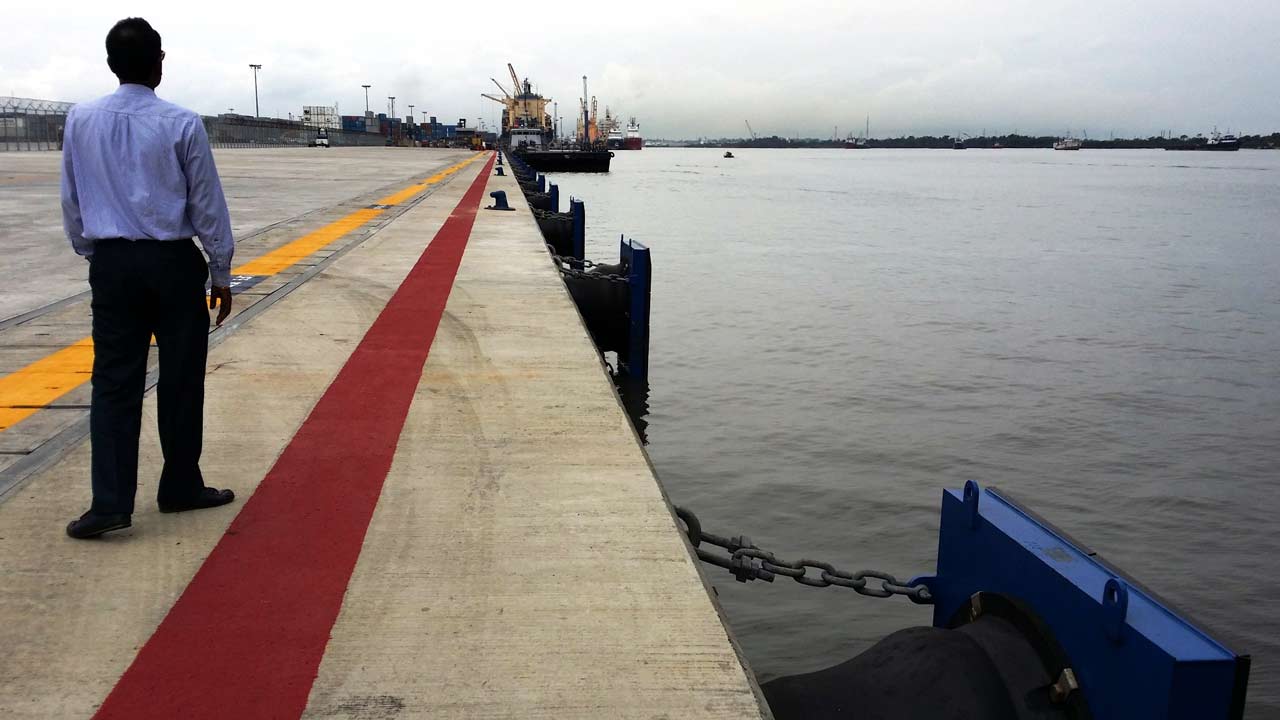
By Ibrahim Nasiru
AS the Port Management Association of West and Central Africa (PMAWCA) gathers in Lagos for the next three days, to deliberate on “Ports of the Future,” the conversation surrounding regional maritime supremacy has never been more urgent.
While the Nigerian Ports Authority (NPA) and the Ministry of Marine and Blue Economy discuss logistical resilience, the structural limitations of Nigeria’s traditional Ports remain an elephant in the room.
To truly dominate the West and Central African sub-region and checkmate aggressive expansion from rivals like Lome and Tema, Nigeria must aggressively accelerate its ultimate maritime trump card: the $4.6billion Ibom Deep Sea Port (IDSP).
For decades, Nigeria’s economic heartbeat has been throttled by the geographical limitations of the Lagos Port Complex.
Even with the laudable arrival of the Lekki Deep Sea Port, the nation’s maritime infrastructure remains heavily centralized, leaving the eastern flank underutilized.
The Ibom Deep Sea Port, strategically carved into the coastline of Akwa Ibom State, offers a game-changing natural advantage with its 16.5-meter design draft coupled with a wide, unrestricted navigation channel.
Unlike the shallow, continually dredged channels of Apapa or Tin Can, IDSP requires no heavy maintenance dredging to welcome the world’s largest modern container vessels.
It is engineered to comfortably host Post-Panamax ships, effectively breaking the structural monopoly of regional hubs and positioning Nigeria as the definitive transshipment destination for the Gulf of Guinea.
Beyond these engineering metrics, the actualization of the Ibom Deep Sea Port represents a masterstroke in economic decentralization.
Strategically located within the Ibom Industrial City multi-product free zone, the Port sits squarely along major global shipping routes.
For Akwa Ibom State and the broader South-South and South-East geopolitical zones, IDSP is the catalyst for a massive industrial rebirth, promising to unlock over 10,000 direct jobs and establish a new industrial manufacturing corridor that feeds directly into the African Continental Free Trade Area (AfCFTA).
Yet, in the theater of governance, the standard remains Facta Non Verba—deeds, not words.
The recent submission of the Comprehensive Feasibility Report to Governor Umo Eno in April 2026 has reignited a fierce debate: does this document signal the dawn of a maritime revolution, or is it merely another chapter in a long-running political anthology?
For the people of Akwa Ibom State, the story of the IDSP has, for decades, been governed by Res Ipsa Loquitur—the thing speaks for itself—where the prolonged absence of an operational Port tells its own story of political promises fading into the sunset.
To change this narrative, the project must escape what is currently a technical reality trapped in a financial purgatory.
The road to actualizing the Port remains entangled in bureaucratic bottlenecks, complex Public-Private Partnership (PPP) negotiations, and shifting federal priorities.
A project of this magnitude, requiring billions in investment, cannot bypass rigorous technical gestation periods.
However, as Minister Gboyega Oyetola champions the Blue Economy agenda at PMAWCA, the IDSP must move from a recurring item on the promotional checklist to a top-tier national infrastructure priority.
Securing international consortium backing and streamlining regulatory approvals from the Infrastructure Concession Regulatory Commission (ICRC) must be handled with the utmost urgency because public necessity outweighs private or localized interests.
The real test of sincerity lies in the immediate transition from documentation to mobilsation.
The next true sign of life for the IDSP will not be found in another boardroom presentation, but in the finalization of the concession agreement with the Bollore Consortium and the actual flag-off of dredging and breakwater construction, currently projected for late 2026.
Only when the first piling is driven into the seabed will the project move from the realm of political possibility into the undeniable light of economic reality.
Ultimately, you cannot build a “Port of the Future” on yesterday’s infrastructure.
While the PMAWCA roundtable in Lagos offers a fantastic platform for regional diplomacy, Nigeria’s true maritime liberation lies in the completion of deep-water frontiers like Ibom.
If the Federal Government is serious about Port resilience, trade connectivity, and sub-regional domination, the Ibom Deep Sea Port must be treated as what it truly is: a non-negotiable national security and economic imperative.
Chief Nasiru, a public affairs analyst, writes from Abuja, Nigeria


Cabotage Enforcement is My Priority: DG NIMASA

Customs Renovates Ife Girls’ School, Pledges University Scholarships

Tinubu Applauds Coca-Cola’s Planned $1b Investment

2027: Northern Muslim Women Declare Support for President Tinubu

Dakuku Peterside: Weak Institutions Stall Nigeria’s Wealth, Prosperity

Inside Nigeria’s Sea Power: The Rise of NPA as a Maritime Powerhouse

Adebayo Williams At 75: A Missing Honour — By Femi Macaulay

High Hopes as Dangote Launches ₦2.15 Trillion IPO

2027: LP chieftain sues WAEC, UNN, NYSC over Obi’s credentials

Tension in Osun as Masked Gunmen Kill Adeleke’s Ally ‘Emir’ at Peace Meeting

Tribute to a Colossus: The Eternal Legacy of Alhaji Bamanga Tukur (1935–2026)

US Praises Nigeria for Ending 12-Year Maritime Restrictions; Oyetola Credits President Tinubu

Environmental sanitation resumes in Lagos tomorrow

Tribute to a Legal Icon and Master Administrator: Alhaji Yahaya Bukar-Gana

Panel recommends 60-month timeline on State Police inauguration

Customs smashes smuggling ring at Tin-Can port, seizes illicit drugs worth ₦18.9b

Customs nets ₦178b at PTML, Miko resumes office

NIMASA Calls on The Media to Help Drive Blue Economy Growth

NIMASA Partners Malta to Fast-Track Full Automation of Nigerian Ship Registry

History as Customs CG Adeniyi bags First NIJ alumnus fellowship

“A Blueprint for Prosperity: How Amb. (Engr.) Omar Suleiman Will Transform Adamawa State”

Apapa Customs Intercepts ₦12.7b ‘Canadian Loud’, Expired Drugs in Lagos

Misclassified Levies: Senate Clears Customs of ₦62.2bn Under-Remittance Claim
