
News
Gowon: Igbos Received Full Bank Refunds with Interest After Civil War

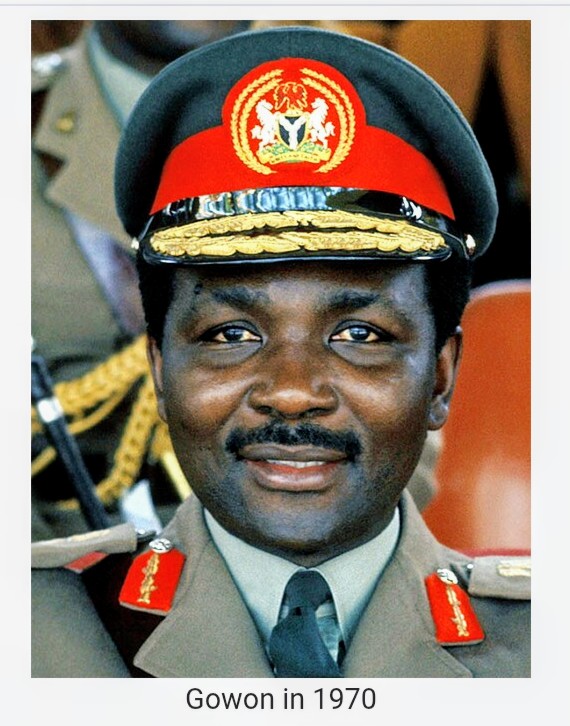
By Temitope Adebiyi, Correspondent
Former Military Head of State, General Yakubu Gowon, stated that the Igbo people were duly compensated for their material losses following the civil war.
He also defended the late Federal Finance Commissioner, Chief Obafemi Awolowo, dismissing accusations that Awolowo maliciously targeted the Igbo with the post-war 20-pound policy, and clarified that the decision was a collective government measure made to save the national economy.
Gowon, who was Head of State between 1966 and 1975, said those who had money in the banks, including the businessmen, got their money back with interests.
He also clarified in his memoir titled: ‘My Life of Duty and Allegiance,’ that the post-war currency control policy was the final decision of the Federal Government, stressing that Awolowo was only a commissioner (minister) under the administration.
The three-year civil war started in 1967 and ended in 1970. After the war, Gowon who proclaimed ‘no victory, no vanquished,’ embarked on the programmes of reconciliation, reconstruction and rehabilitation in the Eastern Central State.
Gen. Gowon recalled that his administration carried out a currency change, owing to the large scale looting of the Central Bank in Benin and Enugu, adding that “much of what the people had amassed automatically ceased to be a legal tender in Nigeria.” NigerianEntertainment Coverage
He also said the Biafran currency was of no value because it was not convertible anywhere in the world.
Gowon said: “That left the Federal Executive Council with the question of what to do to alleviate the suffering of retunees. Council diligently evaluated all suggestions that were proposed.
“The Central Bank, on its part, set up a panel to look at all the ramifications of possible currency conversion of the Biafran pound, though it was evident it would be a difficult assignment because abinitio the Biafran currency was not a legal tender in Nigeria. NigerianEntertainment Coverage
“Due to the large number of Biafran pounds in circulation, the Federal Government decided it could not afford to exchange them all at par with the Nigerian currency without risking economic collapse.
Federal Government limit the payout to approximately 20 Nigerian pounds for each Biafran adult, irrespective of the amount of Biafran currency being returned. NigerianEntertainment Coverage
“We accepted the proposition and adopted it as policy, particularly because we were unable to determine the micro and macro parameters for printing the Biafran notes.
“However, all who fled Nigeria but had proof of having money in Nigerian banks received full value for their money plus the interest that it earned in the Nigerian currency. It would have been unwise to take a different course of action.”
The former head of state lamented that despite the passage of time, “pseudo-historians continue to blame the Commissioner for Finance, Chief Awolowo for the after effect of the Federal Government’s post-war currency control policy.”
Gen. Gowon said:”This is far from the truth. The final decision was not Chief Awolowo’s, even though he was the Finance Commissioner. It was done in the overall national interest.
“We certainly could not have ignored the recommendations of our economic advisers without collapsing the economy. Thus, the government made a collective and tough decision to save Nigeria’s economy, which struggled to stabilise after a 30- month war fought without external borrowing.”
Gen. Gowon said to support the economic regeneration of the former Eastern Region, facilitate reconciliation and expedite the region’s recovery, the FEC allocated a substantial proportion of the national budget for the rehabilitation of the East Central State and other war-affected areas.
He recalled that further measures were implemented to ensure comprehensive recovery efforts.
Gen. Gowon said rather than implement the National Development Plan from April 1970, the Federal Government pushed forward the commencement date to October 70 “ so that we could achieve meaningful reconciliation for the East Central State to be able to participate in the Second National Development Plan.”


Cabotage Enforcement is My Priority: DG NIMASA

Customs Renovates Ife Girls’ School, Pledges University Scholarships

Tinubu Applauds Coca-Cola’s Planned $1b Investment

2027: Northern Muslim Women Declare Support for President Tinubu

Dakuku Peterside: Weak Institutions Stall Nigeria’s Wealth, Prosperity

Inside Nigeria’s Sea Power: The Rise of NPA as a Maritime Powerhouse

Adebayo Williams At 75: A Missing Honour — By Femi Macaulay

High Hopes as Dangote Launches ₦2.15 Trillion IPO

2027: LP chieftain sues WAEC, UNN, NYSC over Obi’s credentials

Tension in Osun as Masked Gunmen Kill Adeleke’s Ally ‘Emir’ at Peace Meeting

Tribute to a Colossus: The Eternal Legacy of Alhaji Bamanga Tukur (1935–2026)

US Praises Nigeria for Ending 12-Year Maritime Restrictions; Oyetola Credits President Tinubu

Environmental sanitation resumes in Lagos tomorrow

Tribute to a Legal Icon and Master Administrator: Alhaji Yahaya Bukar-Gana

Panel recommends 60-month timeline on State Police inauguration

Customs smashes smuggling ring at Tin-Can port, seizes illicit drugs worth ₦18.9b

Customs nets ₦178b at PTML, Miko resumes office

NIMASA Calls on The Media to Help Drive Blue Economy Growth

NIMASA Partners Malta to Fast-Track Full Automation of Nigerian Ship Registry

History as Customs CG Adeniyi bags First NIJ alumnus fellowship

“A Blueprint for Prosperity: How Amb. (Engr.) Omar Suleiman Will Transform Adamawa State”

Apapa Customs Intercepts ₦12.7b ‘Canadian Loud’, Expired Drugs in Lagos

Misclassified Levies: Senate Clears Customs of ₦62.2bn Under-Remittance Claim
