
Security
Tinubu Pushes 5-Year Security Overhaul with 90-Day Report Window

By Temitope Adebiyi, Correspondent
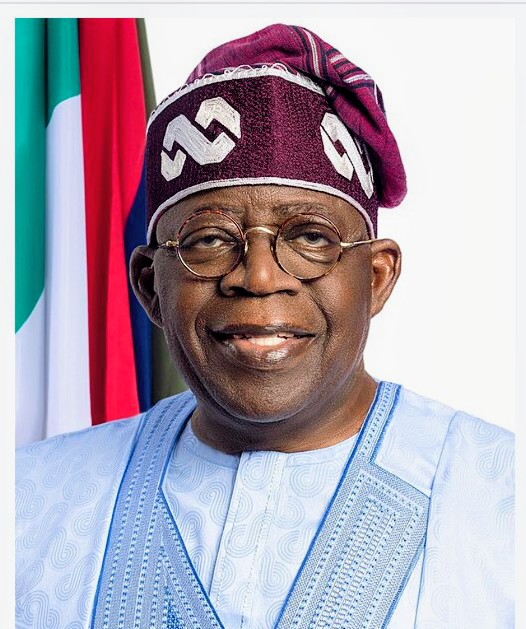
The administration of President Bola Ahmed Tinubu is reshaping its security strategy to end rising banditry and kidnapping in the country.
To achieve this, a panel of top security chiefs has 90 days to recommend a proposed five-year rolling plan.
The committee, inaugurated by the Secretary to the Government of the Federation (SGF), Senator George Akume on behalf of President Bola Ahmed is expected to propose a coherent strategic system in which Nigeria’s assessment of threats determines operational objectives, while those objectives, in turn, determine the capabilities required.
The President said the nation, which is eager to win the battle against insecurity, would demand professionalism and speed, stressing that the restoration of security and peace was a matter of urgent importance.
The committee is headed by the Special Adviser to the President on Homeland Security, Major General Adeyinka Famadewa (rtd.).
Other members are the Minister of Defence, Gen. Christopher Musa; National Security Adviser, Nuhu Ribadu; Minister of State for Defence, Bello Muhammad Matawalle; and Chief of Defence Staff, General Olufemi Oluyede.
Also on the panel are Chief of Army Staff, Lt.-General Waidi Shaibu; Chief of Air Staff, Air Marshal Sunday Kelvin Aneke; Chief of Naval Staff, Vice Admiral Idi Abbas; Inspector-General of Police, Olatunji Rilwan Disu; Director-General of the Department of State Services, Tosin Adeola Ajayi; and Director-General of the National Intelligence Agency, Ambassador Muhammed Muhammed.
Akume charged them to approach the assignment with the highest degree of professionalism, objectivity, urgency and patriotism.
The SGF also urged members to bring their collective expertise to bear on developing a coherent framework that would strengthen Nigeria’s capacity to anticipate, plan for and respond to current and emerging security threats.
He assured the committee of the government’s full support and cooperation, adding that his office had been authorised to consult or co-opt representatives of other Ministries, Departments and Agencies whose specialised knowledge might be required.
Akume said, in a statement by his Special Adviser on Media and Publicity, Yomi Odunuga, that the inauguration marked an important step in strengthening the country’s ability to understand and respond effectively to an increasingly complex and evolving security environment.
He said contemporary security threats had become increasingly interconnected and adaptive, with the capacity to exploit gaps between institutions, jurisdictions and operational theatres.
Acknowledging significant successes recorded by the Armed Forces and other security agencies across different theatres in recent months, Akume said Nigeria must move beyond responding to individual security challenges to building a system capable of anticipating threats, setting priorities, allocating resources rationally and sustaining operational momentum.
He said the envisaged system must also ensure that national security objectives were consistently translated into measurable outcomes.
The SGF stressed that although heads of defence, intelligence and security agencies must retain the flexibility required to respond to immediate threats, their responses should be anchored on a shared national understanding of the security environment and a coherent short-, medium- and long-term strategy.
He noted that operational requirements were sometimes considered independently without sufficient reference to an agreed national threat assessment, clearly prioritised national objectives or a unified capability plan.
Akume said the situation made coordination more difficult and limited the efficient deployment of scarce resources.
The committee, he explained, was expected to help establish a coherent strategic system in which Nigeria’s assessment of threats determines operational objectives, while those objectives, in turn, determine the capabilities required.
Akume said capability requirements should inform expenditure, procurement, force development and industrial priorities.
He added: “In simple terms, we must establish a clear path from threat to objective, from objective to capability, from capability to resource, and from resource to measurable outcome.”
Akume said the National Threat Assessment would provide the government with a comprehensive and objective understanding of the security landscape by identifying what threatens the country, why the threats matter, how they are likely to evolve and the consequences of failing to address them.
He said it would also determine appropriate government responses and provide a common planning basis for the Armed Forces, intelligence services and other relevant security agencies.
The SGF said the assessment should enable the government to distinguish between immediate threats requiring urgent operational responses and emerging threats demanding early investment in intelligence, technology, infrastructure, doctrine, training and other capabilities.
He said the plan should establish what must be achieved in each operational theatre and identify the forces, capabilities, equipment, infrastructure, logistics, intelligence, technology and other enablers required to achieve the objectives.
It would also identify existing capability gaps and establish priorities based on the severity and urgency of identified threats, as well as provide a realistic implementation timetable specifying what is required, when it is required, why it is required, who is responsible for delivering it and how progress will be measured.
Akume said the five-year timeframe would provide the medium-term horizon required for force development, capability acquisition, infrastructure development, training, maintenance, research and development, and the strengthening of Nigeria’s defence industrial base.
However, the plan would operate on a rolling basis and be reviewed annually to accommodate emerging threats, changing operational realities, technological developments and lessons from ongoing operations.
Under its Terms of Reference, the committee is to review the principal existing and emerging security threats facing Nigeria and assess their relative urgency and strategic implications.
It is also mandated to define operational priorities and identify the capabilities required in each theatre; determine capability gaps and equipment, logistics, infrastructure, technology, personnel and support requirements; and establish procurement priorities based on assessed threats and operational requirements rather than institutional preferences.
The committee will also establish implementation steps and realistic timelines for each priority, including measures for monitoring progress and assessing outcomes, as well as make other recommendations necessary for the formulation and effective implementation of the Strategic Defence Operations Plan.
The SGF said the nation’s military and security personnel, who continue to demonstrate courage and commitment in defending the country, deserved a strategic framework that clearly defined their objectives and provided the capabilities, resources and support required to accomplish them.
Famadewa expressed appreciation to President Tinubu for the confidence reposed in the panel and the opportunity given to members to contribute to the security and wellbeing of the country.


Cabotage Enforcement is My Priority: DG NIMASA

Customs Renovates Ife Girls’ School, Pledges University Scholarships

Tinubu Applauds Coca-Cola’s Planned $1b Investment

2027: Northern Muslim Women Declare Support for President Tinubu

Dakuku Peterside: Weak Institutions Stall Nigeria’s Wealth, Prosperity

Inside Nigeria’s Sea Power: The Rise of NPA as a Maritime Powerhouse

Adebayo Williams At 75: A Missing Honour — By Femi Macaulay

High Hopes as Dangote Launches ₦2.15 Trillion IPO

2027: LP chieftain sues WAEC, UNN, NYSC over Obi’s credentials

Tension in Osun as Masked Gunmen Kill Adeleke’s Ally ‘Emir’ at Peace Meeting

Tribute to a Colossus: The Eternal Legacy of Alhaji Bamanga Tukur (1935–2026)

US Praises Nigeria for Ending 12-Year Maritime Restrictions; Oyetola Credits President Tinubu

Environmental sanitation resumes in Lagos tomorrow

Tribute to a Legal Icon and Master Administrator: Alhaji Yahaya Bukar-Gana

Panel recommends 60-month timeline on State Police inauguration

Customs smashes smuggling ring at Tin-Can port, seizes illicit drugs worth ₦18.9b

Customs nets ₦178b at PTML, Miko resumes office

NIMASA Calls on The Media to Help Drive Blue Economy Growth

NIMASA Partners Malta to Fast-Track Full Automation of Nigerian Ship Registry

History as Customs CG Adeniyi bags First NIJ alumnus fellowship

“A Blueprint for Prosperity: How Amb. (Engr.) Omar Suleiman Will Transform Adamawa State”

Apapa Customs Intercepts ₦12.7b ‘Canadian Loud’, Expired Drugs in Lagos

Misclassified Levies: Senate Clears Customs of ₦62.2bn Under-Remittance Claim
