
Security
The General Who Outlasted Them All: An Answer to The Aliyu Gusau Enigma

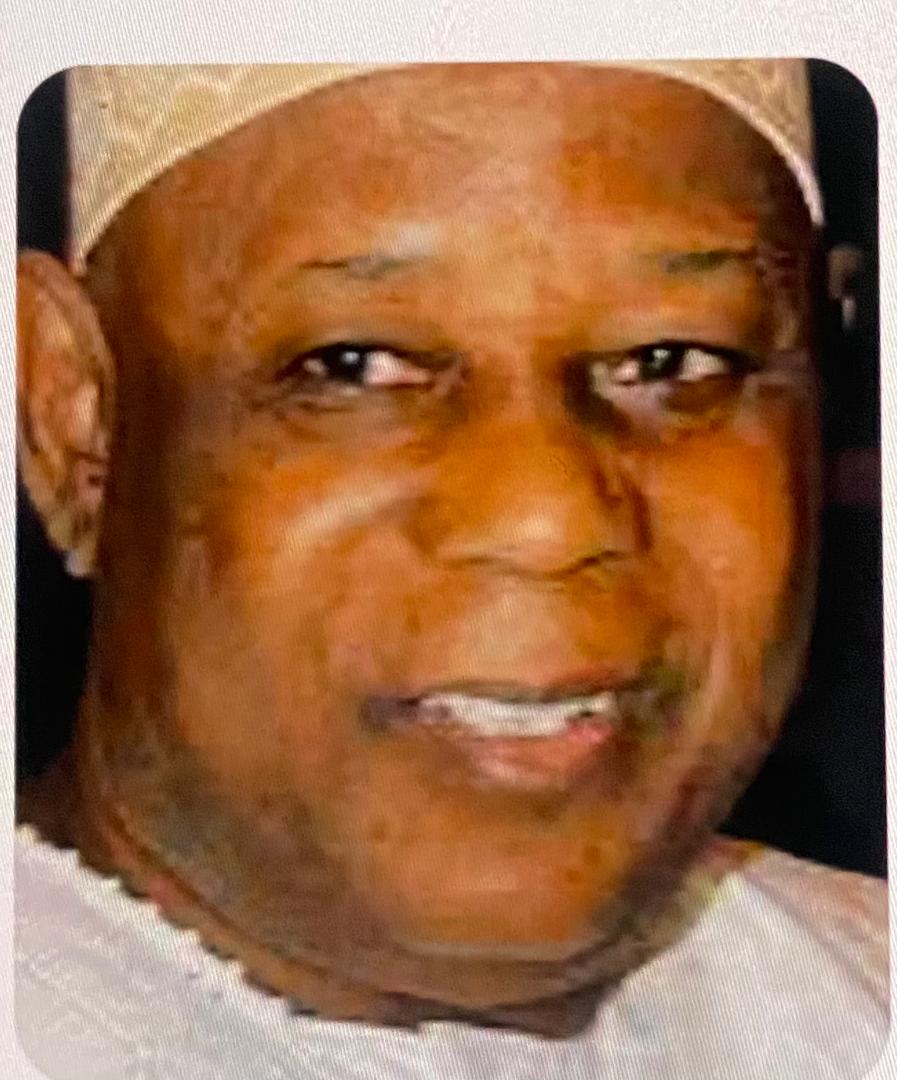
By Ibrahim Nasiru
The ultimate paradox of modern Nigerian statecraft is encapsulated in a single, recurring question that haunts the archives of our national security architecture: Was General Aliyu Mohammed Gusau Nigeria’s greatest military intelligence strategist, or simply the ultimate survivor of the coup era?
To view the legendary spymaster through a binary lens is to fundamentally misread the complex mechanics of sub-national and sovereign power. In the high-stakes theater of military interruptions and democratic transitions, raw survival is never a product of accidental longevity.
It is a highly technical, deliberate discipline. Gusau did not merely survive the coup era; he engineered the very institutional frameworks that rendered his presence indispensable to successive governments, both military and civilian. His strategic genius was the foundational anchor of his survival.
Gusau’s definitive contribution to Nigeria does not lie in the tactical execution of backroom political realignments, but in his visionary unbundling of the old National Security Organisation (NSO) in 1986. Prior to this structural overhaul, intelligence collection was a blunt, centralized instrument.
By conceptualising and birthing the tripartite architecture we rely on today—the State Security Service (SSS) for internal vigilance, the National Intelligence Agency (NIA) for external espionage, and the Defence Intelligence Agency (DIA) for military surveillance, Gusau moved Nigeria past primitive policing into the modern era of institutional intelligence.
This was not the work of a mere opportunist; it was the blueprint of a master strategist who understood that a modern state requires specialised, compartmentalised security organs to survive its own internal contradictions.
Therefore, his uncanny ability to serve as National Security Adviser to three distinct civilian administrations—spanning the structural transitions of President Olusegun Obasanjo, President Umaru Musa Yar’Adua, and President Goodluck Ebuele Jonathan—must be re-examined.
Where lesser players saw partisan battles, Gusau operated within a realm of non-partisan institutional continuity. He became the ultimate custodian of the state’s deep secrets, the quiet diplomat who could interface with Western intelligence agencies, and the primary bridge between an anxious military class and an emerging civilian elite.
Regimes changed, presidents rotated, and political parties evolved, but the state’s fundamental need for a steady, invisible hand on the security levers remained absolute. Gusau became that irreplaceable hand.
Ultimately, the cult of Aliyu Gusau teaches us that true power does not belong to those who make the loudest noise on the political stage, but to those who control the structural pipelines of information. He outlasted his contemporaries because he chose to build institutions rather than chase short-lived executive titles.
He was not a bystander in the coup era; he was the primary architect who helped transition the nation away from it, systematically professionalising our security grids so that democracy could finally take root.
Gusau remains both: Nigeria’s finest intelligence strategist precisely because he understood that in the arena of statecraft, absolute institutional competence is the only permanent guarantee of survival.
Chief Ibrahim Nasiru
A Public Affairs Analyst writes from Abuja, Nigeria.
NOTE:
Views expressed by contributors are strictly personal and not of The Spynews.


Cabotage Enforcement is My Priority: DG NIMASA

Customs Renovates Ife Girls’ School, Pledges University Scholarships

Tinubu Applauds Coca-Cola’s Planned $1b Investment

2027: Northern Muslim Women Declare Support for President Tinubu

Dakuku Peterside: Weak Institutions Stall Nigeria’s Wealth, Prosperity

Inside Nigeria’s Sea Power: The Rise of NPA as a Maritime Powerhouse

Adebayo Williams At 75: A Missing Honour — By Femi Macaulay

High Hopes as Dangote Launches ₦2.15 Trillion IPO

2027: LP chieftain sues WAEC, UNN, NYSC over Obi’s credentials

Tension in Osun as Masked Gunmen Kill Adeleke’s Ally ‘Emir’ at Peace Meeting

Tribute to a Colossus: The Eternal Legacy of Alhaji Bamanga Tukur (1935–2026)

US Praises Nigeria for Ending 12-Year Maritime Restrictions; Oyetola Credits President Tinubu

Environmental sanitation resumes in Lagos tomorrow

Tribute to a Legal Icon and Master Administrator: Alhaji Yahaya Bukar-Gana

Panel recommends 60-month timeline on State Police inauguration

Customs smashes smuggling ring at Tin-Can port, seizes illicit drugs worth ₦18.9b

Customs nets ₦178b at PTML, Miko resumes office

NIMASA Calls on The Media to Help Drive Blue Economy Growth

NIMASA Partners Malta to Fast-Track Full Automation of Nigerian Ship Registry

History as Customs CG Adeniyi bags First NIJ alumnus fellowship

“A Blueprint for Prosperity: How Amb. (Engr.) Omar Suleiman Will Transform Adamawa State”

Apapa Customs Intercepts ₦12.7b ‘Canadian Loud’, Expired Drugs in Lagos

Misclassified Levies: Senate Clears Customs of ₦62.2bn Under-Remittance Claim
