
News
120,000 Converted CNG Vehicles: Fed Govt and States Drive Down Transport Fares

By Olabisi Akinpelu, Reporter
FOLLOWING the new initiative by the Federal Government, affordable transport fares are on the way across the country.
More than 120,000 vehicles have already been converted to CNG under the programme, he said.
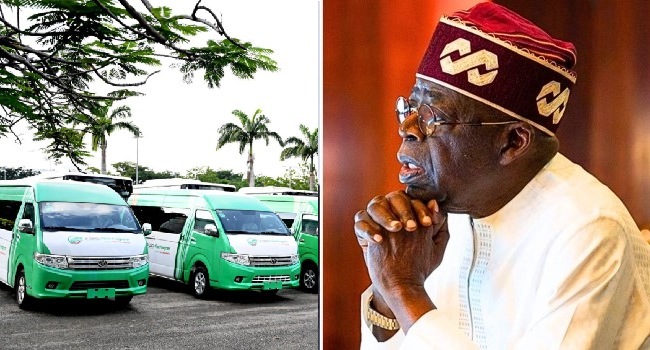
President Bola Ahmed Tinubu has directed state governments to accelerate the National Affordable CNG Transit Programme to deliver measurable reductions in transport fares starting October 1.
At the moment, the country has over 400 certified conversion centres and more than 90 CNG refuelling stations across the states and the Federal Capital Territory.
The President, in an update on the National Affordable CNG Transit Programme yesterday, said Nigeria, as a gas-rich country, must insulate itself from volatility in the international energy market by expanding cheaper domestic alternatives rather than reverting to petrol subsidies, which he said consumed trillions of naira and left the economy vulnerable to movements in global oil prices.
“At a time like this, our answer cannot be to return to the ruinous petrol subsidy regime that consumed trillions of naira and left our economy exposed to every movement in international oil prices, as some have suggested,” he said.
He added: “We must accelerate the cheaper alternatives we have been building at home.”
Tinubu recalled that he met with governors of the 36 states on August 27, where they agreed that Nigerians should begin to experience measurable reductions in transportation costs from October 1.
He said the meeting subsequently led to the establishment of an implementation committee for the National Affordable CNG Transit Programme under the Nigeria Governors’ Forum (NGF), chaired by Kwara State Governor AbdulRahman AbdulRazaq.
According to the President, the committee, working with the Presidential Initiative on Compressed Natural Gas and Electric Vehicles (PiCNG & EV), state governments and other stakeholders, has been identifying priority transport corridors and determining appropriate interventions ahead of the October deadline.
Tinubu said the urgency of the programme had increased following disruptions to global energy supplies, which are putting pressure on petrol and diesel prices and driving transportation costs higher internationally.
“Nigeria cannot control events in global energy markets. But as a gas-rich nation, we can reduce our exposure. That is what we have been doing,” he said.
The President cited existing CNG and electric transport schemes across several states as evidence that cheaper energy could translate directly into lower fares for commuters.
According to him, CNG-powered and electric public transport services in Borno State are carrying passengers for between N50 and N100 on routes where commercial operators charge between N300 and N600.
In Kaduna State, he said, 100 CNG buses providing free transportation on major routes carried about 3.2 million passengers in their first year, saving commuters more than N3.5 billion in transportation costs.
Tinubu said the deployment of CNG buses to the Pacesetter Transport Service in Oyo State reduced the Lagos-Ibadan fare from about N8,000 to N3,200 during the initial rollout, while alternative-energy transit services in Adamawa State had reduced some fares by as much as 50 per cent, from N8,000 to N4,000.
He added that the deployment of 100 CNG buses in Enugu State brought the Enugu-Nsukka fare down from N2,500 to N1,500, while government-supported buses in Plateau State transport about 13,000 commuters daily for N200, against commercial fares exceeding N500.
The President also highlighted the Federal Government’s partnership with the National Union of Road Transport Workers (NURTW), under which passengers using CNG-converted commercial vehicles on selected Abuja routes receive a 40 per cent fare reduction.
He said the Area 1-Gwagwalada fare had dropped from N1,500 to N900, while fares to Nyanya declined from N700 to N420 and Wuse from N400 to N240.
Similarly, Tinubu said passengers on the Suleja-Abuja service in Niger State now pay N550 against about N800, while Abia State has deployed 40 electric buses with fares subsidised by 50 per cent.
“These are not projections. Nigerians are already experiencing these savings,” he said.
The President commended governors and state governments that had moved quickly to deploy alternative-energy transportation but stressed that considerably more needed to be done to extend the benefits to millions of Nigerians.
He assured the states of Federal Government support to expand the programme, saying his administration had spent the past three years deliberately building a CNG transportation ecosystem as part of efforts to reduce dependence on petrol.
The Presidential CNG Initiative was established in August 2023 as one of the administration’s responses to the removal of petrol subsidy, with an initial focus on mass transit, vehicle conversions, domestic assembly and the development of a nationwide network of conversion workshops.
Its mandate was expanded in March 2026 to incorporate electric vehicles and charging infrastructure as part of a broader clean-mobility strategy.
The administration has also accelerated investment in CNG infrastructure. In May, Tinubu commissioned four CNG projects in Lagos, Abuja and Owerri under the Midstream and Downstream Gas Infrastructure Fund, including mother and daughter stations and refuelling facilities.
On state-level expansion, Tinubu said Edo State already has 50 CNG buses in active service, while Kano had converted more than 1,000 commercial vehicles and was expanding its conversion and refuelling network.
He said Delta, Kwara and Lagos states are also expanding CNG-supported transport services, while Akwa Ibom had taken delivery of 50 CNG buses ahead of the commencement of commercial operations.
Tinubu urged all governors to sustain the momentum towards the October 1 target by working closely with transport unions and commercial operators, supporting vehicle conversions and fleet deployment, and facilitating the development of necessary infrastructure.
“Above all, ensure that savings from cheaper energy reach Nigerian citizens through lower fares,” the President charged the governors.
He said the Federal Government would continue to expand CNG infrastructure and conversion capacity while creating an enabling environment for states, transport operators, manufacturers and private investors to participate in the emerging alternative-energy transport industry.
“Nigeria has the gas. We are building the infrastructure. We are already seeing the savings.
“Now we must move faster and scale this so that more Nigerians feel those savings in the fares they pay every day,” Tinubu said.


LAGOS: Tinubu’s Maritime Policy, Performance to Take Center Stage at NNMJ Unity Conference

Hamzat Unveils 100-Point ‘Lagos Promise’ Manifesto, Pledges Better Quality of Life for Residents

President Tinubu Arrives in Jeddah for Umrah and National Prayers

Nigeria Customs, US Team Up to Fast-Track Trade

Naira Conversion Eroded $350m CVFF Value, Omatseye Reveals

Enugu Partners with Humatrix in Landmark BPO Deal to Create 100,000 Jobs

Boosting Maritime: Fed Govt, Banks Urged to Tackle Shipping Funding Crisis

NPA to Audit Inland Dry Ports, Partners With ICNL to Boost Hinterland Trade

President Tinubu Leaves for Mecca Tomorrow; Expected Back Next Week

Dockworkers may Shut Down Ports next week Over Terminal Operator Delays

Fed Govt seeks private sector funding blueprint as 30 state assemblies approve State Police

Ahead of 2027 Evaluation, Customs Vows Zero Tolerance for Money Laundering

Man Arrested in Adamawa While Trying to Sell His Niece for ₦7m

Customs smashes smuggling ring at Tin-Can port, seizes illicit drugs worth ₦18.9b

Environmental sanitation resumes in Lagos tomorrow

Apapa Customs Smashes Smuggling Ring, Seizes Illicit Drugs Worth ₦26.57b

IN 3 YEARS: Oyetola Reshapes Nigeria’s Blue Economy, Revenues Surge to ₦1.83tr

Customs CG Adeniyi Displays Narcotics, Fake Drugs Worth ₦53.3b at Apapa

SINGLE-DAY RECORD: Apapa Customs Generates ₦28b in 24 Hours

High Hopes as Dangote Launches ₦2.15 Trillion IPO

Oyo/Osun Customs Intercepts Rifles, Contraband Worth ₦3.2b in Three Months

Seme Customs Seizes 3,300 Explosive Cartridges, Generates ₦19.84b in 7 Months

Customs Zone ‘A’ Speeds Up Cargo Clearance to Hit ₦8trn Revenue Goal
