
News
Tinubu, U.S. Agencies Oppose Greenspan Bid

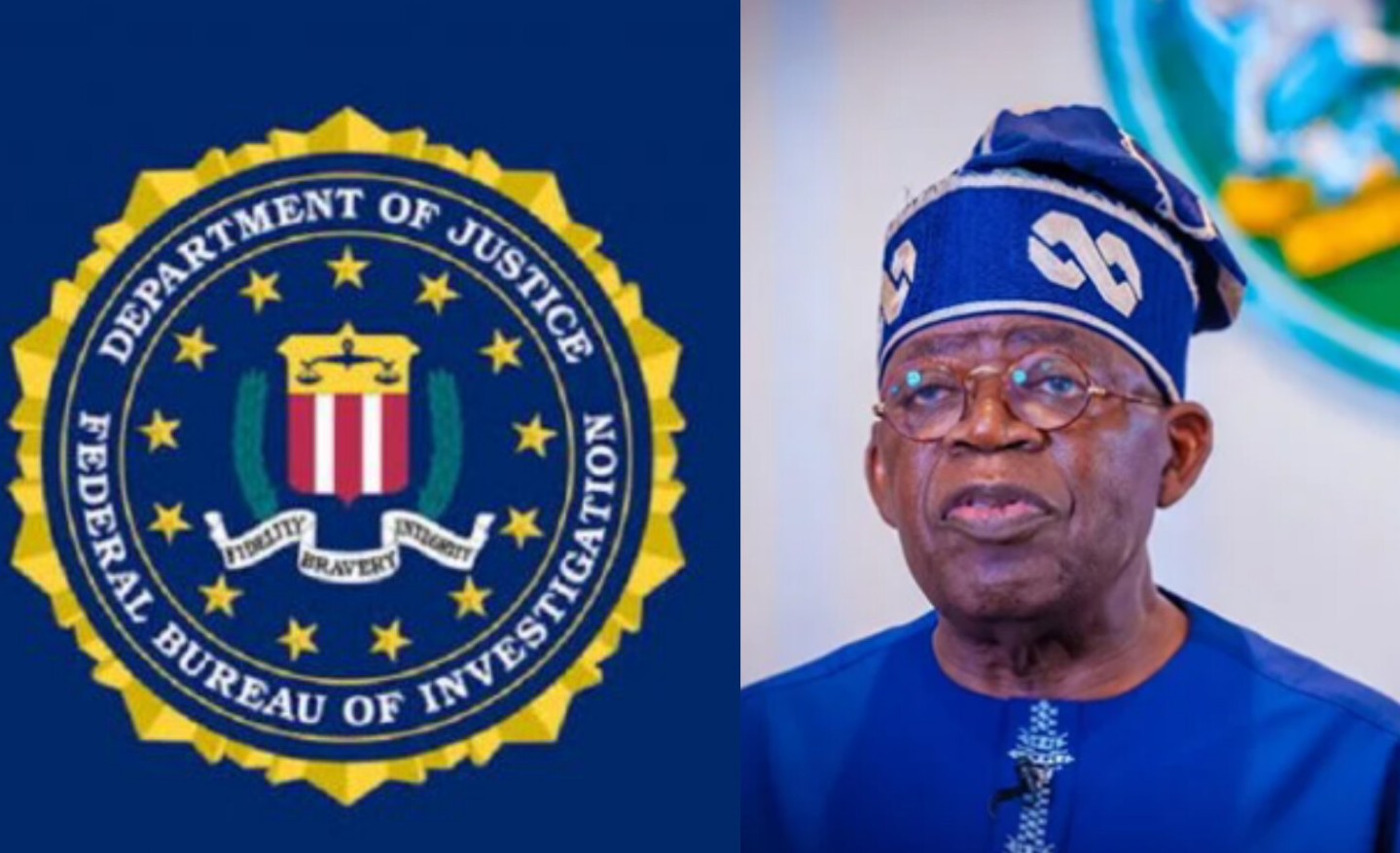
By Lateepha Eniola, Assistant Editor
Lawyers representing President Bola Ahmed Tinubu and the United States government have asked a federal court in Washington, D.C., to deny Aaron Greenspan’s request to expand discovery in his Freedom of Information Act lawsuit.
Counsel for Bola Ahmed Tinubu, appearing as an intervenor, contended that Aaron Greenspan sought to misuse federal discovery by targeting third parties over supposed denial-of-service attacks against PlainSite.org.
They informed the U.S. District Court for the District of Columbia that this discovery exceeded the limited scope of a FOIA action, calling it a speculative investigation into third-party activities.
Greenspan, who operates the for-profit website PlainSite, alleged that the platform suffered denial-of-service attacks..
Tinubu’s lawyers clarified that he did not verify the cyberattacks, know who carried them out, or accuse Tinubu of involvement.
They also dismissed Greenspan’s attempt to connect the attacks to the FOIA lawsuit as purely speculative
In a September 23 filing, Tinubu’s lawyers stated that Aaron Greenspan was asking the court to compel answers and document productions from Tinubu.
The plaintiff also sought a third-party subpoena for DCI Group AZ, LLC—a public relations and lobbying firm—and its unnamed parent company. Additionally, the proposed discovery requested details on other parties allegedly offering legal, lobbying, or public relations counsel.
Tinubu’s lawyers argued that the Freedom of Information Act (FOIA) is designed to provide transparency into government activities rather than to investigate private parties.
They cited legal precedents establishing that discovery is generally unavailable in FOIA cases. When permitted, it is reserved for exceptional circumstances—specifically, when a plaintiff raises substantial questions about the adequacy or good faith of an agency’s search.
The lawyers noted that Greenspan had neither sought discovery from the government agencies nor demonstrated bad faith in how they handled his FOIA requests.
The lawyers argued that Aaron Greenspan failed to show how the requested discovery related to the court’s core issues.
According to the court filing, Greenspan admitted he did not know who launched the cyberattacks, noting that botnets make tracking the actual culprits difficult.
Counsel also highlighted Greenspan’s concession that his platform, PlainSite, faced prior cyberattacks during periods with no active court filings.
The defense countered that the existence of over 100 docket entries fails to establish a causal link, despite assertions that an attack occurred within days of specific filings.
Characterising the plaintiff’s connection between the website issues and the litigation as “wholly speculative,” Tinubu’s legal team subsequently opposed Greenspan’s request for expedited discovery.
The defense argued that expedited discovery was unjustified because Greenspan’s own filing showed the attacks had stopped at the end of August 2026.
They dismissed his concern about future attacks as speculative and theoretical. Additionally, they rejected his reliance on the court’s inherent authority, arguing it cannot bypass the relevance, proportionality, and FOIA restrictions set by the Federal Rules of Civil Procedure.
They urged the court to deny the motion in its entirety.
In a separate reply, the FBI and Drug Enforcement Administration (DEA) requested summary judgment, maintaining that they had conducted adequate searches for records responsive to Greenspan’s FOIA requests.
The agencies stated that both had searched for responsive documents, processed the located files, and released all reasonably segregable, non-exempt information
The Federal Bureau of Investigation (FBI) explained that its search used the separate terms “Bola” and “Tinubu,” followed by a manual page-by-page review of a multi-subject file.
An additional declaration in the agency’s reply directly answered Aaron Greenspan’s concerns regarding the chosen search terms and the alleged failure to check for spelling mistakes.
Meanwhile, the Drug Enforcement Administration (DEA) noted that Greenspan did not question the quality of its search, maintaining that its methods were reasonable for finding relevant records.
The agencies relied on several FOIA exemptions to withhold specific records.
For grand-jury content, the FBI invoked Exemption 3 alongside Federal Rule of Criminal Procedure 6(e), the Pen Register Act, and Title III.
According to the government, this information remains secret to maintain grand-jury confidentiality and safeguard non-public surveillance details.
Defending its reliance on Exemption 5, the FBI argued that the records sought by Greenspan are protected by attorney-client and work-product privileges.
The bureau stated that releasing these documents would expose the strategies and thought processes of U.S. Attorney’s Office personnel working with the FBI, ultimately hindering prosecutors from openly planning their duties.
Defending the exemptions, the agencies argued that the records involve third-party criminal defendants and require protection to safeguard personal privacy, law enforcement techniques, and confidential sources.
The DEA specifically emphasized that disclosing source information could reveal identities and jeopardize their safety.
Defending its use of Exemptions 7(E) and 7(F), the FBI argued both were necessary to protect sensitive details.
It stated that Greenspan had already conceded non-public investigative techniques could be withheld under 7(E). Additionally, the bureau applied 7(F) to protect the names of individuals who could face physical violence if their identities were disclosed.
The DEA similarly cited the sensitive nature of undercover operations involving armed, potentially violent offenders.
Consequently, the FBI and DEA requested summary judgment in their favor, while Tinubu urged the court to reject Greenspan’s discovery application.
U.S. transparency activist Greenspan is seeking these records through a FOIA lawsuit against several federal agencies, demanding documents from investigations involving President Bola Ahmed Tinubu.
The request seeks the Federal Bureau of Investigation’s complete file on Bola Ahmed Tinubu—including Form 302 interview records from 1992 to 1993—alongside records tied to a 1993 U.S. civil forfeiture case involving roughly $460,000 linked to him.


LAGOS: Tinubu’s Maritime Policy, Performance to Take Center Stage at NNMJ Unity Conference

Hamzat Unveils 100-Point ‘Lagos Promise’ Manifesto, Pledges Better Quality of Life for Residents

President Tinubu Arrives in Jeddah for Umrah and National Prayers

Nigeria Customs, US Team Up to Fast-Track Trade

Naira Conversion Eroded $350m CVFF Value, Omatseye Reveals

Enugu Partners with Humatrix in Landmark BPO Deal to Create 100,000 Jobs

Boosting Maritime: Fed Govt, Banks Urged to Tackle Shipping Funding Crisis

NPA to Audit Inland Dry Ports, Partners With ICNL to Boost Hinterland Trade

President Tinubu Leaves for Mecca Tomorrow; Expected Back Next Week

Dockworkers may Shut Down Ports next week Over Terminal Operator Delays

Fed Govt seeks private sector funding blueprint as 30 state assemblies approve State Police

Ahead of 2027 Evaluation, Customs Vows Zero Tolerance for Money Laundering

Man Arrested in Adamawa While Trying to Sell His Niece for ₦7m

Customs smashes smuggling ring at Tin-Can port, seizes illicit drugs worth ₦18.9b

Environmental sanitation resumes in Lagos tomorrow

Apapa Customs Smashes Smuggling Ring, Seizes Illicit Drugs Worth ₦26.57b

IN 3 YEARS: Oyetola Reshapes Nigeria’s Blue Economy, Revenues Surge to ₦1.83tr

Customs CG Adeniyi Displays Narcotics, Fake Drugs Worth ₦53.3b at Apapa

SINGLE-DAY RECORD: Apapa Customs Generates ₦28b in 24 Hours

High Hopes as Dangote Launches ₦2.15 Trillion IPO

Oyo/Osun Customs Intercepts Rifles, Contraband Worth ₦3.2b in Three Months

Seme Customs Seizes 3,300 Explosive Cartridges, Generates ₦19.84b in 7 Months

Customs Zone ‘A’ Speeds Up Cargo Clearance to Hit ₦8trn Revenue Goal
