
News
Presidency Counters ‘The Economist’: Reforms Justified by Brutal Economic Legacy

By Aminat Damilola, Assistant Editor
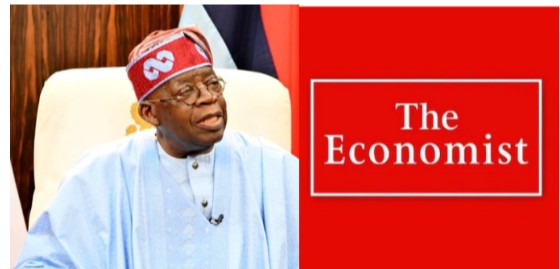
The Presidency has pushed back against claims made by The Economist suggesting that economic strain has caused a surge in public alienation toward President Bola Ahmed Tinubu.
It criticized the publication’s review as patronising and inaccurate, arguing that it failed to recognise the actual impact of the administration’s reforms.
Dr. Sunday Dare, Special Adviser to the President on Media and Public Communications, argued that critics pointing to a “widespread rejection” of the president are ignoring the brutal economic legacy and the structural overhauls launched since May 2023.
Writing in “Beyond the Economist Condescension: Nigeria’s Re-Engineering Under Tinubu is Unstoppable,” the presidential aide accused foreign commentators of oversimplifying Nigeria’s complex realities into sensational narratives of national despair.
“The Economist claims Nigerians dislike their President, but it’s a claim that smells of opposition and is riddled with inconsistencies,” he added.
Four days ago, the Economist predicted that despite the economic woes besetting Nigeria, President Tinubu will win next year’s election.
Dare argued that framing economic reform challenges as a total rejection of the President misreads the country’s actual situation.
“They love to peddle the lazy, hollow fiction that ‘Nigerians hate President Bola Ahmed Tinubu,’ packaging localised administrative growing pains into neat, uniform narratives of national rejection. AccessServices
“This is not merely analytical laziness; it is an intellectual fraud,” he added.
Dare noted that the current administration took over a deeply compromised economic system—one weighed down by an unsustainable fuel subsidy regime, fractured foreign exchange markets, immense debt burdens, and chronic underinvestment in critical infrastructure, energy, and security.
He emphasized that President Tinubu opted for decisive action over procrastination, tackling these systemic issues head-on through the removal of the petrol subsidy and the unification of the foreign exchange market.
He stated that the reforms strengthened government finances, trade balances, and external reserves while reducing wasteful subsidy payments and currency arbitrage.
To cushion the impact of these changes, Dare highlighted relief measures like the Nigerian Education Loan Fund, local government financial autonomy, a new minimum wage, CNG bus deployments, and agricultural interventions.
“The notion that millions of Nigerians harbour blind hatred for President Tinubu collapses when you meet everyday reality”, he said, adding that students benefiting from education loans, workers receiving improved wages, local governments accessing greater financial autonomy and farmers benefiting from interventions had reasons to support the administration.
Dare, who acknowledged that Nigerians are experiencing economic hardship, insisted that the pain is linked to necessary structural reforms intended to address longstanding weaknesses in the economy.
“These citizens recognise a leader doing the heavy, foundational lifting—someone cleaning up decades of accumulated governance debris. They know that the current reforms are the bitter medicine required to cure a chronic national ailment,” Dare stressed.
The presidential adviser also rejected the endency by foreign publications to view Nigeria solely through economic hardship and security challenges without recognising the broader changes underway across the country.
“Nigeria’s political and economic ecosystem is admittedly complex, shaped by security challenges and global economic headwinds. However, external commentators’ attempt to reduce this complex sovereign nation to a caricature of helpless misery does a disservice to the truth,” he said.
Dare maintained that the administration would not retreat from its economic programme, adding that Presi Tinubu’s policies had placed Nigeria on an “irreversible path toward sustainable growth, fiscal independence, and enduring prosperity.
“The narrative of inevitable rejection is exposed daily as a hollow illusion, dismantled by the tangible fruits of a renewed, resilient republic,” he added.


LAGOS: Tinubu’s Maritime Policy, Performance to Take Center Stage at NNMJ Unity Conference

Hamzat Unveils 100-Point ‘Lagos Promise’ Manifesto, Pledges Better Quality of Life for Residents

President Tinubu Arrives in Jeddah for Umrah and National Prayers

Nigeria Customs, US Team Up to Fast-Track Trade

Naira Conversion Eroded $350m CVFF Value, Omatseye Reveals

Enugu Partners with Humatrix in Landmark BPO Deal to Create 100,000 Jobs

Boosting Maritime: Fed Govt, Banks Urged to Tackle Shipping Funding Crisis

NPA to Audit Inland Dry Ports, Partners With ICNL to Boost Hinterland Trade

President Tinubu Leaves for Mecca Tomorrow; Expected Back Next Week

Dockworkers may Shut Down Ports next week Over Terminal Operator Delays

Fed Govt seeks private sector funding blueprint as 30 state assemblies approve State Police

Ahead of 2027 Evaluation, Customs Vows Zero Tolerance for Money Laundering

Man Arrested in Adamawa While Trying to Sell His Niece for ₦7m

Customs smashes smuggling ring at Tin-Can port, seizes illicit drugs worth ₦18.9b

Environmental sanitation resumes in Lagos tomorrow

Apapa Customs Smashes Smuggling Ring, Seizes Illicit Drugs Worth ₦26.57b

IN 3 YEARS: Oyetola Reshapes Nigeria’s Blue Economy, Revenues Surge to ₦1.83tr

Customs CG Adeniyi Displays Narcotics, Fake Drugs Worth ₦53.3b at Apapa

SINGLE-DAY RECORD: Apapa Customs Generates ₦28b in 24 Hours

High Hopes as Dangote Launches ₦2.15 Trillion IPO

Oyo/Osun Customs Intercepts Rifles, Contraband Worth ₦3.2b in Three Months

Seme Customs Seizes 3,300 Explosive Cartridges, Generates ₦19.84b in 7 Months

Customs Zone ‘A’ Speeds Up Cargo Clearance to Hit ₦8trn Revenue Goal
