
Customs
CGC Adeniyi Activates New Anti-Corruption Panel for Nigeria Customs

By Saheed Olatunji, Reporter
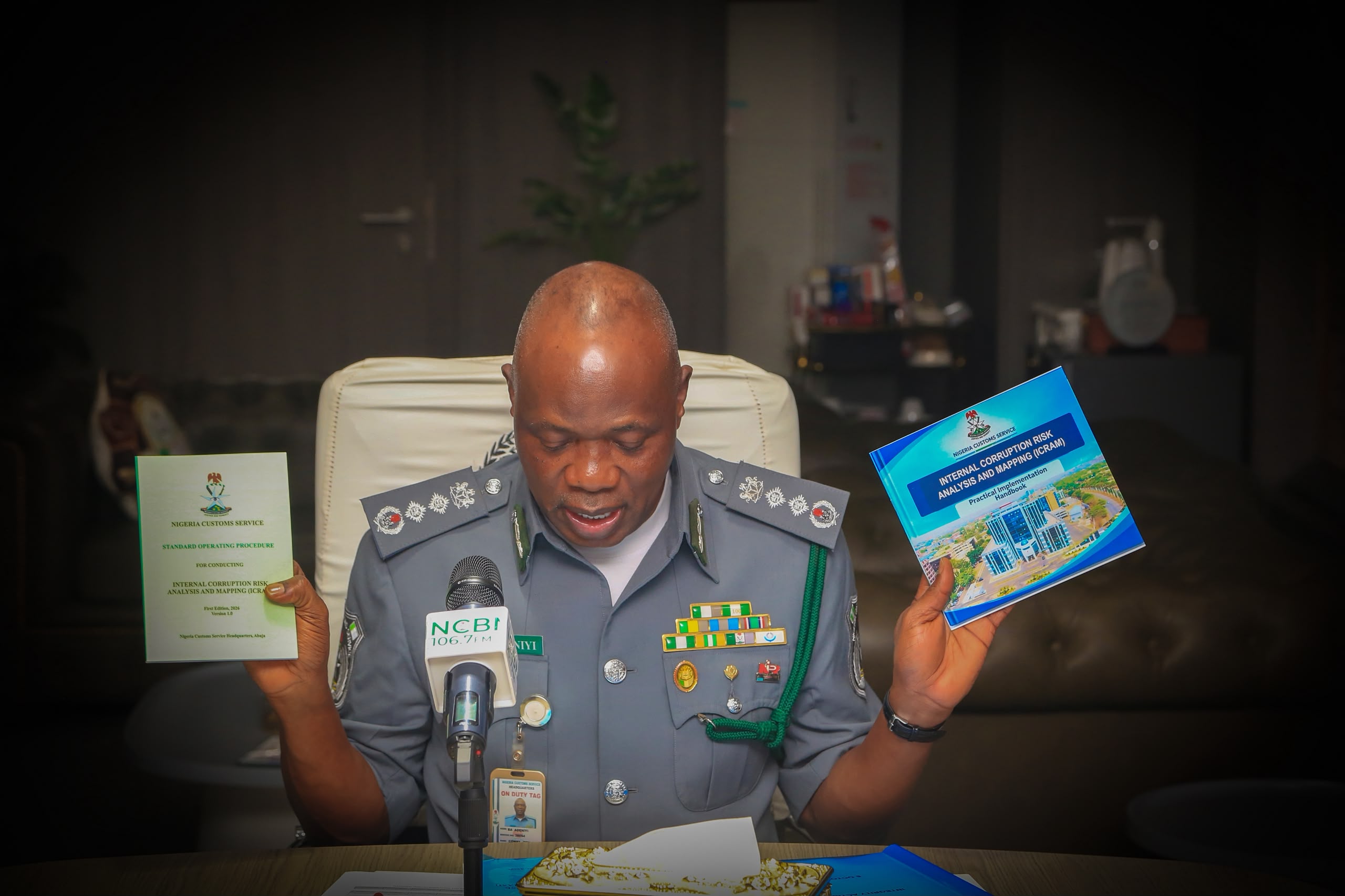
The approved documents include the Standard Operating Procedure (SOP) for Conducting Internal Corruption Risk Analysis and Mapping (ICRAM), the ICRAM Handbook, and the Integrity Action Plan.
During the ceremony at the NCS Headquarters in Abuja, Adeniyi also activated the ICRAM Steering Committee, establishing a systematic framework to identify and map corruption risks across all operations.
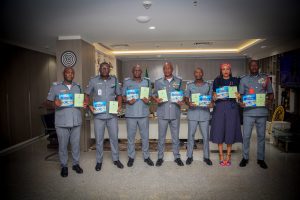
CGC Adeniyi said the documents resulted from a painstaking process involving an internal team, the World Customs Organisation (WCO), and partner administrations such as His Majesty’s Revenue and Customs (HMRC), noting that the objective was to ensure integrity remains central to all operations.
“These two documents are products of a painstaking process which we have undertaken with efforts from an internal team working together with our partners from the WCO and a number of other Customs administrations that have walked this path with us to ensure that we have a Service where integrity leads,” CGC Adeniyi said.
He explained that the documents were developed as practical tools to enable officers at ports, borders, and airports to identify and map corruption risks within their areas of operation and implement targeted measures to eliminate them.
“We want to believe that we have laid a practical step, very easy to follow, for all our operatives at the ports, the borders, and the airports, to be able to conduct corruption risk mapping in their places, giving them the opportunity and capacity to implement the action plan to instil integrity in our system,” he added.
Earlier, the Assistant Comptroller-General of Customs in charge of the Strategic Research and Policy Department, ACG Nafi’u Isyaku, who led senior officers to present the documents, sought approval for its full rollout across the Service.
Before the formal launch, the ICRAM methodology was piloted across seven key Commands and Units, covering 66 processes across regulatory, core Customs, and support functions. The pilot locations included:
• Sea Modality: Apapa Area Command
• Air Modality: Murtala Muhammed Cargo (MMAC) and Murtala Muhammed International Airport (MMIA) Commands
• Land Modality: Seme Area Command
• Specialised Units: Customs Police Unit Zone A, PAAR Ruling Centre, and the Procurement Unit.
The pilot produced a comprehensive Integrity Action Plan (IAP) with 101 Action Items and 295 Sub-Action Items. Key focal areas include enhanced automation, strengthened supervision and accountability, robust audit trails and traceability, clear segregation of duties, regular staff rotation, targeted training, and improved officer-stakeholder controls.


Hamzat Unveils 100-Point ‘Lagos Promise’ Manifesto, Pledges Better Quality of Life for Residents

President Tinubu Arrives in Jeddah for Umrah and National Prayers

Nigeria Customs, US Team Up to Fast-Track Trade

Naira Conversion Eroded $350m CVFF Value, Omatseye Reveals

Enugu Partners with Humatrix in Landmark BPO Deal to Create 100,000 Jobs

Boosting Maritime: Fed Govt, Banks Urged to Tackle Shipping Funding Crisis

NPA to Audit Inland Dry Ports, Partners With ICNL to Boost Hinterland Trade

President Tinubu Leaves for Mecca Tomorrow; Expected Back Next Week

Dockworkers may Shut Down Ports next week Over Terminal Operator Delays

Fed Govt seeks private sector funding blueprint as 30 state assemblies approve State Police

Ahead of 2027 Evaluation, Customs Vows Zero Tolerance for Money Laundering

JUSTIN: Panel Reveals 37 Miners Suffocated in NSCDC Custody

Man Arrested in Adamawa While Trying to Sell His Niece for ₦7m

Customs smashes smuggling ring at Tin-Can port, seizes illicit drugs worth ₦18.9b

Environmental sanitation resumes in Lagos tomorrow

Apapa Customs Smashes Smuggling Ring, Seizes Illicit Drugs Worth ₦26.57b

IN 3 YEARS: Oyetola Reshapes Nigeria’s Blue Economy, Revenues Surge to ₦1.83tr

Customs CG Adeniyi Displays Narcotics, Fake Drugs Worth ₦53.3b at Apapa

SINGLE-DAY RECORD: Apapa Customs Generates ₦28b in 24 Hours

High Hopes as Dangote Launches ₦2.15 Trillion IPO

Oyo/Osun Customs Intercepts Rifles, Contraband Worth ₦3.2b in Three Months

Seme Customs Seizes 3,300 Explosive Cartridges, Generates ₦19.84b in 7 Months

Customs Zone ‘A’ Speeds Up Cargo Clearance to Hit ₦8trn Revenue Goal
