
Politics
The Nasarawa South Quadrilemma: Executive Leverage, Institutional Trophies and The ‘Mr Chop’ Conudrum

By Ibrahim Nasiru
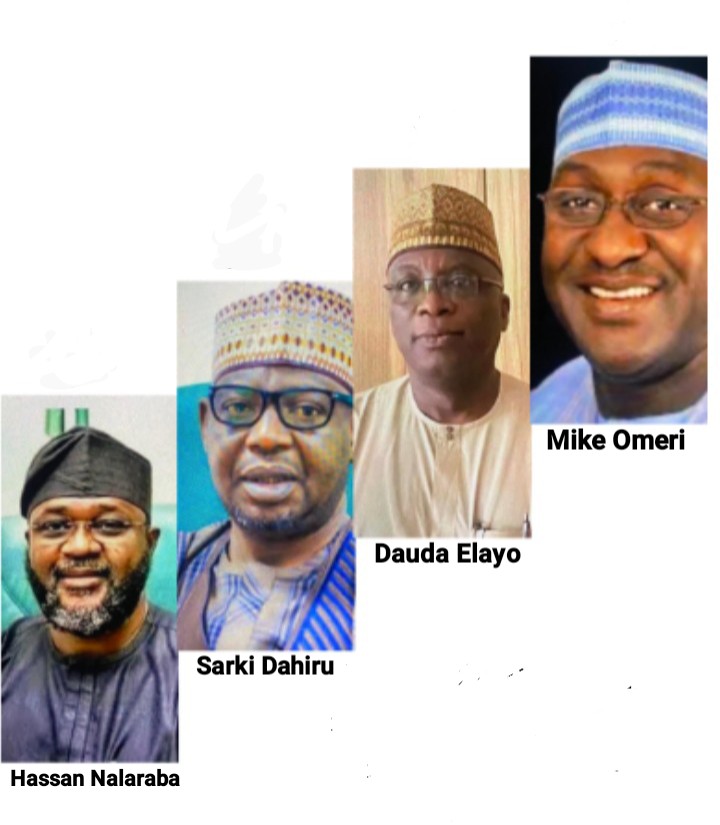
As the Independent National Electoral Commission (INEC) activates the official political campaign countdown toward the 2027 general elections, the contest for the Nasarawa South Senatorial district has ceased to be a mere battle of party logos. Instead, it has evolved into a fascinating, high-stakes clash of distinct political strategies, each offering the electorate a vastly different version of “effective representation.”
Nasarawa South is the intellectual and administrative engine of the state, encompassing five critical local government areas—Lafia, Obi, Doma, Keana, and Awe. Yet, as the gladiators line up, the debate is no longer about generic promises. It is a fundamental argument over the currency of political transaction. The race has boiled down to four distinct contenders, each representing a unique structural philosophy: institutional trophies, grassroots populism, technocratic humanitarianism, or national networks.
At the forefront of the legislative establishment stands Hon. Hassan Nalaraba, trading heavily on what can be described as the “legislative powerhouse” narrative. Nalaraba’s entire campaign framework is built on high-visibility, brick-and-mortar federal capital assets—most notably his instrumental role in facilitating the establishment of the Federal College of Education (Technical) in Keana. To his supporters, this is concrete proof of an operative who knows how to navigate the complex budgetary corridors of Abuja to extract permanent dividends for his constituency.
However, Nalaraba’s path is complicated by structural optics. Having recently pivoted from a highly visible gubernatorial aspiration to focus on the Red Chamber, his media team faces a clinical challenge: they must convince the electorates, particularly in the Alago heartlands of Doma that this senatorial run is a deliberate, primary objective rather than a strategic “Plan B.” Furthermore, he must navigate the complex fallout of earlier political endorsements within the ruling party to maintain his absolute credibility on the trail.
In direct ideological contrast to the pursuit of institutional monuments is Hon. Sarki Dahiru, popularly known as Mai Yamma. Representing the Lafia/Obi Federal Constituency, Dahiru is the ultimate third-party wildcard and machine-breaker. His historic third-term victory in the House of Representatives under the platform of the Social Democratic Party (SDP)—defeating both the APC and PDP machineries—is a masterclass in political resilience.
Dahiru’s strength lies in an unvarnished, stomach-infrastructure philosophy locally dubbed the “Mr. Chop” model. While elite commentators discuss macroeconomic theories, Dahiru focuses on immediate, gut-level constituent welfare—direct financial interventions, food security, and localized humanitarian aid alongside “silent” projects like health diagnostic machines in Kwandare and solar boreholes across 23 wards.
Yet, the senatorial mandate demands a broader canvas. The cross-examination for Dahiru is two-fold: Can a political model built on localized, small-scale giving scale up to capture the massive, highly competitive Alago-dominated terrains of Doma, Keana, and Awe? More critically, critics argue that after more than a decade in the green chamber, his scorecard lacks a singular, generation-defining legacy asset equivalent to a federal tertiary institution.
Injecting a philosophy of “Business Unusual” into the race is Engr. Ishak Dauda Elayo, running under the rapidly expanding banner of the African Democratic Congress (ADC). Elayo represents the rising demand for a clean break from legacy political actors. His campaign is anchored on structural philanthropy, youth digital empowerment, and a polished technocratic image designed to appeal to a disillusioned electorate tired of old political structures.
Elayo’s vulnerability, however, is the classic third-party paradox. While his humanitarian credentials have generated significant urban momentum and youth appeal, a senatorial race requires deep structural penetration.
Can a relatively fresh political vehicle successfully challenge or match the entrenched, multi-LGA polling unit machineries of the legacy parties across all five local governments? Elayo must prove that his widespread popularity can translate into hard, verifiable numbers at the ballot box on election day.
Finally, representing the elite national alternative is Dr. Mike Omeri, flying the flag of the Peoples Democratic Party (PDP). As a former Director-General of the National Orientation Agency (NOA) and former state Commissioner for Works, Omeri offers a highly sophisticated, “detribalized” profile. His supporters point to his deep administrative footprint in Abuja, crediting his tenure with facilitating federal employment for over 250 indigenes, as proof that he possesses the high-level network required to attract macroeconomic dividends that local politicians might completely miss.
But Omeri’s elite profile is a double-edged sword. Critics frequently question whether a candidate entrenched in high-level national administration can truly connect with the daily, gut-level struggles of a rural rice farmer in Awe or a peasant farmer in Doma. Furthermore, his structural vehicle is a major liability; with the PDP’s national and state leadership locked in persistent internal crises, Omeri must convince voters that his individual capacity can somehow outweigh the deep fragmentation of his party platform.
Ultimately, the battle for Nasarawa South is an intellectual crossroads. The electorate is being asked to choose between architectural monuments they cannot immediately eat, and immediate welfare handouts that leave them structurally poor. They must weigh the promises of a clean technocratic break against the allure of elite national connections.
Will the district choose Executive Leverage, Legislative Trophies, Grassroots Populism, or National Reach? The gladiators have drawn their lines in the sand, but one thing is clear: standard political rhetoric will not suffice. The stage is set for an unprecedented policy collision.
Chief Ibrahim Nasiru
A Public Affairs Analyst writes from Abuja, Abuja, Nigeria.
ALSO READ: "A Blueprint for Prosperity: How Amb. (Engr.) Omar Suleiman Will Transform Adamawa State"
NOTE:
Views expressed by contributors are strictly personal and not of The Spynews.

Continue Reading

Maritime5 hours ago
Cabotage Enforcement is My Priority: DG NIMASA

Education8 hours ago
Customs Renovates Ife Girls’ School, Pledges University Scholarships

Business14 hours ago
Tinubu Applauds Coca-Cola’s Planned $1b Investment

Politics15 hours ago
2027: Northern Muslim Women Declare Support for President Tinubu

News1 day ago
Dakuku Peterside: Weak Institutions Stall Nigeria’s Wealth, Prosperity

Maritime2 days ago
Inside Nigeria’s Sea Power: The Rise of NPA as a Maritime Powerhouse

Education2 days ago
Adebayo Williams At 75: A Missing Honour — By Femi Macaulay

Oil & Gas2 days ago
High Hopes as Dangote Launches ₦2.15 Trillion IPO

News2 days ago
2027: LP chieftain sues WAEC, UNN, NYSC over Obi’s credentials

Crime2 days ago
Tension in Osun as Masked Gunmen Kill Adeleke’s Ally ‘Emir’ at Peace Meeting

National2 days ago
Tribute to a Colossus: The Eternal Legacy of Alhaji Bamanga Tukur (1935–2026)

Maritime Safety2 days ago
US Praises Nigeria for Ending 12-Year Maritime Restrictions; Oyetola Credits President Tinubu

News5 months ago
Environmental sanitation resumes in Lagos tomorrow

General News1 week ago
Tribute to a Legal Icon and Master Administrator: Alhaji Yahaya Bukar-Gana

General News5 months ago
Panel recommends 60-month timeline on State Police inauguration

Customs5 months ago
Customs smashes smuggling ring at Tin-Can port, seizes illicit drugs worth ₦18.9b

Customs4 months ago
Customs nets ₦178b at PTML, Miko resumes office

Maritime4 months ago
NIMASA Calls on The Media to Help Drive Blue Economy Growth

Maritime3 months ago
NIMASA Partners Malta to Fast-Track Full Automation of Nigerian Ship Registry

Customs5 months ago
History as Customs CG Adeniyi bags First NIJ alumnus fellowship

Politics3 months ago
“A Blueprint for Prosperity: How Amb. (Engr.) Omar Suleiman Will Transform Adamawa State”

Customs3 months ago
Apapa Customs Intercepts ₦12.7b ‘Canadian Loud’, Expired Drugs in Lagos

Customs3 months ago
Misclassified Levies: Senate Clears Customs of ₦62.2bn Under-Remittance Claim

Customs3 months ago