
News
Supreme Court Rulings on 2026 Electoral Act Shatter 2027 Political Ambitions

By Lateepha Eniola, Assistant Editor
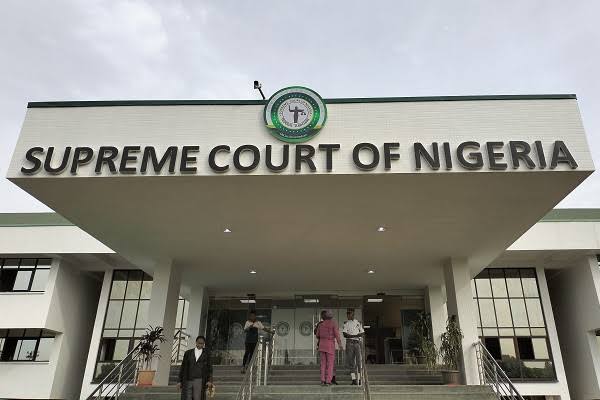
The Supreme Court ruling validating Sections 77(5), 77(6), 77(7), and 84(2) of the Electoral Act 2026, appears to jeopardise the aspirations of many politicians in the fast approaching 2027 general elections.
In the ruling, the Supreme Court restored the powers of the Independent National Electoral Commission (INEC) over party registers and nominations, ruling that these Electoral Act provisions do not violate the 1999 Constitution.
Specifically, anyone who participates in more than one party primary faces disqualification. Additionally, individuals whose names are missing from a party’s official register as of May 2026 are not considered party members and also risk disqualification.
Lawyers involved in the case are analysing the Supreme Court’s decision and its potential implications for their candidates, according to political observers speaking with Spynews.
Political observers have expressed concern over the political future of several key candidates, including:
Peter Obi, presidential candidate of the Nigerian Democratic Congress (NDC).
Saliu Mustapha and Kolo Jiya, the Peoples Democratic Party’s (PDP) senatorial candidates for Kwara Central and Kwara North, respectively.
Other candidates backed by the Bukola Saraki G15 alliance in Kwara State.
Candidates sponsored by the Nyesom Wike-led Rainbow Alliance in Rivers State
The political aspirations of the following candidates are also feared to be in jeopardy:
*Seyi Makinde – Presidential candidate, Allied Peoples Movement (APM)
*Dr. Iyabo Obasanjo – Senatorial candidate, PDP (Ogun Central).
*Ovie Omo-Agege – Senatorial candidate, NDC (Delta Central)
*Elisha Abbo – Governorship candidate, Labour Party (Adamawa).
*Aishatu Dahiru Ahmed Binani – Governorship candidate, NDC (Adamawa).
*Abdulrahman Haske – Governorship candidate, APM (Adamawa).
*Mohammed Adamu – Governorship candidate, Social Democratic Party (Nasarawa State).
A fresh PDP governorship primary has been scheduled for Tuesday, September 29, in Gombe State, following a court order nullifying the nomination of former Communication Minister Isa Ali Pantami. Pantami originally joined the PDP after losing his bid in the APC primary.
Obi
Peter Obi, the presidential candidate of Labour Party in the 2023 election, switched camps to the African Democratic Congress (ADC) in December last year only to move to the NDC five months later.
He officially joined his new party on May 3, 2026, along with his running mate, Dr. Rabiu Kwankwaso.
Obi picked the NDC presidential nomination and expression-of-interest forms on May 17 and was screened two days later by the party’s leadership.
On May 20, the NDC screening committee cleared Obi, expressly stating that he had satisfied the requirements of the party’s Constitution, the Electoral Act and the 1999 Constitution.
He was thus adopted as the party’s presidential candidate on May 29.
Responding yesterday to a question yesterday, an NDC source said: “if by ‘was Peter Obi’s name on the NDC register’ you mean whether he had formally become an NDC member before emerging as the party’s presidential candidate, the record says yes. He had received an NDC membership card 26 days before May 29.”
Mustapha, Jiya, other candidates of Saraki-G15 group
Senator Mustapha, Jiya and several other candidates sponsored by the alliance were, until recently, members of the APC in Kwara State.
They fell out with the APC governor of the state, AbdulRahman AbdulRazaq, following the party primaries.
Mustapha, having lost out in the governorship race, expected the governor to allow him a return ticket to the senate.
But he was denied the APC senatorial ticket also missed him, he left for the PDP with other aggrieved party members.
Gov Makinde
Oyo State Governor Seyi Makinde declared his presidential ambition on what he called APM/PDP platform on May 14.
And a major highlight of his declaration was the signing of a Memorandum of Understanding (MOU) between the APM and his faction of the PDP.
PDP chieftains, however, say there is no record of his resignation from the party.
Omo-Agege
Former Deputy Senate President Ovie Omo-Agege was, until May 22, a member of the APC.
He initially wanted to contest the gubernatorial ticket with Governor Sheriff Oborevwori who had defected from the PDP.
But having hit a wall in that adventure, he sought the senatorial ticket for Delta Central. That bid too failed, leading to his resignation from the APC and subsequent crossing to the NDC, which gave him a waiver to contend for the same seat on its platform.
Ex-IGP Adamu
Former Police Inspector General, Mohammed Abubakar Adamu, threw practically everything into the APC governorship race in Nasarawa State, only to lose to Senator Aliyu Wadada in the primary.
On May 25, Adamu resigned from the APC citing “recent developments within the party especially the conduct of the governorship primary election processes in Nasarawa State, have made it difficult for me to continue with my political activities under the platform of the party.”
On September 5, the Social Democratic Party (SDP) named him its governorship candidate following a substitution primary held in Lafia, the state capital.
The original candidate Musa Angba had withdrawn from the contest.
Pantami
Isah Pantami left the APC after failing to clinch the party’s governorship ticket in Gombe State.
He found home in PDP and got the ticket he wanted there.
However, last Tuesday, a Federal High Court sitting in Gombe nullified the governorship primary that produced Pantami and ordered a rerun within one month.
The state chapter of the party announced yesterday that it has Pantami, Khamisu Ahmed Mailantarki and Usman Aliyu Garry for a fresh governorship primary election scheduled for Tuesday.
Iyabo Obasanjo
Iyabo, daughter of former president Olusegun Obasanjo, lost out in the race for the APC governorship ticket in Ogun State.
On May 31, 2026, a few days after Senator Solomon Adeola emerged as the APC governorship candidate, Iyabo resigned her membership of the party.
By June 17, she returned to the PDP and immediately became its candidate for Ogun Central.
Elisha Abbo
Elisha Abbo, a former senator representing Adamawa North, was one of the several political heavyweights who dumped the ADC in Adamawa State following the bad blood generated by the party’s governorship primary.
By the end of May, he emerged as LP’s consensus flagbearer having been cleared by the national leadership of LP.
Aisha Binani
Like Abbo, Binani felt betrayed by the ADC in the conduct of its governorship primary.
She resigned from the party and pitched her tent with the NDC on May 1, 2026.
Binani was presented her party membership card on the day by Seriake Dickson, the party’s national leader, who welcomed her and announced her as the head of the NDC in Adamawa, pending internal democratic processes.
She subsequently emerged as the NDC governorship candidate.
Abdulrahman Haske
Abdulrahman Haske contested the APC governorship primary in Adamawa State but lost.
He was named APM’s governorship candidate only two weeks ago.
Rivers APC dismisses fears over Chinda’s candidature
The Rivers State chapter of the APC, yesterday, dismissed fears that the Supreme Court ruling could jeopardise the candidature of its governorship candidate, O.K. Chinda.
The party’s Publicity Secretary, Chibike Ikenga, said there was no cause for alarm, insisting that Chinda’s candidature remained intact.
The judgment sparked speculation in Rivers State, on Friday, with some claiming that Chinda’s emergence as the APC candidate could be affected because of questions surrounding the timing of his membership of the party.
The concerns followed Chinda’s public emergence as an APC member in May and his subsequent participation in the party’s governorship primary, which he won.
His resignation from the Peoples Democratic Party (PDP), his former party, was read by the Speaker of the House of Representatives, Tajudeen Abbas, during plenary.
However, indications emerged that Chinda’s formal resignation letter from the PDP was dated April 23, 2026.
The development has also drawn attention to the timeline for submission of party membership registers.
INEC had initially fixed April 21, 2026 as the deadline for political parties to submit their registers but later extended the deadline to May 10.
The commission said the extension remained consistent with the Electoral Act 2026, which requires political parties to submit their membership registers at least 21 days before their primaries.
Reacting to the controversy, Ikenga said the Supreme Court judgment did not invalidate Chinda’s candidacy but, rather, reinforced it.
He said: “The Supreme Court judgement affected our governorship candidate positively. Those claiming that his name was not in the register, where they the people, who submitted the register?”
Ikenga insisted that the party had no doubts about Chinda’s status as its candidate, urging APC supporters to remain focused on the election.
“Our governorship candidate remains OK Chinda. He will run and he will win,” he said.
He added: “People should continue to have faith; mobilise and reach out to voters and continue the process of inclusiveness bringing everybody together so that we can defeat our opponents squarely, creditably in a free, fair and credible election.”
From a lawyer/human rights activist’s perspective: Implications of the ruling
Reviewing the Supreme Court ruling yesterday, human rights activist, lawyer and former presidential adviser, Okoi Obono-Obla, described it as “arguably the most important pre-election judgment for 2027.”
His words: “On Thursday, September 24, 2026, a seven-member panel of the Supreme Court led by Justice Adamu Jauro allowed the appeal filed by the Independent National Electoral Commission in SC/CR/495/2026 and set aside the judgment of the Court of Appeal, Abuja Division delivered on July 16, 2026.
“The origin was Suit No. FHC/ABJ/509/2026 filed by Zenith Labour Party (ZLP) challenging the constitutionality of Sections 77(5), 77(6), 77(7) and 84(2) of the Electoral Act 2026.
“Justice Mohammed Umar of the Federal High Court Abuja had on May 5, 2026 dismissed ZLP’s suit for lacking merit. On appeal in CA/ABJ/CV/750/2026, the Court of Appeal partly allowed ZLP’s appeal and struck down the provisions, holding they conflicted with Sections 221 and 222 of the 1999 Constitution governing political parties.
“INEC, represented by Dr Alex Izinyon, SAN, appealed to the Supreme Court. On September 24, the apex court reversed the Court of Appeal, restored the Federal High Court judgment, held that the provisions are not inconsistent with the Constitution, and awarded N2 million costs against ZLP.
What the restored provisions say
“The judgment restores the full statutory regime for membership registers and nomination:
“Section 77(5): Only persons whose names appear in the membership register submitted to INEC not later than 21 days before the date fixed for a primary, congress or convention are eligible to participate in the exercise.
“Section 77(6): Prohibits a political party from using a membership register other than the one submitted to INEC for its primaries, congresses and conventions.
“Section 77(7): A political party that fails to submit its membership register within the prescribed period is not eligible to field a candidate for the election.
“Section 84(2): The procedure for nominating candidates for elective offices shall be by direct primaries or consensus. This excludes indirect primaries.
Immediate Legal Implications
A. Finality and Constitutional Settlement
“The Supreme Court has settled the long-running debate on the relationship between party autonomy under Sections 221/222 of the Constitution and the National Assembly’s power to regulate elections under Section 228. The Court held that regulating membership registers and nomination methods is permissible electoral regulation, not an unconstitutional encroachment on internal party affairs. The Court of Appeal’s view that ordinary legislation cannot introduce disqualifying conditions has been rejected.
B. The Death of Indirect Primaries for 2027
“Section 84(2) as restored makes direct primaries and consensus the only lawful modes. Any party constitution or guideline providing for indirect delegate primaries is now void to that extent. The litigation had generated considerable debate because it went to the relationship between constitutional autonomy of parties and the National Assembly’s power to prescribe rules.


LAGOS: Tinubu’s Maritime Policy, Performance to Take Center Stage at NNMJ Unity Conference

Hamzat Unveils 100-Point ‘Lagos Promise’ Manifesto, Pledges Better Quality of Life for Residents

President Tinubu Arrives in Jeddah for Umrah and National Prayers

Nigeria Customs, US Team Up to Fast-Track Trade

Naira Conversion Eroded $350m CVFF Value, Omatseye Reveals

Enugu Partners with Humatrix in Landmark BPO Deal to Create 100,000 Jobs

Boosting Maritime: Fed Govt, Banks Urged to Tackle Shipping Funding Crisis

NPA to Audit Inland Dry Ports, Partners With ICNL to Boost Hinterland Trade

President Tinubu Leaves for Mecca Tomorrow; Expected Back Next Week

Dockworkers may Shut Down Ports next week Over Terminal Operator Delays

Fed Govt seeks private sector funding blueprint as 30 state assemblies approve State Police

Ahead of 2027 Evaluation, Customs Vows Zero Tolerance for Money Laundering

Man Arrested in Adamawa While Trying to Sell His Niece for ₦7m

Customs smashes smuggling ring at Tin-Can port, seizes illicit drugs worth ₦18.9b

Environmental sanitation resumes in Lagos tomorrow

Apapa Customs Smashes Smuggling Ring, Seizes Illicit Drugs Worth ₦26.57b

IN 3 YEARS: Oyetola Reshapes Nigeria’s Blue Economy, Revenues Surge to ₦1.83tr

Customs CG Adeniyi Displays Narcotics, Fake Drugs Worth ₦53.3b at Apapa

SINGLE-DAY RECORD: Apapa Customs Generates ₦28b in 24 Hours

High Hopes as Dangote Launches ₦2.15 Trillion IPO

Oyo/Osun Customs Intercepts Rifles, Contraband Worth ₦3.2b in Three Months

Seme Customs Seizes 3,300 Explosive Cartridges, Generates ₦19.84b in 7 Months

Customs Zone ‘A’ Speeds Up Cargo Clearance to Hit ₦8trn Revenue Goal
