
Business & Economy
Drive Business Growth with Priority Loans, Tinubu Tells Banks

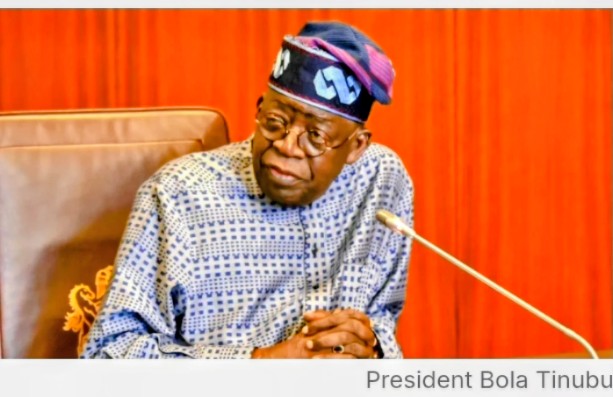
By Temitope Adebiyi, Correspondent
President Bola Ahmed Tinubu called on commercial banks to shift focus from government securities.
He encouraged greater lending to key productive sectors like infrastructure and enterprise.
President Tinubu who advocated for the shift, stated that banking recapitalisation and increased corporate lending would help transform recent economic stability into robust private-sector growth..
The President gave the charge at the 19th Annual Banking and Finance Conference of the Chartered Institute of Bankers of Nigeria (CIBN) in Abuja, yesterday.
He noted that attractive returns on government securities had for years made lending to businesses less attractive to banks, but improving fiscal conditions should gradually create more room for private-sector credit.
“So, from financing government, we need to move to financing growth,” Tinubu, who was represented by Minister of Finance and Coordinating Minister of the Economy, Taiwo Oyedele, said.
According to him, stronger fiscal discipline would reduce government borrowing pressure, while lower inflation should support lower interest rates, making capital more affordable for businesses and encouraging investment, production, jobs and higher incomes.
Tinubu said the recently completed bank recapitalisation must produce more than stronger balance sheets, stressing that the additional capital should translate into greater financing of Nigerian businesses and their expansion across Africa. JoinDiaspora Networks
“A bigger bank that does not finance a more productive economy is a sub-optimal outcome,” Tinubu said.
To encourage lending to productive sectors, he said the government was expanding guarantees, risk-sharing arrangements, blended finance and credit enhancements, with the National Credit Guarantee Company at the centre of the strategy.
According to him, the mechanism would reduce lending risks and attract multiples of private capital into productive investments rather than relying mainly on direct government funding.
Tinubu said government should increasingly measure its success by the amount of productive private capital it attracts rather than simply by how much it spends.
He also called for increased mobilisation of long-term capital for infrastructure, industry, housing and energy, saying Nigeria could not finance long-term development mainly with short-term funds. JoinDiaspora Networks
The president urged deeper capital markets and stronger pension, insurance and asset-management sectors to mobilise domestic savings and foreign capital for long-term investment.
The President said Nigeria must compete aggressively for international capital because investors were driven by risk-adjusted returns.
He said: “Capital is highly mobile. It is neither emotional nor patriotic; it goes where risk-adjusted returns are attractive and competitive”.
Tinubu said Nigeria was expected to return to the JPMorgan Bond Index soon, while the country’s capital market had delivered about 60 per cent year-to-date.
He said the developments reflected improving investor confidence and created an opportunity for Nigeria to attract more capital for productive investment.
Tinubu identified five priorities for a resilient financial system: growth facilitation, inclusion, technology, long-term capital and trust.
On inclusion, he said having a bank account was not enough, arguing that genuine inclusion meant enabling market women and young entrepreneurs to access affordable working capital based on viable cash flow rather than collateral they could not provide.
On technology, the president said artificial intelligence, open banking, digital identity and instant payments were transforming financial services but warned that digital expansion was also creating new vulnerabilities.
The case for Tinubu’s second term
“Cybersecurity is now financial stability infrastructure,” he said, calling for stronger data protection and fraud prevention.
Tinubu also urged the banks to help local businesses become African regional champions by financing exports and expansion through the African Continental Free Trade Area (AfCFTA), which provides access to a continental market of more than 1.4 billion people.
He said banks should help transform today’s micro-enterprises into tomorrow’s large companies and redirect capital from speculation to production.
CBN Governor Olayemi Cardoso, who was represented by the Deputy Governor, Economic Policy, Philip Ikeazor, said the country’s macroeconomic stability was gradually returning as monetary and fiscal authorities worked more closely together.
He said the collaboration between both sides was producing results, but acknowledged the question of when ordinary Nigerians would feel the benefits.
He said: “That is on its way, because of this same collaboration that I’m talking about”.
The CBN boss said the authorities were working towards bringing inflation permanently into single digits and were involving state governments in the process because subnational governments were part of the inflation challenge.
He also credited banks for accepting the burden associated with the Central Bank’s cash reserve requirement as part of the sacrifices made to restore stability.
According to him, the CBN had incurred substantial costs in managing liquidity while banks and fiscal authorities also faced the effects of tighter monetary conditions.
He said Nigeria’s economic buffers had been tested by external shocks, including the Iran conflict, but remained sufficient to help the country withstand the disruption.
The conflict, he noted, temporarily slowed the disinflation process, but recent data showed that the downward trend had resumed.
He also said fiscal initiatives such as the Single Window were expected to begin producing benefits, while state finance commissioners were being brought into closer cooperation with the Federal Government and CBN.
CIBN President, Dele Alabi, called for the establishment of scalable SME Hubs across the country to connect small businesses with infrastructure, skills, technology, markets and finance.
He said many MSMEs remained constrained by high operating costs, poor infrastructure, limited market access, low productivity and inadequate digital adoption.
The proposed hubs, he said, could reduce operating costs, improve the bankability of small businesses and create a stronger link between recapitalised banks and the real sector.
Alabi said the initiative was part of the Institute’s IMPACT Vision, introduced after he assumed office as the 24th President and Chairman of Council in May.
He said the vision was designed to move CIBN from identifying industry problems to developing practical solutions around professional standards, capacity building and responsible innovation.
Alabi also warned that artificial intelligence and fintech were creating both opportunities and risks for the financial system, including cyber threats, data governance concerns, market concentration, job displacement and systemic risks.


Cabotage Enforcement is My Priority: DG NIMASA

Customs Renovates Ife Girls’ School, Pledges University Scholarships

Tinubu Applauds Coca-Cola’s Planned $1b Investment

2027: Northern Muslim Women Declare Support for President Tinubu

Dakuku Peterside: Weak Institutions Stall Nigeria’s Wealth, Prosperity

Inside Nigeria’s Sea Power: The Rise of NPA as a Maritime Powerhouse

Adebayo Williams At 75: A Missing Honour — By Femi Macaulay

High Hopes as Dangote Launches ₦2.15 Trillion IPO

2027: LP chieftain sues WAEC, UNN, NYSC over Obi’s credentials

Tension in Osun as Masked Gunmen Kill Adeleke’s Ally ‘Emir’ at Peace Meeting

Tribute to a Colossus: The Eternal Legacy of Alhaji Bamanga Tukur (1935–2026)

US Praises Nigeria for Ending 12-Year Maritime Restrictions; Oyetola Credits President Tinubu

Environmental sanitation resumes in Lagos tomorrow

Tribute to a Legal Icon and Master Administrator: Alhaji Yahaya Bukar-Gana

Panel recommends 60-month timeline on State Police inauguration

Customs smashes smuggling ring at Tin-Can port, seizes illicit drugs worth ₦18.9b

Customs nets ₦178b at PTML, Miko resumes office

NIMASA Calls on The Media to Help Drive Blue Economy Growth

NIMASA Partners Malta to Fast-Track Full Automation of Nigerian Ship Registry

History as Customs CG Adeniyi bags First NIJ alumnus fellowship

“A Blueprint for Prosperity: How Amb. (Engr.) Omar Suleiman Will Transform Adamawa State”

Apapa Customs Intercepts ₦12.7b ‘Canadian Loud’, Expired Drugs in Lagos

Misclassified Levies: Senate Clears Customs of ₦62.2bn Under-Remittance Claim
