
Crime
God rejects corrupt Hajj and Jerusalem sponsorship, Sultan warns politicians

By Olabisi Akinpelu, Correspondent
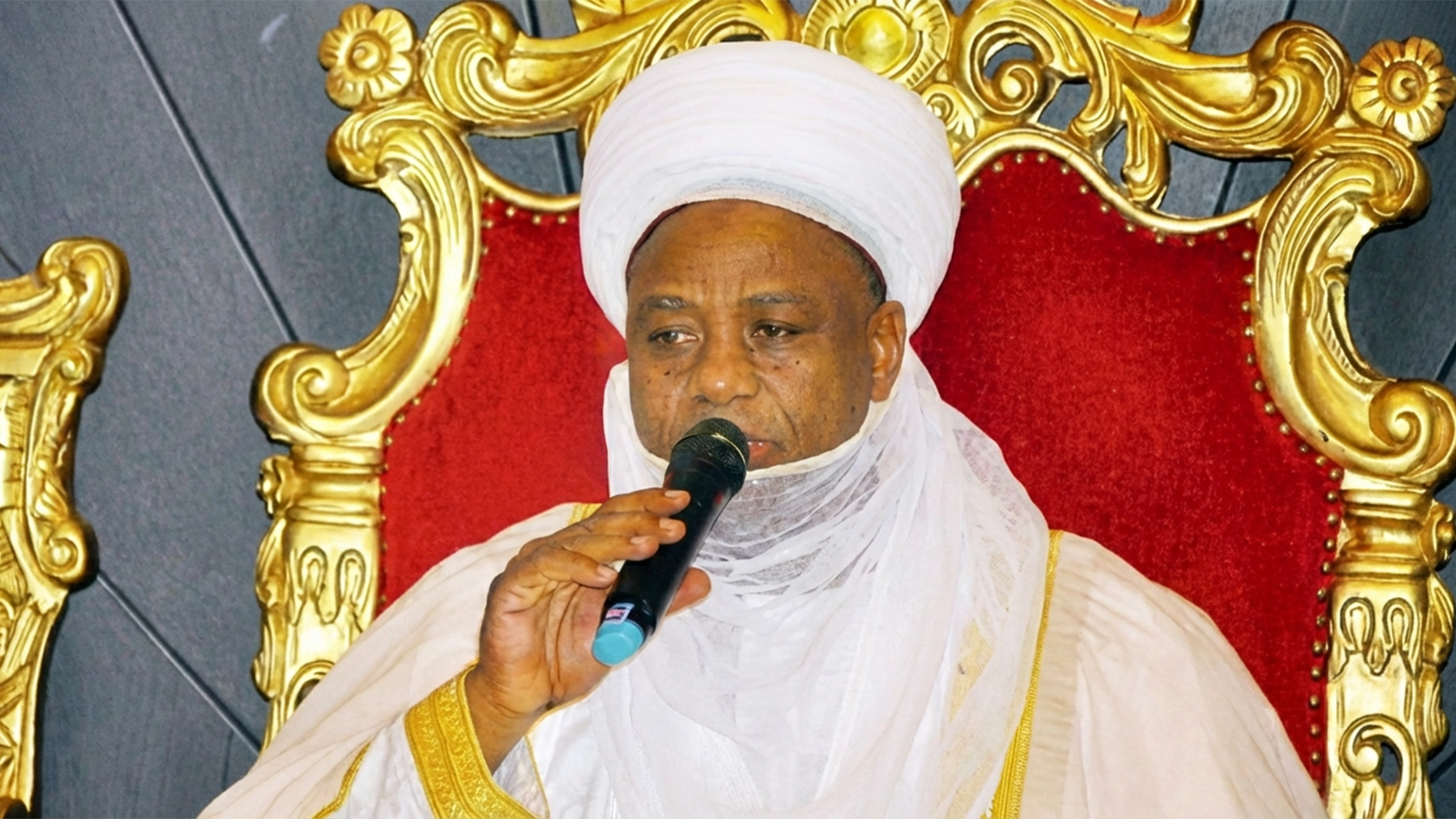
The Sultan of Sokoto, Alhaji Sa’ad Abubakar III, warned politicians against using stolen public funds to sponsor pilgrimages to Mecca and Jerusalem, stating that God rejects religious acts financed through corruption.
Speaking yesterday in Abuja, the eminent traditional and religious leader urged clerics to collaborate with anti-corruption agencies to curb systemic graft.
He made the call at the opening ceremony of the Nigeria Inter-Religious Council (NIREC) stakeholders’ meeting, held under the theme: “Shared Sacred Flourishing in Nigeria.
Addressing participants, Sultan Abubakar urged religious leaders to collaborate with anti-corruption agencies to curb systemic graft.
“We, as religious leaders, must fight corruption because God Almighty doesn’t like corruption.
“You cannot steal money and send people to Jerusalem or Mecca with corrupt funds and think God will accept your deeds. God is not corrupt; so, you cannot use corrupt money for Hajj or anything else,” he said.
The Sultan urged the Economic and Financial Crimes Commission (EFCC) to deal decisively with corrupt individuals, regardless of their political or religious affiliations. Politics
“Whoever is involved — our brothers, sisters, fathers, or friends — should face the law.
“When someone is facing the law, do not tell me he is the pastor of so-and-so church or the chief imam of so-and-so mosque. We do not want to hear that,” he said.
Sultan Abubakar also urged the EFCC to discharge its duties without political interference.
Highlighting the importance of national unity, the sultan described NIREC as a unique platform for fostering dialogue between Christians and Muslims.
He said such regular interactions were essential for peace, stability, and national development.
Sultan Abubakar urged religious leaders to prioritise genuine mutual understanding over mere tolerance.
“I keep telling people that I don’t want you to tolerate me, because tolerance means enduring something you have no choice about.
“But if you understand me, we can work together because we know who we are to each other,” he said.
The Sultan also cautioned clerics to mind their utterances on the pulpit, especially during election periods.
He advised them to pray for national leaders rather than use religious platforms to incite division or attack public officers.
Sultan Abubakar paid tribute to the outgoing Executive Secretary of NIREC, Prof. Cornelius Omonokhua, applauding his eight-year tenure for transforming the council into a vibrant national platform.
He urged participants to discuss national issues openly and avoid spreading rumours when they return to their communities.
The Chairman of the Economic and Financial Crimes Commission (EFCC), Olanipekun Olukoyede, also expressed concern over the high number of individuals bearing religious titles under investigation and prosecution for financial crimes.
Olukoyede said the commission’s case files contained numerous cases involving persons described as pastors, imams, and other religious leaders, with some already convicted and serving jail terms.
“I advocated for a review of the titles we give to men of God. Maybe, if it is possible for us to remove those titles – pastor and imam. Do you know why? I have my case files full of these titles,” he said.
According to him, EFCC’s case files contain instances of “pastor so-so-so” and “imam so-so-so” being indicted for financial crimes, as well as others who have been convicted and imprisoned.
“And some of them have been convicted, and they are in jail. And while in jail, they still refer to them as pastor and imam. So, it is something for us to really think about,” he said.
Olukoyede suggested that religious leaders should be judged by their conduct rather than the titles they carry.
The EFCC chairman said genuine men of God should be identified by their actions and commitment to doing what is right.
“People who carry the spirit of God, who do the right thing… because the spirit of God is by their fruits, not their appearance; not what we call ourselves. It’s by the fruits,” he said.
Olukoyede narrated an encounter involving a suspect who was brought to the commission for investigation.
The EFCC’s boss said the suspect, when allowed to meet him, introduced himself with several religious titles.
“‘I am Reverend Dr. Bishop…’ the suspect reportedly told him. I said: ‘Wait there; don’t bring that one here. Did you misappropriate money or not?’” he recounted.
According to him, the suspect allegedly misappropriated funds and was subsequently facing five charges.
Olukoyede warned religious leaders that their positions would not protect them from investigation or prosecution if they became involved in financial crimes.
“So, if you think you’re a Christian or you’re a pastor here, and you commit financial crime, I will be your enemy. I won’t be your friend,” Olukoyede said.
The anti-graft commission’s boss urged religious leaders to demonstrate the values they preach by maintaining integrity and accountability, stressing that religious status should not be used to evade the law.
In an overview of the Interfaith Anti-Corruption Manuals Project, Prof. Adedibu Ojerinde, described the manuals as a joint strategic initiative between the EFCC and Nigeria’s religious leadership to address the nation’s moral crisis.
Ojerinde is the Chairman of the Interfaith Anti-Corruption Advisory Committee (IAAC).
He said the project, an outcome of the 2007 National Interfaith Forum on Corruption, aims to mobilise the pulpit and the minbar to transform public morality through dedicated preaching manuals anchored in biblical and Qur’anic texts.
The IAAC chairman said the manuals, originally inaugurated in 2014 and re-inaugurated in January 2024 by President Bola Ahmed Tinubu, were expanded to address contemporary challenges, including youth, cybercrime and money-laundering vulnerabilities within religious institutions.
Ojerinde said the formal handover of the manuals to NIREC marked a shift from publication to practical execution.
He urged the integration of anti-corruption themes into Friday sermons and Sunday messages.


Hamzat Unveils 100-Point ‘Lagos Promise’ Manifesto, Pledges Better Quality of Life for Residents

President Tinubu Arrives in Jeddah for Umrah and National Prayers

Nigeria Customs, US Team Up to Fast-Track Trade

Naira Conversion Eroded $350m CVFF Value, Omatseye Reveals

Enugu Partners with Humatrix in Landmark BPO Deal to Create 100,000 Jobs

Boosting Maritime: Fed Govt, Banks Urged to Tackle Shipping Funding Crisis

NPA to Audit Inland Dry Ports, Partners With ICNL to Boost Hinterland Trade

President Tinubu Leaves for Mecca Tomorrow; Expected Back Next Week

Dockworkers may Shut Down Ports next week Over Terminal Operator Delays

Fed Govt seeks private sector funding blueprint as 30 state assemblies approve State Police

Ahead of 2027 Evaluation, Customs Vows Zero Tolerance for Money Laundering

JUSTIN: Panel Reveals 37 Miners Suffocated in NSCDC Custody

Man Arrested in Adamawa While Trying to Sell His Niece for ₦7m

Customs smashes smuggling ring at Tin-Can port, seizes illicit drugs worth ₦18.9b

Environmental sanitation resumes in Lagos tomorrow

Apapa Customs Smashes Smuggling Ring, Seizes Illicit Drugs Worth ₦26.57b

IN 3 YEARS: Oyetola Reshapes Nigeria’s Blue Economy, Revenues Surge to ₦1.83tr

Customs CG Adeniyi Displays Narcotics, Fake Drugs Worth ₦53.3b at Apapa

SINGLE-DAY RECORD: Apapa Customs Generates ₦28b in 24 Hours

High Hopes as Dangote Launches ₦2.15 Trillion IPO

Oyo/Osun Customs Intercepts Rifles, Contraband Worth ₦3.2b in Three Months

Seme Customs Seizes 3,300 Explosive Cartridges, Generates ₦19.84b in 7 Months

Customs Zone ‘A’ Speeds Up Cargo Clearance to Hit ₦8trn Revenue Goal
