
Customs
FARINTO: Govt Waives Zero Duty on Electric Vehicles, flays Rejecters of Green tax Policy

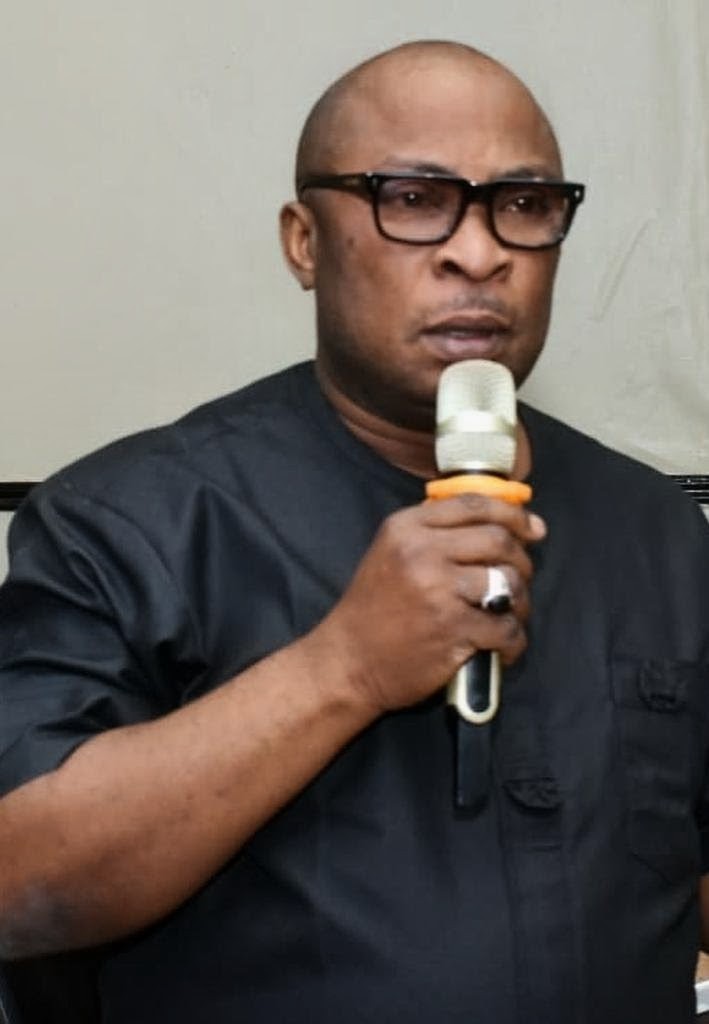
By Saheed Olatunji, Reporter
The Federal Government, through the Ministry of Finance, has approved zero duty on imported electric vehicles into the country, SpyNews has learnt.
This was disclosed by the former acting National President of the Association of Nigerian Licensed Customs Agents (ANLCA), Dr. Kayode Farinto.
Speaking on the implementation of the Green Tax policy imposed on imported vehicles by the Federal Government, the ANLCA chief said, “If you import electric vehicles and apply to the Federal Government through the Ministry of Finance, you receive approval for zero duty. I have personally facilitated this process for some importers on several occasions.”
As a leading advocate in the Customs and port sector, Farinto argued that the environmental levy should not be viewed in isolation, insisting that importers are better off under the new tariff regime due to the simultaneous reduction of the used-vehicle Import Adjustment Tax (IAT) from 15% to 5% by the Federal Government.

Dr. Farinto
The ANLCA chief also said the government has the responsibility to protect the nation’s emerging automobile assembly industry, arguing that authorities must strike a balance between encouraging local manufacturing and allowing vehicle imports.
According to him, while importers will now pay a Green Tax surcharge of between two and four percent depending on a vehicle’s engine capacity, the overall duty payable on imported used vehicles has reduced significantly.
“I’ve been doing advocacy in the last 15 years and we have never seen a government that is as listening as this one,” Farinto said.
“We asked for either the reduction or total abrogation of the 15 per cent levy on used vehicles. Government came out with a better version by reducing it to five per cent while introducing a two or four per cent Green Tax. That is a welcome development.”
He explained that contrary to public perception, the Green Tax is neither a new nor unusual policy, noting that many developed countries have long imposed environmental charges on high-emission vehicles.
Drawing from personal experience, Farinto recalled paying a substantial environmental charge while driving an older diesel-powered Mercedes-Benz in the United Kingdom during a training programme.
“I drove a Mercedes-Benz 190 to Heathrow Airport and had to pay about £30 just because the vehicle did not meet modern emission standards. Nigeria is actually overdue in implementing this policy,” he said.
Farinto stressed that the Green Tax is part of Nigeria’s effort to comply with international environmental commitments aimed at reducing carbon emissions and protecting the ozone layer.
According to him, the policy also complements existing government incentives designed to encourage the importation of cleaner vehicles.
He disclosed that importers bringing fully electric vehicles into Nigeria currently enjoy zero import duty upon approval by the Federal Government.
“If you import electric vehicles and apply to the Federal Government through the Ministry of Finance, you receive approval for zero duty. I have personally facilitated this process for some importers on several occasions,” he revealed.
He argued that while electric vehicles deserve incentives, owners of older fossil-fuel-powered vehicles should reasonably expect to pay environmental surcharges because of their carbon emissions.
Farinto further dismissed claims that the Green Tax would increase the overall cost of vehicle importation, insisting that the reduction in the Import Adjustment Tax more than offsets the new surcharge.
“We are using one stone to kill two birds. Import duties have reduced while Nigeria is also complying with international environmental reforms. Overall, vehicle import duty has come down,” he said.
Explaining how the surcharge would apply, Farinto noted that vehicles with engine capacities between 2.0 and 2.4 litres would attract a two per cent Green Tax, while larger luxury Sport Utility Vehicles (SUVs) above the prescribed threshold would pay four per cent.
He stated that owners of luxury vehicles should naturally bear higher environmental costs because of their larger engines and higher emissions.


Cabotage Enforcement is My Priority: DG NIMASA

Customs Renovates Ife Girls’ School, Pledges University Scholarships

Tinubu Applauds Coca-Cola’s Planned $1b Investment

2027: Northern Muslim Women Declare Support for President Tinubu

Dakuku Peterside: Weak Institutions Stall Nigeria’s Wealth, Prosperity

Inside Nigeria’s Sea Power: The Rise of NPA as a Maritime Powerhouse

Adebayo Williams At 75: A Missing Honour — By Femi Macaulay

High Hopes as Dangote Launches ₦2.15 Trillion IPO

2027: LP chieftain sues WAEC, UNN, NYSC over Obi’s credentials

Tension in Osun as Masked Gunmen Kill Adeleke’s Ally ‘Emir’ at Peace Meeting

Tribute to a Colossus: The Eternal Legacy of Alhaji Bamanga Tukur (1935–2026)

US Praises Nigeria for Ending 12-Year Maritime Restrictions; Oyetola Credits President Tinubu

Environmental sanitation resumes in Lagos tomorrow

Tribute to a Legal Icon and Master Administrator: Alhaji Yahaya Bukar-Gana

Panel recommends 60-month timeline on State Police inauguration

Customs smashes smuggling ring at Tin-Can port, seizes illicit drugs worth ₦18.9b

Customs nets ₦178b at PTML, Miko resumes office

NIMASA Calls on The Media to Help Drive Blue Economy Growth

NIMASA Partners Malta to Fast-Track Full Automation of Nigerian Ship Registry

History as Customs CG Adeniyi bags First NIJ alumnus fellowship

“A Blueprint for Prosperity: How Amb. (Engr.) Omar Suleiman Will Transform Adamawa State”

Apapa Customs Intercepts ₦12.7b ‘Canadian Loud’, Expired Drugs in Lagos

Misclassified Levies: Senate Clears Customs of ₦62.2bn Under-Remittance Claim
