
News
I never planned to become Commander-in-Chief, says Yakubu Gowon in memoir

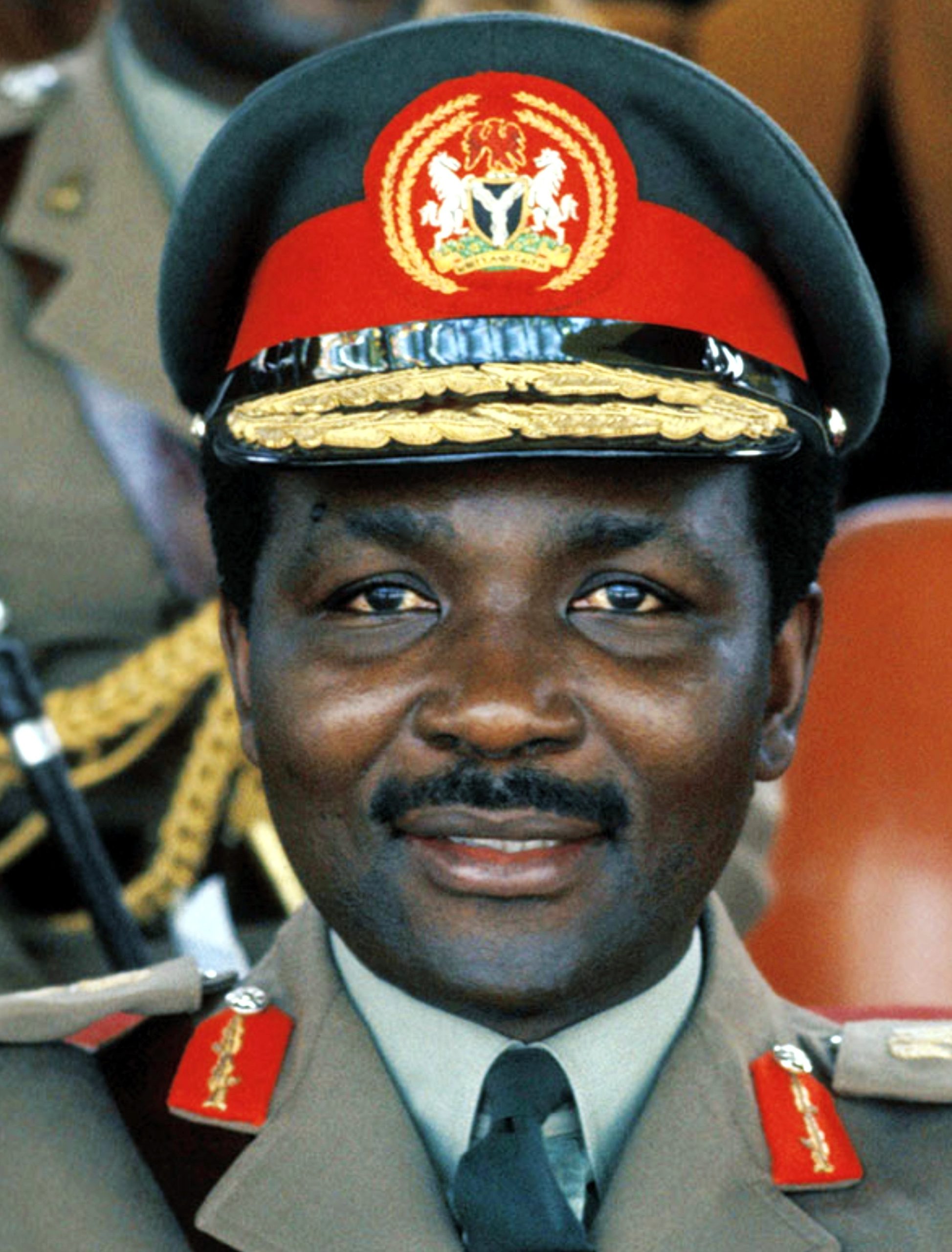
By Saheed Olatunji
The oldest living former military Head of State of the Federal Republic of Nigeria, General Yakubu Gowon, revealed yesterday, that he never harbored any plan to become Commander-in-Chief, talk less of leading the country.
He said that he was uplifted to power by junior military officers following the bloody counter-coup of July 1966.
The 92-year-old elder statesman made these known in his 859-page autobiography, “My Life of Duty and Allegiance.” The book was presented to the public yesterday at the Bola Ahmed Tinubu International Conference Centre in Abuja, drawing top government dignitaries, historians, and diplomatic corps.
Gowon, who became Nigeria’s youngest-ever leader at the age of 31, maintained that he was completely unaware of the bloody mutiny that resulted in the assassination of the then-Head of State, Major General Johnson Aguiyi-Ironsi, and his host, the Military Governor of Western Nigeria, Lt. Col. Adekunle Fajuyi.
According to the memoir, while the coup plotters succeeded in removing Aguiyi-Ironsi, they had no succession plan.
In a bid to maintain military hierarchy and avert a leadership vacuum, Gowon — then a Lieutenant Colonel — initially suggested that senior officers of Southern extraction be appointed to lead. However, his proposals were flatly rejected.
“Rather than consider my suggestions, the loud voices of the junior officers in the hall hit me with the force of a three-ton truck,” Gowon recounted in the book. “They wanted me to be their leader. They wanted me to assume the position of Head of State and Supreme Commander… they added that I was the only officer acceptable to them.”
The consequences of his refusal, Gowon noted, would have been catastrophic.
“Otherwise, they would keep up the momentum of the coup and execute it to its logical conclusion, which certainly would not be devoid of more bloodshed! I certainly did not want this. I instantly declined the offer.”
Gowon, who described himself at the time as “apolitical,” pleaded with the insurrectionists to let him focus instead on restoring discipline and loyalty within the fractured Armed Forces.
“I never aspired to and was unprepared for the new role that fate had now thrust on me,” he wrote. “Barely 24 hours earlier, I had been an independent arbiter seeking to put an explosive situation under control. Now, without warning, I had become the issue… Set before me was a semblance of what could be considered an alternative between the rock and the deep blue sea,” he wrote.
Realizing that both junior and senior officers viewed him as the only figure capable of preventing total anarchy, Gowon finally capitulated to their demands.
“It dawned on me that I could not hope to successfully resist the load of leadership responsibility that had been placed on my frail shoulders… When it was clear that I could not get out of the commitment to be the new Head of State, I was suddenly overwhelmed by indescribable fear—that the buck ends with me.”
Faced with the monumental task, the young officer turned to faith. “I requested everyone in the room with me to leave and I went down on my knees to pray to God for grace, mercy and guidance… beseeching God to grant me the wisdom of Solomon… I also prayed for the courage of David to fight every Goliath on my path. And what a relief I felt after that.”
The events of July 1966 altered the trajectory of Nigeria’s history. The “counter-coup,” led primarily by Northern officers, was a retaliatory strike following the January 15, 1966 coup, which had claimed the lives of key Northern political leaders, including Prime Minister Abubakar Tafawa Balewa and terminated Nigeria’s first republic.
When Gowon reluctantly assumed office on August 1, 1966, he inherited a country on the brink of collapse. His ascension did not pacify the Eastern Region, led by Lt. Col. Odumegwu Ojukwu, who refused to recognize Gowon’s authority. This political impasse ultimately degenerated into the brutal Nigeria’s 30-month Civil War (1967–1970).
Despite his initial reluctance to take power, Gowon went on to anchor the longest uninterrupted military administration in Nigerian history, ruling for nine consecutive years until he was overthrown in a bloodless coup led by General Murtala Muhammed in July 1975.
While Nigeria experienced a total of 29 years of military dictatorship across various regimes between 1966 and 1999, Gowon’s single 9-year tenure remains the longest continuous stretch by any individual military ruler in the nation’s history. His administration oversaw the post-war era of “Reconstruction, Rehabilitation, and Reconciliation,” as well as the 1970s oil boom, leaving a complex legacy that historians continue to debate today.


Cabotage Enforcement is My Priority: DG NIMASA

Customs Renovates Ife Girls’ School, Pledges University Scholarships

Tinubu Applauds Coca-Cola’s Planned $1b Investment

2027: Northern Muslim Women Declare Support for President Tinubu

Dakuku Peterside: Weak Institutions Stall Nigeria’s Wealth, Prosperity

Inside Nigeria’s Sea Power: The Rise of NPA as a Maritime Powerhouse

Adebayo Williams At 75: A Missing Honour — By Femi Macaulay

High Hopes as Dangote Launches ₦2.15 Trillion IPO

2027: LP chieftain sues WAEC, UNN, NYSC over Obi’s credentials

Tension in Osun as Masked Gunmen Kill Adeleke’s Ally ‘Emir’ at Peace Meeting

Tribute to a Colossus: The Eternal Legacy of Alhaji Bamanga Tukur (1935–2026)

US Praises Nigeria for Ending 12-Year Maritime Restrictions; Oyetola Credits President Tinubu

Environmental sanitation resumes in Lagos tomorrow

Tribute to a Legal Icon and Master Administrator: Alhaji Yahaya Bukar-Gana

Panel recommends 60-month timeline on State Police inauguration

Customs smashes smuggling ring at Tin-Can port, seizes illicit drugs worth ₦18.9b

Customs nets ₦178b at PTML, Miko resumes office

NIMASA Calls on The Media to Help Drive Blue Economy Growth

NIMASA Partners Malta to Fast-Track Full Automation of Nigerian Ship Registry

History as Customs CG Adeniyi bags First NIJ alumnus fellowship

“A Blueprint for Prosperity: How Amb. (Engr.) Omar Suleiman Will Transform Adamawa State”

Apapa Customs Intercepts ₦12.7b ‘Canadian Loud’, Expired Drugs in Lagos

Misclassified Levies: Senate Clears Customs of ₦62.2bn Under-Remittance Claim
