
Health & Fitness
NIGERIA: Kano Community Mourns as Diphtheria Kills Over 50 Children

By Temitope Adebiyi, Correspondent
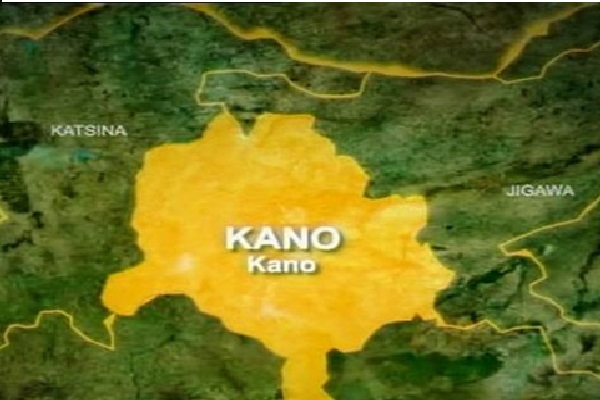
In Rurum and Kiru, a three-month diphtheria outbreak has quieted the local streets, claiming young lives and devastating families in Kano State.
Residents report that diphtheria—a vaccine-preventable disease—has claimed more than 50 children in Rurum, Kiru, and nearby areas. Most victims were under 10, and multiple families have lost more than one child.
Access to medical care is severely limited. While Rano General Hospital is only 20 kilometers from Rurum, dilapidated roads, high transit costs, and deep poverty prevent families from reaching it in time. Furthermore, those who do arrive are frequently referred out to major facilities in Kano city, such as Murtala Muhammad Specialist Hospital or Aminu Kano Teaching Hospital.
“A trip that should take 30 minutes takes two hours,” said Umar Sadi, a resident.
“By the time you borrow money for bike and drugs, the child is already weak. At Rano they will write referral. To Kano? That’s another transport, another cost. Many parents just go back home.”
For many families, the first point of care is not a hospital but a chemist, a patent medicine vendor or, in some cases, a traditional healer.
Health workers say these delays are contributing significantly to the deaths. According to them, most of the children who died had not been vaccinated and were first treated at home. Some were also taken to traditional healers who attempted to remove the thick membrane that forms in the throat during diphtheria infection, believing it would cure the illness.
Medical experts, however, warn that the practice can worsen the condition by spreading the bacteria deeper into the body and bloodstream.
Ibrahim Lawan, who recently lost his daughter, said another child in his family died a week earlier.
“I first saw fever and swelling,” he recalled. “The chemist gave us syrup. After two days her neck swelled bigger. She started vomiting and it smelled bad. She couldn’t eat. By the time we got to hospital and they put her on drip, she was gone,” he lamented.
The Village Head of Rurum, Ado Yusuf, said similar cases continue to occur.
“Just yesterday, a five-year-old girl died. They thought it was catarrh. The native healer tried. By the time they decided to go to hospital, it was late,” he said.
According to health experts, symptoms of diphtheria include fever, sore throat, a thick grey coating in the throat, swelling of the neck, difficulty breathing and a foul odour. Without prompt treatment with diphtheria antitoxin and antibiotics, the disease can become fatal within days.
The Director-General of the Kano State Centre for Disease Control, Prof. Muhammad Abbas, said official figures did not fully reflect the scale of the outbreak.
“We have 32 cases officially reported. Twenty-five in August alone. But the 50 cases the House mentioned tells us what we already know — people stay at home. They don’t come to facilities until it is bad,” he said.
According to him, some are treated entirely at home, while others present at health facilities only after visiting traditional healers.
“The bacteria would have already disseminated. At that stage, treatment becomes very difficult,” he explained.
Kano has experienced recurring diphtheria outbreaks since 2022, with thousands of suspected cases reported across the state. Although the diphtheria vaccine, administered as part of the DPT/Penta routine immunisation programme, is available free of charge at government health facilities, low vaccination coverage, vaccine hesitancy and poor access to healthcare in rural local government areas such as Rano and Kiru continue to leave many children vulnerable.
On Wednesday, the Kano State House of Assembly debated a motion of urgent public importance on the outbreak.
The member representing Rano Constituency, Ibrahim Muhammad, told Speaker Ismail Falgore and other lawmakers that Ridin and Sabuwar Kaura communities had been worst affected, with more than 50 children reportedly dead.
“Emergency drugs and health workers have been deployed, but more is needed — vaccines, ambulances, health education, and support for families to reach hospitals.”
The Assembly urged Governor Abba Yusuf to declare the outbreak a public health emergency and release intervention funds.
Back in Rurum, mothers gathered under a tree with infants strapped to their backs, expressing a common plea.
“Just vaccines,” one mother, Hajiya Lamin said, adding: “Just a clinic we can reach without borrowing money. Just someone to come and tell us the signs early enough so we don’t bury another child.”
Another mother, who declined to be named, held her surviving son close.
“Diphtheria is preventable. So why are our children still dying from it?,” she asked quietly.
For many residents, the question remains unanswered as communities continue to grapple with the outbreak and hope for improved access to vaccination, healthcare and timely treatment.
Against the backdrop of the tragedy in Kano, the Nigeria Centre for Disease Control and Prevention (NCDC) recently revealed that over 10,000 diphtheria cases have been confirmed in the country this year, even as 65,000 suspected cholera cases were recorded across 35 states and about 195 local government areas (LGAs), with Borno accounting for the highest number of cases and Enugu remaining the only state yet to report an outbreak.
Although the case-fatality rates for both diseases have declined compared with the same period last year, the Director-General of the NCDC, Dr Jide Idris, warned that the improvement should not lead to complacency, stressing that the underlying factors driving the outbreaks remain largely unresolved.
Speaking in Abuja on Friday, Idris confirmed that Nigeria has recorded over 10,000 diphtheria cases this year and noted that the death rate has dropped significantly compared to last year.
While the outbreak remains concentrated in Kano, Borno, and Bauchi, new cases have also emerged in Niger and Katsina states.


Cabotage Enforcement is My Priority: DG NIMASA

Customs Renovates Ife Girls’ School, Pledges University Scholarships

Tinubu Applauds Coca-Cola’s Planned $1b Investment

2027: Northern Muslim Women Declare Support for President Tinubu

Dakuku Peterside: Weak Institutions Stall Nigeria’s Wealth, Prosperity

Inside Nigeria’s Sea Power: The Rise of NPA as a Maritime Powerhouse

Adebayo Williams At 75: A Missing Honour — By Femi Macaulay

High Hopes as Dangote Launches ₦2.15 Trillion IPO

2027: LP chieftain sues WAEC, UNN, NYSC over Obi’s credentials

Tension in Osun as Masked Gunmen Kill Adeleke’s Ally ‘Emir’ at Peace Meeting

Tribute to a Colossus: The Eternal Legacy of Alhaji Bamanga Tukur (1935–2026)

US Praises Nigeria for Ending 12-Year Maritime Restrictions; Oyetola Credits President Tinubu

Environmental sanitation resumes in Lagos tomorrow

Tribute to a Legal Icon and Master Administrator: Alhaji Yahaya Bukar-Gana

Panel recommends 60-month timeline on State Police inauguration

Customs smashes smuggling ring at Tin-Can port, seizes illicit drugs worth ₦18.9b

Customs nets ₦178b at PTML, Miko resumes office

NIMASA Calls on The Media to Help Drive Blue Economy Growth

NIMASA Partners Malta to Fast-Track Full Automation of Nigerian Ship Registry

History as Customs CG Adeniyi bags First NIJ alumnus fellowship

“A Blueprint for Prosperity: How Amb. (Engr.) Omar Suleiman Will Transform Adamawa State”

Apapa Customs Intercepts ₦12.7b ‘Canadian Loud’, Expired Drugs in Lagos

Misclassified Levies: Senate Clears Customs of ₦62.2bn Under-Remittance Claim
