
Maritime
NPA Plans Dedicated Fishing Terminals to Boost Seafood Production

By Temitope Adebiyi, Correspondent
The Nigerian Ports Authority (NPA) aims to build specialised fishing ports to boost the blue economy and grow the seafood trade.
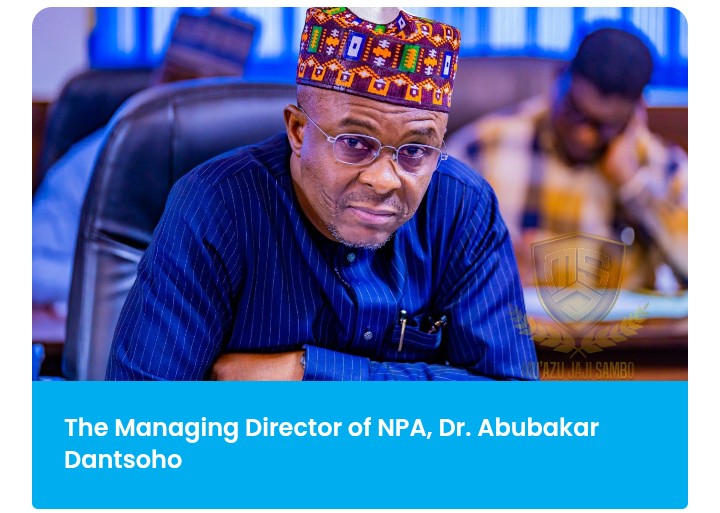
NPA Managing Director Dr. Abubakar Dantsoho announced this while presenting a paper, “The Role of Port Infrastructure and Maritime Logistics in Advancing Sustainable Fishing in Nigeria,” at the MARCON National Conference.
Speaking through his representative, Mr. Adegbite Adewumi, the NPA boss, Dr. Abubakar Dantsoho, emphasized that building a specialized fishing port is essential to expand the fishing industry and grow Nigeria’s blue economy.
Dantsoho noted that private investors will fund and build this port infrastructure using a Public-Private Partnership (PPP) model.
The NPA confirmed that active measures are already in place to provide a smooth, reliable environment for handling fish and other perishable cargo.
.
According to him, Kirikiri Lighter Terminal (KLT) has been made a dedicated fish terminal, with cold-room facilities for storage, while a dedicated export processing terminal and efficient hinterland connectivity are also part of the infrastructure.
He affirmed that the major container terminals also have reefer facilities for the storage of perishable cargo, while ongoing port modernisation efforts are aimed at revamping port infrastructure.
The NPA chief also outlined key infrastructure required for fishing ports, including breakwaters, quays and wharves, slipways and shipyards, navigation channels, landing and unloading areas, ice plants and cold storage facilities, processing plants, as well as road and logistics networks.
He added that fishing ports require marine structures, handling facilities, and logistics support to ensure safe vessel operations and the preservation of seafood.
Dantsoho also addressed port operations, noting that 24-hour vessel berthing operations as well as cargo handling and delivery were already operational at the western ports.
Speaking earlier, the President of MARCON, Ismail Aniemu, urged state governments to invest deliberately in the fisheries sector and harness their marine resources to create jobs, strengthen food security and generate revenue.
He said Nigeria could no longer afford to have vast marine resources without adequately participating in the economic activities generated from them, stressing that fishing should occupy a stronger position in the country’s blue-economy agenda.
Nigeria’s marine endowment, he said, extends beyond fish to include octopus, crabs, shrimps, crayfish and other resources across the fisheries value chain.
Aniemu attributed the limited attention given to fisheries partly to Nigeria’s long-standing dependence on oil and gas, arguing that the country must begin to recognise fishing as an important source of economic diversification.
He said the sector had significant potential for wealth and job creation but questioned whether Nigeria was adequately participating in the value chain or managing its marine resources sustainably.


Hamzat Unveils 100-Point ‘Lagos Promise’ Manifesto, Pledges Better Quality of Life for Residents

President Tinubu Arrives in Jeddah for Umrah and National Prayers

Nigeria Customs, US Team Up to Fast-Track Trade

Naira Conversion Eroded $350m CVFF Value, Omatseye Reveals

Enugu Partners with Humatrix in Landmark BPO Deal to Create 100,000 Jobs

Boosting Maritime: Fed Govt, Banks Urged to Tackle Shipping Funding Crisis

NPA to Audit Inland Dry Ports, Partners With ICNL to Boost Hinterland Trade

President Tinubu Leaves for Mecca Tomorrow; Expected Back Next Week

Dockworkers may Shut Down Ports next week Over Terminal Operator Delays

Fed Govt seeks private sector funding blueprint as 30 state assemblies approve State Police

Ahead of 2027 Evaluation, Customs Vows Zero Tolerance for Money Laundering

JUSTIN: Panel Reveals 37 Miners Suffocated in NSCDC Custody

Man Arrested in Adamawa While Trying to Sell His Niece for ₦7m

Customs smashes smuggling ring at Tin-Can port, seizes illicit drugs worth ₦18.9b

Environmental sanitation resumes in Lagos tomorrow

Apapa Customs Smashes Smuggling Ring, Seizes Illicit Drugs Worth ₦26.57b

IN 3 YEARS: Oyetola Reshapes Nigeria’s Blue Economy, Revenues Surge to ₦1.83tr

Customs CG Adeniyi Displays Narcotics, Fake Drugs Worth ₦53.3b at Apapa

SINGLE-DAY RECORD: Apapa Customs Generates ₦28b in 24 Hours

High Hopes as Dangote Launches ₦2.15 Trillion IPO

Oyo/Osun Customs Intercepts Rifles, Contraband Worth ₦3.2b in Three Months

Seme Customs Seizes 3,300 Explosive Cartridges, Generates ₦19.84b in 7 Months

Customs Zone ‘A’ Speeds Up Cargo Clearance to Hit ₦8trn Revenue Goal
