
Culture
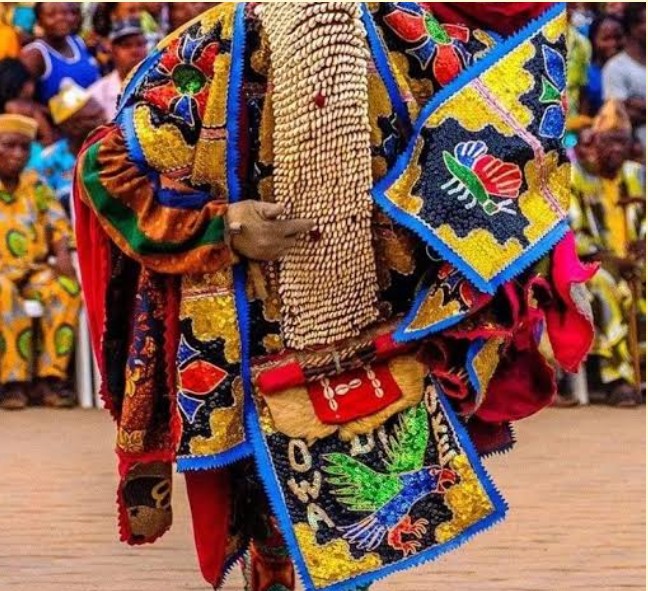
Olóòlù Masquerade: Of Delicate Balance Between Tradition and Modernity

By Tola Osunnuga
The controversy surrounding Wasilat and the Olóòlù masquerade in Ibadan has once again brought to the fore an enduring question confronting not only Yorùbá society but many multicultural societies across the world: How do we reconcile ancient traditions with the demands of modern constitutional democracy?
Predictably, opinions have been sharply divided. Some view the incident solely through the lens of fundamental human rights and gender equality, while others see it as an affront to a revered cultural institution. Yet, reducing the issue to a simple contest between “rights” and “tradition” misses the complexity of the matter. Every society is built upon a unique foundation of customs, traditions, beliefs and social norms. These are the invisible threads that bind communities together and distinguish one people from another. Every culture has its dos and don’ts—practices that outsiders may neither fully understand nor appreciate, but which are nonetheless integral to the identity of those who observe them.
Among the Yorùbá, masquerade traditions are more than colourful festivals. They are enduring cultural institutions that embody history, ancestry and communal identity. Within this tradition, certain masquerades are regarded as sacred and are governed by customs that have survived generations. Olóòlù, one of Ibadan’s most revered masquerades, belongs to this category. One of the longstanding customs associated with it is that women are traditionally not expected to behold the masquerade during designated rituals or processions. One need not subscribe to the spiritual significance of the tradition to acknowledge its cultural importance. Respecting a people’s culture is not synonymous with endorsing every belief that underpins it. A plural society requires exactly that kind of distinction.
Modern Nigeria is equally founded on constitutional guarantees of freedom of movement, freedom of religion, equality before the law and human dignity. These rights are neither optional nor negotiable. They are the pillars of democratic governance. But rights, important as they are, do not exist in a vacuum. They flourish best where there is also mutual respect, civility and accommodation. There is wisdom in the timeless injunction to “render unto Caesar the things that are Caesar’s, and unto God the things that are God’s.” The lesson extends beyond taxation. It reminds us that not every act of compliance amounts to an abandonment of personal conviction. Every day, we comply with social expectations that do not offend our conscience. We remove our shoes before entering certain homes or places of worship, not because we have adopted another person’s religion, but because courtesy demands it. We stand in silence when occasions demand it, we obey courtroom procedures, and we observe airport security regulations. None of these diminish our personal freedoms. They simply acknowledge that society functions best when individuals respect legitimate rules that govern shared spaces. Respect for other people’s traditions is one of the marks of a well-brought-up person. NigerianBusiness Coverage
Read Also: National Policing Bill gets seven-week action plan
The same principle can apply to cultural practices such as the Olóòlù procession. If a temporary restriction or a request to avoid a particular route during a sacred procession does not compel anyone to worship, renounce their faith, or violate their conscience, complying with such an arrangement should ordinarily be viewed as an act of respect rather than religious submission. Respecting a cultural protocol is not the same as embracing its theology. Of course, this argument carries an equally important obligation for custodians of tradition. Respect cannot be demanded through coercion or violence. Traditional institutions must recognise that they operate within a constitutional democracy governed by the rule of law. Cultural preservation should never become a licence for intimidation, assault or arbitrary restrictions on citizens. Where customs require accommodation from the public, there should be adequate public notice, dialogue and peaceful engagement. The burden of coexistence therefore rests on everyone.
Related News
Those who cherish tradition must accept that constitutional rights are real and deserving of protection. Those who champion modern rights must also recognise that cultural heritage deserves respect and should not be dismissed simply because it differs from contemporary sensibilities.
The Wasilat and Olóòlù incident should therefore serve as an opportunity for reflection rather than division. It invites us to ask not who won or who lost, but how a diverse society can better accommodate competing interests without sacrificing either its cultural soul or its constitutional values.
•Professor Tola Osunnuga writes from Ago-Iwoye, Ogun State.


Cabotage Enforcement is My Priority: DG NIMASA

Customs Renovates Ife Girls’ School, Pledges University Scholarships

Tinubu Applauds Coca-Cola’s Planned $1b Investment

2027: Northern Muslim Women Declare Support for President Tinubu

Dakuku Peterside: Weak Institutions Stall Nigeria’s Wealth, Prosperity

Inside Nigeria’s Sea Power: The Rise of NPA as a Maritime Powerhouse

Adebayo Williams At 75: A Missing Honour — By Femi Macaulay

High Hopes as Dangote Launches ₦2.15 Trillion IPO

2027: LP chieftain sues WAEC, UNN, NYSC over Obi’s credentials

Tension in Osun as Masked Gunmen Kill Adeleke’s Ally ‘Emir’ at Peace Meeting

Tribute to a Colossus: The Eternal Legacy of Alhaji Bamanga Tukur (1935–2026)

US Praises Nigeria for Ending 12-Year Maritime Restrictions; Oyetola Credits President Tinubu

Environmental sanitation resumes in Lagos tomorrow

Tribute to a Legal Icon and Master Administrator: Alhaji Yahaya Bukar-Gana

Panel recommends 60-month timeline on State Police inauguration

Customs smashes smuggling ring at Tin-Can port, seizes illicit drugs worth ₦18.9b

Customs nets ₦178b at PTML, Miko resumes office

NIMASA Calls on The Media to Help Drive Blue Economy Growth

NIMASA Partners Malta to Fast-Track Full Automation of Nigerian Ship Registry

History as Customs CG Adeniyi bags First NIJ alumnus fellowship

“A Blueprint for Prosperity: How Amb. (Engr.) Omar Suleiman Will Transform Adamawa State”

Apapa Customs Intercepts ₦12.7b ‘Canadian Loud’, Expired Drugs in Lagos

Misclassified Levies: Senate Clears Customs of ₦62.2bn Under-Remittance Claim
