
Road
Royal Luxury vs. Government Failure: The Cybertruck Debate

By Ibrahim Nasiru
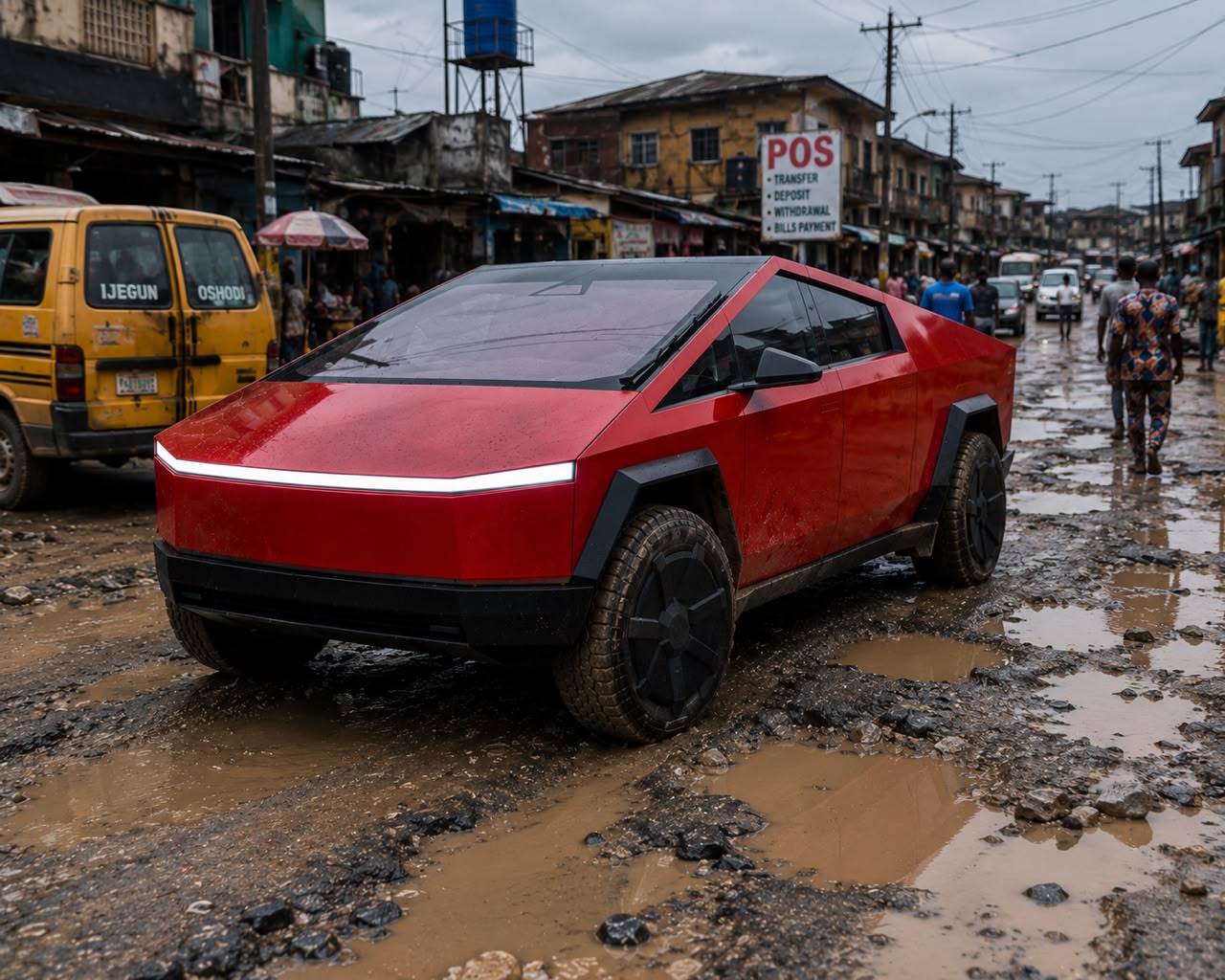
A viral image recently ignited a storm across Nigerian social media networks, capturing a futuristic Tesla Cybertruck navigating the uneven, unpaved local roads of Nasarawa Eggon. The vehicle belongs to the paramount ruler of the Eggon nation, the Aren Eggon, HRH Justice Ahmed Ubangari Alaku.
For many casual observers, the scene became an instant caricature of Nigerian contradictions. Commentators quickly rushed to the internet to bemoan how a traditional ruler could flaunt futuristic private luxury in a community heavily burdened by poverty and infrastructural abandonment.
However, this knee-jerk outrage represents a lazy, deeply flawed form of public analysis that completely misdiagnoses the structural relationship between traditional institutions and modern state governance in Nigeria.
To look at a broken rural road and blame the local monarch’s garage is to display a profound ignorance of how the Nigerian federation is legally and financially architected.
Traditional rulers are the custodians of cultural heritage, communal morality, and local dispute resolution; they are not commissioners for works, local government chairmen, or state governors.
The Aren Eggon is a highly distinguished jurist who spent decades climbing the ladder of public service, ultimately retiring as the Chief Judge of Nasarawa State long before ascending the ancestral throne. To police how a retired top-tier judicial officer spends his private life or career earnings is a massive misdirection of civic frustration.
A monarch does not command an executive budget, collect monthly federal allocations, or award civil engineering contracts.
The real conversation must shift away from royal palace garages and focus squarely on the systemic failure of elected state actors. The presence of a multi-million naira private asset navigating a nineteenth-century dirt track is the definitive portrait of a failed local government administration.
Over the years, the financial autonomy of local government areas across Nigeria has been systematically crippled by state executives, leaving rural communities entirely decoupled from modern infrastructure development.
While state houses of assembly, local government secretariats, and federal ministries receive billions of naira in budgetary allocations meant for rural paving, drainage networks, and economic empowerment, the money routinely vanishes into administrative overheads or political patronage loops.
By directing public anger at traditional stools every time structural decay becomes visible, citizens unwittingly grant a free pass to the elected politicians who actually collect their taxes.
Traditional institutions are frequently weaponized by the state as convenient shock absorbers to manage grassroots anger, yet they are left with zero constitutional powers to fix the collapsing schools or the broken healthcare centers around them.
If we truly want our rural surroundings to match the technological future, the public must learn to look past emotional distractions and direct their accountability demands exactly where the public funds go.
The Cybertruck on a dirt road is not a symbol of royal insensitivity; it is an indictment of a political class that has consistently failed to convert public revenue into enduring public infrastructure.
Chief Ibrahim Nasiru
A Public Affairs Analyst writes from Abuja, Nigeria.
NOTE:
Views expressed by contributors are strictly personal and not of The Spynews


Cabotage Enforcement is My Priority: DG NIMASA

Customs Renovates Ife Girls’ School, Pledges University Scholarships

Tinubu Applauds Coca-Cola’s Planned $1b Investment

2027: Northern Muslim Women Declare Support for President Tinubu

Dakuku Peterside: Weak Institutions Stall Nigeria’s Wealth, Prosperity

Inside Nigeria’s Sea Power: The Rise of NPA as a Maritime Powerhouse

Adebayo Williams At 75: A Missing Honour — By Femi Macaulay

High Hopes as Dangote Launches ₦2.15 Trillion IPO

2027: LP chieftain sues WAEC, UNN, NYSC over Obi’s credentials

Tension in Osun as Masked Gunmen Kill Adeleke’s Ally ‘Emir’ at Peace Meeting

Tribute to a Colossus: The Eternal Legacy of Alhaji Bamanga Tukur (1935–2026)

US Praises Nigeria for Ending 12-Year Maritime Restrictions; Oyetola Credits President Tinubu

Environmental sanitation resumes in Lagos tomorrow

Tribute to a Legal Icon and Master Administrator: Alhaji Yahaya Bukar-Gana

Panel recommends 60-month timeline on State Police inauguration

Customs smashes smuggling ring at Tin-Can port, seizes illicit drugs worth ₦18.9b

Customs nets ₦178b at PTML, Miko resumes office

NIMASA Calls on The Media to Help Drive Blue Economy Growth

NIMASA Partners Malta to Fast-Track Full Automation of Nigerian Ship Registry

History as Customs CG Adeniyi bags First NIJ alumnus fellowship

“A Blueprint for Prosperity: How Amb. (Engr.) Omar Suleiman Will Transform Adamawa State”

Apapa Customs Intercepts ₦12.7b ‘Canadian Loud’, Expired Drugs in Lagos

Misclassified Levies: Senate Clears Customs of ₦62.2bn Under-Remittance Claim
