
Politics
The House and the Horizon: Factionalism and Structural Fragility of Nasarawa’s Opposition

By Ibrahim Nasiru
The African Democratic Congress (ADC) in Nasarawa State is currently constructing a classic political paradox. Having successfully positioned itself as a formidable alternative coalition ahead of the 2027 gubernatorial race, the party is already threatening to dismantle its own foundation through premature internal warfare.
The recent public exchange of fiery communiques between its most prominent camps is a definitive warning sign of structural fragility.
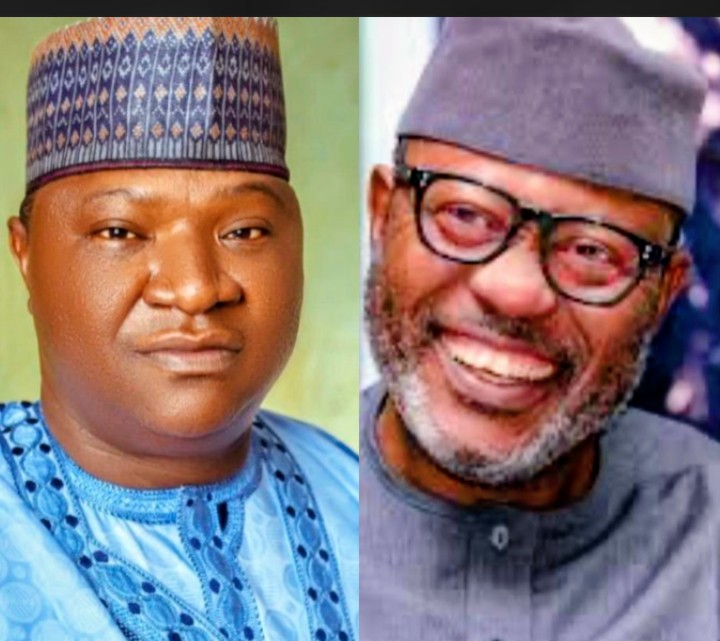
On one side of the ring stands Hon. Jibril Sabo Keana (JSK), Director-General of the Angbazo Campaign Organization, issuing a strategic narrative titled “A Call to Common Purpose”. On the immediate counter-offensive is Alhaji Muhammad Lamino Shittu (Shettiman Shabu), representing the Barrister Mohammed H. Abdullahi (MHA) 2027 Campaign Council, firing back with a deeply personal “Et Tu!…” broadside.
This public friction reveals a dangerous institutional reality. It shows that while the opposition has successfully attracted elite political heavyweights, it has failed to build an elite internal conflict-resolution mechanism.
The core of the problem is a severe clash of strategic timelines. Maj. Gen. Nuhu Angbazo’s camp is naturally eager to consolidate its position following his primary victory, trying to project a unified party front. Meanwhile, the MHA camp—anchored by Barr. Mohammed H. Abdullahi’s extensive administrative pedigree—is fiercely protecting its political capital against perceived marginalization or forced compliance.
When the leadership of an emerging opposition party resorts to trading open letters, press statements, and emotional accusations, it signals to the electorates that the party is more interested in dividing future power than fixing current governance gaps.
Voters do not cast ballots for a house divided against itself. Nasarawa State is currently navigating complex socioeconomic realities, infrastructure deficits, and security pressures. If the ADC wants to be taken seriously as an alternative to the ruling All Progressives Congress (APC), its leaders must realize that their real opponent is outside their walls, not sitting across their own secretariat table.
Trading blames via media councils is a lazy strategy that only serves to delight rival political parties. Genuine political supremacy is built on compromises, backroom diplomacy, and strict institutional discipline—not on dramatic public press releases.
The leaders of both factions must urgently step back from the media trenches. General Angbazo’s team must realize that a candidate cannot win a general election using only his primary victory delegates. Similarly, Barrister Abdullahi’s council must understand that prolonged internal resistance will only bleed the party’s collective strength, leaving it exposed before the battle even begins.
The political game in Nasarawa has completely changed, and the window for internal healing is closing fast. If the ADC fails to convert this internal friction into a genuine, iron-clad reconciliation, its promising 2027 momentum will simply evaporate into another unfulfilled political ambition.
The choice is entirely up to them: build a unified house capable of winning, or keep fighting until there is nothing left to inherit.
Chief Ibrahim Nasiru
A Public Affairs Analyst writes from Abuja, Nigeria.
NOTE
Views expressed by contributors are strictly personal and not of the Spynews


Cabotage Enforcement is My Priority: DG NIMASA

Customs Renovates Ife Girls’ School, Pledges University Scholarships

Tinubu Applauds Coca-Cola’s Planned $1b Investment

2027: Northern Muslim Women Declare Support for President Tinubu

Dakuku Peterside: Weak Institutions Stall Nigeria’s Wealth, Prosperity

Inside Nigeria’s Sea Power: The Rise of NPA as a Maritime Powerhouse

Adebayo Williams At 75: A Missing Honour — By Femi Macaulay

High Hopes as Dangote Launches ₦2.15 Trillion IPO

2027: LP chieftain sues WAEC, UNN, NYSC over Obi’s credentials

Tension in Osun as Masked Gunmen Kill Adeleke’s Ally ‘Emir’ at Peace Meeting

Tribute to a Colossus: The Eternal Legacy of Alhaji Bamanga Tukur (1935–2026)

US Praises Nigeria for Ending 12-Year Maritime Restrictions; Oyetola Credits President Tinubu

Environmental sanitation resumes in Lagos tomorrow

Tribute to a Legal Icon and Master Administrator: Alhaji Yahaya Bukar-Gana

Panel recommends 60-month timeline on State Police inauguration

Customs smashes smuggling ring at Tin-Can port, seizes illicit drugs worth ₦18.9b

Customs nets ₦178b at PTML, Miko resumes office

NIMASA Calls on The Media to Help Drive Blue Economy Growth

NIMASA Partners Malta to Fast-Track Full Automation of Nigerian Ship Registry

History as Customs CG Adeniyi bags First NIJ alumnus fellowship

“A Blueprint for Prosperity: How Amb. (Engr.) Omar Suleiman Will Transform Adamawa State”

Apapa Customs Intercepts ₦12.7b ‘Canadian Loud’, Expired Drugs in Lagos

Misclassified Levies: Senate Clears Customs of ₦62.2bn Under-Remittance Claim
