
Economy
Nigeria’s net reserves hit $34.8bn, signaling stronger external position

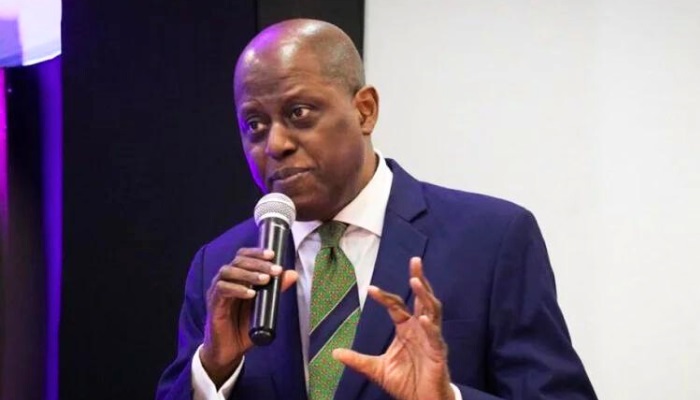
Nigeria’s net foreign exchange reserves surged to $34.80 billion by the end of 2025, reflecting a significant boost in the country’s external liquidity, the Central Bank of Nigeria Governor, Olayemi Cardoso, has disclosed.
In a statement released Monday, the CBN noted that the net reserves climbed from $23.11 billion at the end of 2024 to $34.80 billion in 2025, representing an $11.69 billion increase within a single year. This recovery is even more striking when compared with the $3.99 billion recorded at the close of 2023, highlighting notable improvements in reserve quality over the past two years.
“The Governor of the Central Bank of Nigeria, Mr. Olayemi Cardoso, has stated that Nigeria’s gross and net foreign reserves showed significant improvement at the end of 2025, reflecting stronger external sector fundamentals and sustained policy reforms,” the statement read.
Cardoso, who made the disclosure following the post-Monetary Policy Committee briefing on February 24, 2026, confirmed that gross external reserves stood at $50.45 billion as of February 16, 2026, while net reserves, which exclude short-term liabilities and encumbrances, had reached $34.80 billion at the close of December 2025. Notably, the net reserve figure now surpasses Nigeria’s total gross reserves at the end of 2023, which stood at $33.22 billion.
Gross reserves also saw significant growth, rising from $40.19 billion at the end of 2024 to $45.71 billion at the end of 2025—a $5.52 billion increase—with further gains to $50.45 billion recorded by mid-February 2026.
The CBN Governor attributed the surge in reserves to strengthened transparency and credibility in foreign exchange management, which he said has boosted investor confidence and attracted greater FX inflows.
He explained that the improved reserve position underscores Nigeria’s ability to meet external obligations, maintain exchange rate stability, and reinforce macroeconomic resilience. Enhanced reserve management practices are also designed to preserve capital, ensure liquidity, and support long-term sustainability.
According to Cardoso, the end-2025 reserves validate the Bank’s ongoing reforms and external sector adjustments, reaffirming the CBN’s commitment to maintaining adequate buffers and orderly foreign exchange market operations.


Cabotage Enforcement is My Priority: DG NIMASA

Customs Renovates Ife Girls’ School, Pledges University Scholarships

Tinubu Applauds Coca-Cola’s Planned $1b Investment

2027: Northern Muslim Women Declare Support for President Tinubu

Dakuku Peterside: Weak Institutions Stall Nigeria’s Wealth, Prosperity

Inside Nigeria’s Sea Power: The Rise of NPA as a Maritime Powerhouse

Adebayo Williams At 75: A Missing Honour — By Femi Macaulay

High Hopes as Dangote Launches ₦2.15 Trillion IPO

2027: LP chieftain sues WAEC, UNN, NYSC over Obi’s credentials

Tension in Osun as Masked Gunmen Kill Adeleke’s Ally ‘Emir’ at Peace Meeting

Tribute to a Colossus: The Eternal Legacy of Alhaji Bamanga Tukur (1935–2026)

US Praises Nigeria for Ending 12-Year Maritime Restrictions; Oyetola Credits President Tinubu

Environmental sanitation resumes in Lagos tomorrow

Tribute to a Legal Icon and Master Administrator: Alhaji Yahaya Bukar-Gana

Panel recommends 60-month timeline on State Police inauguration

Customs smashes smuggling ring at Tin-Can port, seizes illicit drugs worth ₦18.9b

Customs nets ₦178b at PTML, Miko resumes office

NIMASA Calls on The Media to Help Drive Blue Economy Growth

NIMASA Partners Malta to Fast-Track Full Automation of Nigerian Ship Registry

History as Customs CG Adeniyi bags First NIJ alumnus fellowship

“A Blueprint for Prosperity: How Amb. (Engr.) Omar Suleiman Will Transform Adamawa State”

Apapa Customs Intercepts ₦12.7b ‘Canadian Loud’, Expired Drugs in Lagos

Misclassified Levies: Senate Clears Customs of ₦62.2bn Under-Remittance Claim
