
Maritime
Choking the Gateway: Can a ₦1.49 Trillion Budget Fix Nigeria’s Broken Ports?

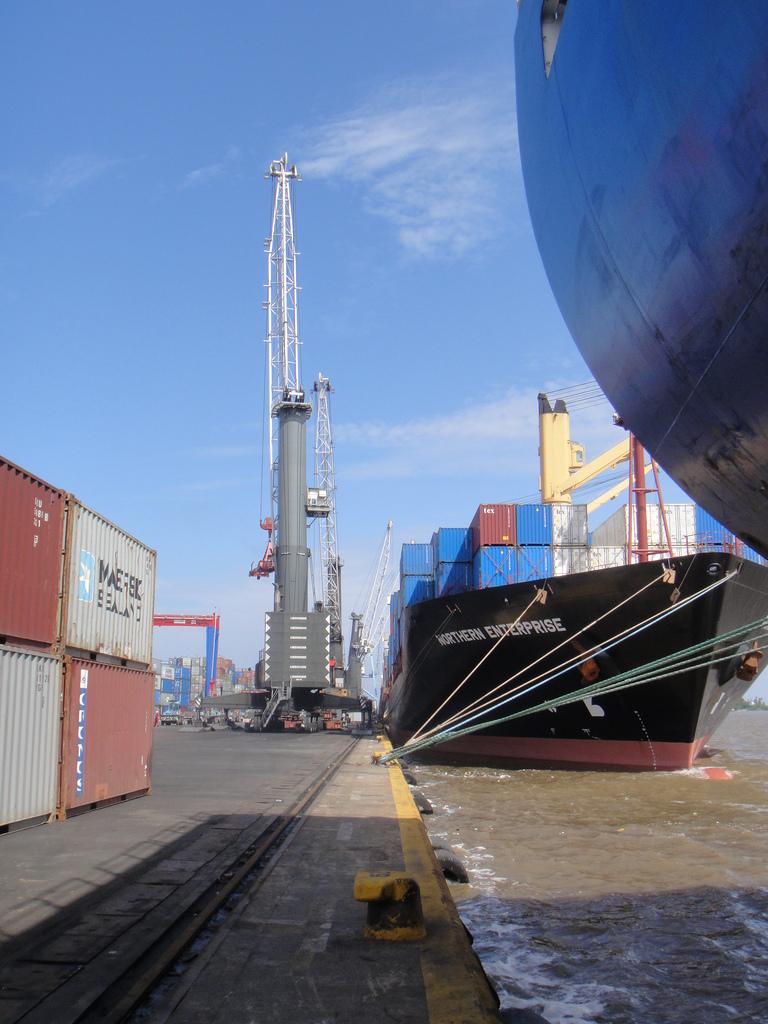
By Ibrahim Nasiru
Welcome back to our ongoing series tracking the critical shifts shaping our economy and leadership.
While we spent the last few weeks dissecting the internal dynamics of our political landscape, it is time to turn our gaze toward a high-stakes national issue that directly affects the pockets of every single Nigerian: the state of our maritime gateways.
Walk into the Apapa or Tin Can Island port complex on any given weekday, and the sheer frustration in the air is thick enough to cut with a knife. You will see lines of trucks trapped in gridlock, clearing agents yelling over mounting demurrage fees, and business owners watching their profit margins evaporate in real-time.
For decades, Nigeria’s premier seaports have operated less like modern economic gateways and more like chaotic, congested toll gates designed to bleed the economy dry.
We frequently complain about inflation and the soaring cost of imported goods, but we rarely look at the source of the bleeding. The uncomfortable truth is that our Ports are crumbling from the inside out. Quay walls are collapsing, digital systems are constantly glitching, and the bureaucratic red tape is exhausting.
It is against this backdrop of systemic decay that the Nigerian Ports Authority (NPA) dropped a massive bombshell: a proposed ₦1.489 trillion budget for the fiscal year. Out of this staggering sum, a whopping ₦945 billion is being funneled directly into capital projects aimed at a total modernisation overhaul.
On paper, it sounds like the magic bullet we have all been praying for. The government is finally throwing serious financial weight behind fixing the structural rot.
But let us be completely honest with ourselves: in Nigeria, throwing trillions of naira at a problem has never been a guarantee of success. A brilliant budget means absolutely nothing if the execution is hijacked by the same old forces of administrative incompetence and political interference.
If this modernisation plan is going to be anything more than another expensive press release, it has to survive two massive, real-world hurdles.
First, there is the lingering threat of government revenue sweeps. In a desperate bid to fund a cash-strapped national treasury, the Federal Government has a habit of raiding the accounts of revenue-generating agencies. If the Ministry of Finance sweeps the NPA’s earnings into the central pot, the ₦945 billion capital budget will become a ghost fund.
You cannot rebuild collapsing berths and buy world-class harbour cranes with promises and empty accounts. The NPA must be allowed to keep its teeth and its money if we want to see actual cranes moving on the ground.
Second, the human factor remains our biggest bottleneck. The NPA is heavily banking on the new National Single Window digital system to eliminate the physical extortion and endless paperwork that makes clearing a container a nightmare. But digital systems are only as clean as the people operating them.
There are powerful cartels within the maritime sector that thrive exclusively on chaos. For these individuals, a transparent, automated tracking system is a direct threat to their illicit livelihoods. If the government lacks the political will to crush the internal resistance from corrupt officials, the technology will be deliberately sabotaged, and we will be right back where we started.
The stakes could not be higher. Right now, smaller neighbouring Ports in places like Cotonou and Lome are happily eating Nigeria’s lunch, positioning themselves as the preferred hubs for West African trade simply because they are more efficient. Nigeria cannot afford to lose this race.
A ₦1.49 trillion budget is a bold, necessary step in the right direction. It shows that the leadership finally recognises that you cannot run a 21st-century economy with 1970s infrastructure. But the real test will not be judged by the size of the budget presentation or the length of the speeches in Abuja. It will be decided by whether the funds actually hit the ground, whether the automated systems are protected from sabotage, and whether a container can finally leave Apapa in 48 hours without a single bribe being paid.
The blueprint is there. Now, let’s see if they have the clean hands to build it.
Chief Ibrahim Nasiru
A Public Affairs Analyst writes from Abuja, Nigeria.
NOTE: Views expressed by contributors are strictly personal and not of the Spynews


Cabotage Enforcement is My Priority: DG NIMASA

Customs Renovates Ife Girls’ School, Pledges University Scholarships

Tinubu Applauds Coca-Cola’s Planned $1b Investment

2027: Northern Muslim Women Declare Support for President Tinubu

Dakuku Peterside: Weak Institutions Stall Nigeria’s Wealth, Prosperity

Inside Nigeria’s Sea Power: The Rise of NPA as a Maritime Powerhouse

Adebayo Williams At 75: A Missing Honour — By Femi Macaulay

High Hopes as Dangote Launches ₦2.15 Trillion IPO

2027: LP chieftain sues WAEC, UNN, NYSC over Obi’s credentials

Tension in Osun as Masked Gunmen Kill Adeleke’s Ally ‘Emir’ at Peace Meeting

Tribute to a Colossus: The Eternal Legacy of Alhaji Bamanga Tukur (1935–2026)

US Praises Nigeria for Ending 12-Year Maritime Restrictions; Oyetola Credits President Tinubu

Environmental sanitation resumes in Lagos tomorrow

Tribute to a Legal Icon and Master Administrator: Alhaji Yahaya Bukar-Gana

Panel recommends 60-month timeline on State Police inauguration

Customs smashes smuggling ring at Tin-Can port, seizes illicit drugs worth ₦18.9b

Customs nets ₦178b at PTML, Miko resumes office

NIMASA Calls on The Media to Help Drive Blue Economy Growth

NIMASA Partners Malta to Fast-Track Full Automation of Nigerian Ship Registry

History as Customs CG Adeniyi bags First NIJ alumnus fellowship

“A Blueprint for Prosperity: How Amb. (Engr.) Omar Suleiman Will Transform Adamawa State”

Apapa Customs Intercepts ₦12.7b ‘Canadian Loud’, Expired Drugs in Lagos

Misclassified Levies: Senate Clears Customs of ₦62.2bn Under-Remittance Claim
