
Maritime
NIGERIA: Meet NPERA, The New Port Watchdog Driving Efficiency, Fair Tariffs

By Temitope Adebiyi, Correspondent
Following President Bola Ahmed Tinubu’s assent to the Nigeria Ports Economic Regulatory Agency Act, 2026, NPERA has officially commenced operations.
As the nation’s new economic regulator for ports, the agency is mandated to ensure fair tariffs, drive healthy competition, speed up cargo clearance, and build a predictable business climate.
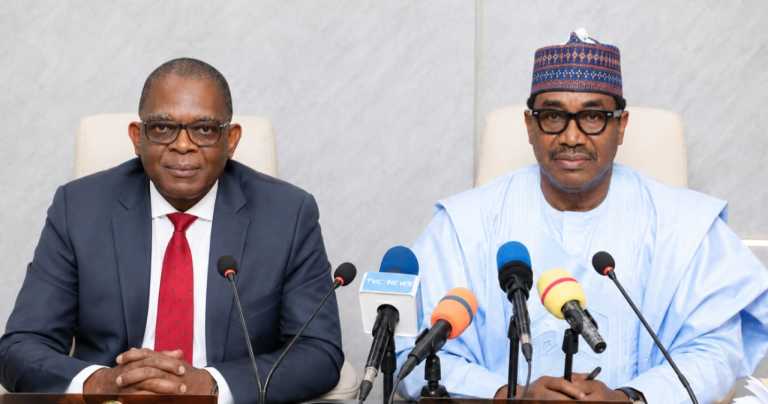
Dr. Ibrahim Shema, the Chairman of the NPERA Governing Board, called the change a major upgrade for Nigerian ports. He noted that it marks fifty years of growth in how the country manages port business and rules.
Shema notes that Nigeria’s port economic regulation began with the 1978 creation of the Nigerian Shippers’ Council and the 2006 port concessions. Appointed interim regulator in 2014, the Council managed tariffs, disputes, and user protection, roles that are now permanently secured under the NPERA Act..
Under the new framework, NPERA will regulate port tariffs and charges, licensing, service standards, competition, commercial dispute resolution, trade facilitation and the protection of port users.
“This is not about creating competing authorities. It is about establishing a coherent system in which institutions work together, each within its statutory responsibilities,” Shema said.
He stressed that the creation of NPERA would not undermine the Nigerian Ports Authority (NPA), which retains responsibility for port infrastructure and its landlord functions.
He assured that NPERA would concentrate on reducing regulatory uncertainty, eliminating unnecessary barriers, facilitating faster cargo movement and strengthening Nigeria’s position as a competitive trading and investment destination.
Shema identified transparency, fairness, predictability, efficiency and accountability as the five principles that would anchor the agency’s regulatory framework.
On tariffs, he said NPERA would give port users greater clarity on the basis for regulated charges, while service providers would have clearer expectations regarding compliance and regulatory requirements.
The agency, he added, would also provide more accessible mechanisms for resolving commercial disputes and deploy digital platforms for licensing, tariff administration, regulatory monitoring, compliance and stakeholder engagement.
Shema assured stakeholders that the transition from the Nigerian Shippers’ Council to NPERA would be orderly and designed to minimise disruption to port operations.
He said the transition process would address personnel, assets, liabilities, existing contracts, pending disputes, regulatory records and licensing arrangements.
The NPERA chairman also called for sustained collaboration among the NPA, Nigerian Maritime Administration and Safety Agency (NIMASA), Nigeria Customs Service (NCS), terminal operators, shipping lines, freight forwarders, importers, exporters and other stakeholders.
“The establishment of NPERA is a historic achievement, but the harder work begins now,” he said.
According to him, the real test of the new agency will be its ability to convert the provisions of the law into tangible improvements in port services, operational efficiency, regulatory certainty and national competitiveness.
“The new era of port economic regulation has begun. The journey has been long. The opportunity before us is enormous. And the work starts now,” he added.
Also speaking, the Executive Secretary/Chief Executive Officer of NPERA, Dr. Pius Akutah, expressed optimism that the new law and the agency’s operations would significantly clarify Nigeria’s port regulatory environment within the next one to two years.
Akutah said NPERA would prioritise fair pricing, promote healthy competition, enhance trade facilitation and strengthen government revenue.
He added that the NPERA Act gives the agency stronger powers to improve commercial dispute resolution and protect the interests and welfare of port users and other stakeholders.
The emergence of NPERA marks a significant restructuring of Nigeria’s port governance architecture, with economic regulation now vested in a dedicated statutory institution separate from the NPA’s infrastructure and landlord functions.
For port users and operators, the new regime is expected to bring greater clarity to tariffs, charges, licensing and service standards, while providing a more structured avenue for resolving commercial disputes.


Cabotage Enforcement is My Priority: DG NIMASA

Customs Renovates Ife Girls’ School, Pledges University Scholarships

Tinubu Applauds Coca-Cola’s Planned $1b Investment

2027: Northern Muslim Women Declare Support for President Tinubu

Dakuku Peterside: Weak Institutions Stall Nigeria’s Wealth, Prosperity

Inside Nigeria’s Sea Power: The Rise of NPA as a Maritime Powerhouse

Adebayo Williams At 75: A Missing Honour — By Femi Macaulay

High Hopes as Dangote Launches ₦2.15 Trillion IPO

2027: LP chieftain sues WAEC, UNN, NYSC over Obi’s credentials

Tension in Osun as Masked Gunmen Kill Adeleke’s Ally ‘Emir’ at Peace Meeting

Tribute to a Colossus: The Eternal Legacy of Alhaji Bamanga Tukur (1935–2026)

US Praises Nigeria for Ending 12-Year Maritime Restrictions; Oyetola Credits President Tinubu

Environmental sanitation resumes in Lagos tomorrow

Tribute to a Legal Icon and Master Administrator: Alhaji Yahaya Bukar-Gana

Panel recommends 60-month timeline on State Police inauguration

Customs smashes smuggling ring at Tin-Can port, seizes illicit drugs worth ₦18.9b

Customs nets ₦178b at PTML, Miko resumes office

NIMASA Calls on The Media to Help Drive Blue Economy Growth

NIMASA Partners Malta to Fast-Track Full Automation of Nigerian Ship Registry

History as Customs CG Adeniyi bags First NIJ alumnus fellowship

“A Blueprint for Prosperity: How Amb. (Engr.) Omar Suleiman Will Transform Adamawa State”

Apapa Customs Intercepts ₦12.7b ‘Canadian Loud’, Expired Drugs in Lagos

Misclassified Levies: Senate Clears Customs of ₦62.2bn Under-Remittance Claim
