
Economy
Developing Nations Hit With $500b Extra Loan Costs; Oyedele Warns Against New Taxes

By Lateepha Eniola, Assistant Editor
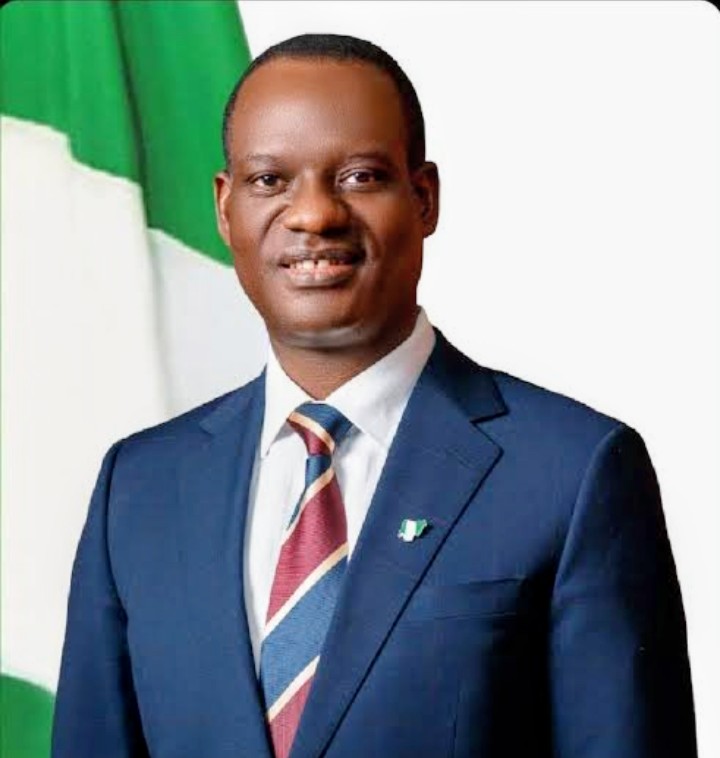
Nigeria’s Minister of Finance, Taiwo Oyedele has criticised the high cost of borrowing for developing nations, stating they pay roughly $500 billion more in debt servicing than developed nations.
Urging the International Monetary Fund and the World Bank Group to lower concessional financing costs, Oyedele stated that fiscal pressures should not be passed on to vulnerable populations or productive economic sectors.
At the World Bank/IMF Annual Meetings in Bangkok, G-24 Chair Taiwo Oyedele defended Nigeria’s recent economic reforms, specifically addressing the sequencing of the fuel subsidy removal and forex liberalisation.
In an interview with repirters, he argued that developing nations must mobilise domestic revenue, eliminate waste, and attract private investment. Ultimately, he noted, borrowing must be tied directly to job creation, inclusive growth, and better living standards.
“We call on both the IMF and the World Bank to find means of making particularly short-term, more affordable concessional borrowing available to particularly the vulnerable countries,” he said.
He also urged the institutions to develop frameworks and policies for mobilising private capital so that scarce public funds could be directed towards essential services.
Oyedele acknowledged that borrowing was necessary for economic development but said debt financing must generate positive outcomes, particularly employment and inclusive growth.
He noted that developing countries faced not only high debt levels but also increasingly expensive borrowing, which constrained their capacity to finance infrastructure and social services.
The minister urged international financial institutions to support reforms that protect social spending and investment, taking account of the political and distributional consequences of economic adjustments.
He also called for predictable and coordinated sovereign debt treatment, greater transparency and improved credit-rating assessments to address debt vulnerabilities.
Oyedele warned that increasing taxes or placing additional burdens on vulnerable households and productive businesses would be inappropriate when many citizens were already struggling with economic pressures.
He advised governments to look inward for savings and improve revenue mobilisation rather than depend solely on additional taxation.
His position comes amid efforts by developing economies to balance fiscal stability with the need to protect citizens and stimulate productive activity.
The minister said macroeconomic stability was essential to sustainable growth but should not be treated as an alternative to employment creation and economic transformation.
G-24 Secretariat head Iyabo Masha said macroeconomic stability provided the foundation for structural policies, infrastructure investment and job creation.
Oyedele agreed, stressing that stability and job-rich growth were complementary objectives.
He cautioned, however, that emerging technologies, particularly artificial intelligence, could generate economic growth without corresponding employment gains if governments failed to regulate and adopt them deliberately.
He also cited geopolitical conflicts, shifting trade policies, monetary policy uncertainties, volatile commodity prices and climate shocks as factors threatening global growth.
The minister called for reforms to the international financial system, including quota realignments at the IMF to reflect changing global economic realities and protect the representation of emerging and vulnerable economies.
He further urged the World Bank Group, regional development banks and other stakeholders to deliver on the target of at least $300 billion in annual climate finance by 2035, as established at COP29.
Speaking on Nigeria removed fuel subsidy before FX reforms, Oyedele said the government raised petrol prices before introducing foreign exchange reforms to improve the chances of success.
Also speaking at an Africa’s Golden Future session, he explained that the foreign exchange component constituted a substantial part of the fuel subsidy burden.
“Many people had not paid attention to the fact that the biggest component of that subsidy wasn’t the fuel product itself; it was the delay in FX flotation. So, if we had done FX flotation before fuel subsidy removal, it would have been impossible,” he said.
According to him, petrol prices initially rose by about 100 per cent following subsidy removal before increasing further after the foreign exchange reform was introduced about two weeks later.
Oyedele said the experience demonstrated why governments must carefully plan and sequence major policy changes, particularly when several reforms affect prices and household purchasing power simultaneously.
“If you start your reforms and you do it halfway, you deliver the pain, and the gains are not guaranteed,” he said.
He cited fuel subsidy removal, foreign exchange liberalisation and tax reform as examples of policies whose outcomes depended partly on how they were designed and implemented.
The minister said Nigeria’s tax reforms were intended to improve the tax system and provide relief rather than impose additional hardship on citizens.
He acknowledged that public confidence was low and the proposals had generated controversy, but insisted that the government needed to continue explaining the rationale for its decisions.
“Trust is not something you can legislate. You have to earn it, and policy is not just what you say; it’s also what you do,” he said.
Oyedele stressed that vulnerable citizens needed support to withstand the immediate difficulties associated with reforms before they could benefit from improvements in the economy.
He cited the cash transfer programme, which he said had reached more than 10 million households, and education support reaching more than 1.5 million students as measures designed to cushion the effects of economic changes.
He added that reforms should be embedded in laws and institutions to ensure continuity beyond changes in government.
Predictable policies, he said, were essential to attracting investment because businesses needed confidence in the direction of government decisions.
Oyedele also called on African governments to align their trade, fiscal and monetary policies to strengthen regional integration and maximise the benefits of the African Continental Free Trade Area (AfCFTA).
He said the agreement offered an opportunity to turn 54 African countries into a single market, allowing businesses to expand production and reach larger customer bases.
However, he warned that regulatory differences, administrative procedures and restrictions on the movement of goods, services, capital and people could prevent the agreement from delivering its full benefits.
“We have a lot of small countries, and what AfCFTA is trying to do is to turn 54 countries into one market, so that way it’s easy for us to scale,” he said.
He disclosed that Nigeria was developing a National Single Window to simplify border procedures and improve trade documentation through technology.
The minister also called for greater investment in electricity, transport, logistics, agricultural processing and storage facilities to improve the competitiveness of African businesses.
He urged governments to protect strategic industries through tariffs only where necessary, with clear objectives and plans for withdrawing protection when it was no longer required.
Speaking at the meetings, IMF Deputy Managing Director Bo Li said Africa needed faster economic growth to improve living standards, warning that the region’s current growth rate meant income per person could take about 50 years to double.
He identified high debt, expensive borrowing and declining foreign aid as constraints, urging governments to improve governance, regulations and market access to attract private investment.
Li said closing half the gap between Sub-Saharan Africa and emerging markets in these areas could increase the region’s economic output by as much as 20 per cent over five to 10 years.
Nedbank’s Daniel Mminele said macroeconomic stability was essential but insufficient to attract long-term investment, stressing the importance of predictable policies, reliable infrastructure and effective contract enforcement.
African Development Bank President Sidi Ould Tah urged governments to move beyond announcing reforms to delivering measurable results.
He cited Mission 300, an initiative involving the AfDB, World Bank and other partners, which aims to provide electricity access to 300 million Africans by 2030.
The discussions highlighted that developing nations must secure cheaper financing, sustain credible reforms, and attract private capital while still protecting vulnerable citizens


Hamzat Unveils 100-Point ‘Lagos Promise’ Manifesto, Pledges Better Quality of Life for Residents

President Tinubu Arrives in Jeddah for Umrah and National Prayers

Nigeria Customs, US Team Up to Fast-Track Trade

Naira Conversion Eroded $350m CVFF Value, Omatseye Reveals

Enugu Partners with Humatrix in Landmark BPO Deal to Create 100,000 Jobs

Boosting Maritime: Fed Govt, Banks Urged to Tackle Shipping Funding Crisis

NPA to Audit Inland Dry Ports, Partners With ICNL to Boost Hinterland Trade

President Tinubu Leaves for Mecca Tomorrow; Expected Back Next Week

Dockworkers may Shut Down Ports next week Over Terminal Operator Delays

Fed Govt seeks private sector funding blueprint as 30 state assemblies approve State Police

Ahead of 2027 Evaluation, Customs Vows Zero Tolerance for Money Laundering

JUSTIN: Panel Reveals 37 Miners Suffocated in NSCDC Custody

Man Arrested in Adamawa While Trying to Sell His Niece for ₦7m

Customs smashes smuggling ring at Tin-Can port, seizes illicit drugs worth ₦18.9b

Environmental sanitation resumes in Lagos tomorrow

Apapa Customs Smashes Smuggling Ring, Seizes Illicit Drugs Worth ₦26.57b

IN 3 YEARS: Oyetola Reshapes Nigeria’s Blue Economy, Revenues Surge to ₦1.83tr

Customs CG Adeniyi Displays Narcotics, Fake Drugs Worth ₦53.3b at Apapa

SINGLE-DAY RECORD: Apapa Customs Generates ₦28b in 24 Hours

High Hopes as Dangote Launches ₦2.15 Trillion IPO

Oyo/Osun Customs Intercepts Rifles, Contraband Worth ₦3.2b in Three Months

Seme Customs Seizes 3,300 Explosive Cartridges, Generates ₦19.84b in 7 Months

Customs Zone ‘A’ Speeds Up Cargo Clearance to Hit ₦8trn Revenue Goal
