
Economy
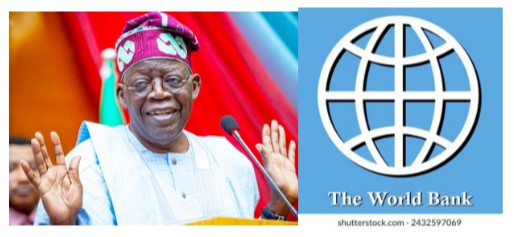
President Tinubu Hails 2026 World Bank Report Showing Economic Reforms Are Working

By Saheed Olatunji, Reporter
President Bola Tinubu has welcomed the World Bank’s October 2026 Nigeria Development Update, saying its findings show that his administration’s economic reforms are yielding results and placing the country on a firmer path towards sustained growth.
Based on the report, Nigeria’s GDP is expected to grow by 4.3% in 2026 and accelerate to an average of 4.4% per year over 2027–2028, according to a World Bank report.
The information is contained in the October 2026 edition of the World Bank’s Nigeria Development Update (NDU), titled Beyond the Federal Purse: How Higher Revenues Reshaped State Priorities, is available on the World Bank Nigeria Publication Portal.
Tinubu’s position was contained in a statement signed by his Special Adviser on Information and Strategy, Bayo Onanuga, following the release of the report.
The President highlighted the report’s finding that Nigeria’s poverty rate had stabilised for the first time since 2019, with the World Bank projecting a gradual decline as economic growth outpaces population growth.
The report also showed that the economy grew by 4.2 per cent in the first half of 2026, compared with 3.9 per cent in the corresponding period of 2025, despite the impact of the conflict in the Middle East.
The World Bank projected that economic growth would average at least 4.4 per cent between 2026 and 2028.
Reacting to the findings, President Tinubu said, “These findings confirm that the difficult but necessary decisions to remove the petrol subsidy, unify the foreign exchange market and strengthen fiscal discipline have raised revenues, stabilised the economy and created fiscal space for every tier of government to invest in its people.”
Read Also: Tinubu’s Wife Urges End to Child Marriage, Investment in Girls’ Rights
On inflation, the report noted that the rate fell from 27.6 per cent in January 2025 to 15.2 per cent in December 2025. However, higher global fuel prices linked to the Middle East conflict had slowed the decline, with inflation projected to ease to about 12 per cent by 2028.
Nigeria’s external position also improved, according to the report, with the current account surplus rising to $12 billion, representing 7.0 per cent of Gross Domestic Product, in the first half of 2026, from $8.6 billion in the corresponding period of the previous year.
Gross external reserves also increased from $45.5 billion at the end of 2025 to $53.8 billion at the end of August 2026.
The report attributed the increase in government revenues to reforms introduced since 2023, which raised federation revenues by 69 per cent in real terms between 2023 and 2025, with state governments emerging as the largest beneficiaries.
According to the World Bank, state governments used the additional resources to increase capital spending by 151 per cent in real terms over the period, directing much of the spending towards roads and other transport infrastructure, agriculture, energy and housing.
Twenty-nine of 33 states also shifted their spending towards economic infrastructure, while real social spending per person increased in all but one state.
The report further found that internally generated revenue grew in real terms in 31 of 35 states, while 21 states reduced their debt-to-GDP ratios between 2021 and 2025.
Nigeria’s overall public debt is also projected to decline from 40.0 per cent of GDP in 2025 to 38.1 per cent in 2026.
Tinubu, however, acknowledged that more work was needed to ensure the gains translated into improved living conditions for Nigerians.
“The dividends of reform are becoming visible. But more work remains to ensure they fully translate into better living standards for every household, starting with lower food prices and decent jobs for our young people,” he said.
The President reaffirmed his administration’s commitment to economic reforms and inclusive growth under the Renewed Hope Agenda.
He said, “We will continue to expand targeted cash transfers, which have already reached more than 10 million households. We will accelerate the deployment of CNG, raise agricultural productivity, and improve access to affordable healthcare and quality education, so that the prosperity being created is shared by all.”
Tinubu also urged state governments to manage their increased revenues prudently and prioritise projects that improve living standards, healthcare and education.
“I urge state governments to use their higher revenues more prudently and prioritise projects that improve the living standards of Nigerians, and the health and education of our people,” he said.
The President commended the Economic Management Team, led by the Minister of Finance and Coordinating Minister of the Economy, state governors and other stakeholders for their cooperation in implementing the reforms.
He added, “I assure Nigerians that the best is yet to come under the Renewed Hope Agenda 2.0, which will accelerate the delivery of shared prosperity for all Nigerians.”


Hamzat Unveils 100-Point ‘Lagos Promise’ Manifesto, Pledges Better Quality of Life for Residents

President Tinubu Arrives in Jeddah for Umrah and National Prayers

Nigeria Customs, US Team Up to Fast-Track Trade

Naira Conversion Eroded $350m CVFF Value, Omatseye Reveals

Enugu Partners with Humatrix in Landmark BPO Deal to Create 100,000 Jobs

Boosting Maritime: Fed Govt, Banks Urged to Tackle Shipping Funding Crisis

NPA to Audit Inland Dry Ports, Partners With ICNL to Boost Hinterland Trade

President Tinubu Leaves for Mecca Tomorrow; Expected Back Next Week

Dockworkers may Shut Down Ports next week Over Terminal Operator Delays

Fed Govt seeks private sector funding blueprint as 30 state assemblies approve State Police

Ahead of 2027 Evaluation, Customs Vows Zero Tolerance for Money Laundering

JUSTIN: Panel Reveals 37 Miners Suffocated in NSCDC Custody

Man Arrested in Adamawa While Trying to Sell His Niece for ₦7m

Customs smashes smuggling ring at Tin-Can port, seizes illicit drugs worth ₦18.9b

Environmental sanitation resumes in Lagos tomorrow

Apapa Customs Smashes Smuggling Ring, Seizes Illicit Drugs Worth ₦26.57b

IN 3 YEARS: Oyetola Reshapes Nigeria’s Blue Economy, Revenues Surge to ₦1.83tr

Customs CG Adeniyi Displays Narcotics, Fake Drugs Worth ₦53.3b at Apapa

SINGLE-DAY RECORD: Apapa Customs Generates ₦28b in 24 Hours

High Hopes as Dangote Launches ₦2.15 Trillion IPO

Oyo/Osun Customs Intercepts Rifles, Contraband Worth ₦3.2b in Three Months

Seme Customs Seizes 3,300 Explosive Cartridges, Generates ₦19.84b in 7 Months

Customs Zone ‘A’ Speeds Up Cargo Clearance to Hit ₦8trn Revenue Goal
