
Customs
Seme Border Vehicle Ban Could Be Lifted Under New Bilateral Framework – CGC Adeniyi

……Set To Remove Trade Bottlenecks

CGC Adeniyi at Seme Border….TODAY
By Saheed Olatunji, Reporter
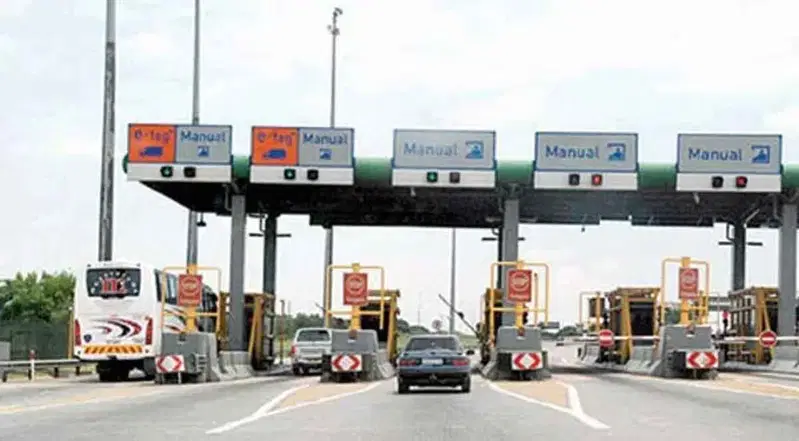
Nigeria may reopen the Seme border in Badagry, Lagos State, for vehicle imports if a new bilateral framework with the Benin Republic succeeds.
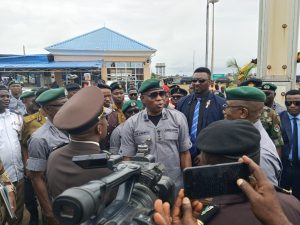
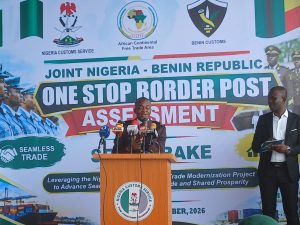
Speaking at the launch of the Joint Nigeria-Benin Republic One Stop Border Post Assessment at Seme today (Friday, September 11, 2026, the Comptroller-General, Nigeria Customs Service (NCS) Bashir Adewale Adeniyi said that vehicle restrictions at the Seme-Krake border could end once the new trade system between Nigeria and the Benin Republic starts working.
Adeniyi explained that the issue extends beyond vehicles as the two countries also need trade bottleneck along the corridor.
This initiative deepens collaboration between both Customs administrations to streamline cross-border trade and movement.

At the event, Adeniyi stressed that a functional interconnectivity framework is crucial to building confidence and creating the conditions needed to harmonise trade restrictions across the wider value chain.
His stance followed an appeal by Alhaji Toyin Wasiu, the ANLCA Seme Chapter Chairman, representing the corridor’s traders, freight forwarders, and clearing agents.
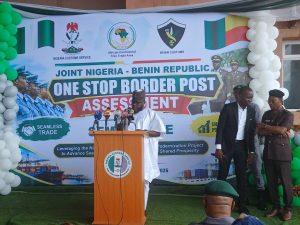
The ANLCA chief appealed to Customs authorities to lift vehicle restrictions at the border, noting that doing so would revitalise legitimate commercial activity and sustain businesses along the Seme corridor.
Adeniyi responded to the appeal by stating that removing the restrictions relies on the success of the upcoming joint border-management and trade-interconnectivity framework.
He echoed the ANLCA Chairman’s call for seamless trade, explaining that a fully operational interconnectivity system will allow Customs to safely streamline existing trade restrictions.
In addition, the CGC made trust and compliance the central plank of his intervention, arguing that seamless cross-border trade cannot be achieved merely by putting infrastructure and technology in place
According to him, confidence must first be built between the agencies, operators and traders on both sides of the border.
He said trust established through sustained compliance would generate mutual gains in the movement of goods and people, while expanding commercial opportunities between Nigeria, Benin Republic and the wider West African region.
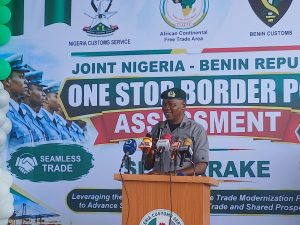
Adeniyi called on government agencies from both sides, particularly the two Customs administrations, to build mutual trust.
He emphasised that this trust is essential for joint operations and seamless trade.
According to Adeniyi, proving that cooperation works will give governments the confidence to lift current restrictions on legitimate cross-border commerce.
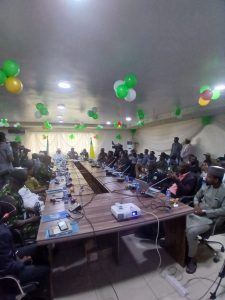
As a key operational test, the assessment reflects both nations’ commitment to reducing duplication, improving coordination, and creating a predictable trading environment along one of West Africa’s busiest land corridors.
Instead of treating the border as two separate territories, this new approach strengthens agency cooperation to deliver a more seamless experience for traders and travelers.
For the Customs administration, the success of this framework could serve as a critical foundation for resolving enduring grievances from border communities and trade operators concerning regulatory restrictions and procedural delays.
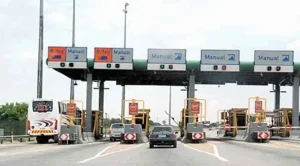
Previously, the Director-General of Benin Customs, Col. Raouf Malehhossou Aboudou, lauded Adeniyi’s pragmatic leadership in revitalizing operational systems designed to facilitate trans-border commerce.
Aboudou affirmed that the Benin Customs administration would robustly support the recalibration of joint assessments, guaranteeing the readiness of his personnel to collaborate with Nigerian counterparts toward achieving the initiative’s objectives
He emphasised that bilateral Customs cooperation is vital for the Seme-Krake corridor, noting that activities on either side directly impact trade and enforcement on the other.
In his welcome address, Seme Customs Area Controller Abdullahi Shuaibu Kaila thanked Adeniyi and his Benin Republic counterpart for their commitment to boosting seamless cross-border trade.
Kaila’s remarks provided valuable context, highlighting the Seme corridor’s strategic importance to Nigeria’s trade with Benin Republic and the broader West African market.
Under this new framework, the command must balance trade facilitation with border security, revenue protection, and legal enforcement
.
The event also drew goodwill messages from cross-border traditional rulers and community leaders, who welcomed renewed efforts to boost cooperation and ease legitimate movement along the corridor.
Their insights offer a compelling human-interest angle for the report; for communities around Seme-Krake, the border is a vital daily economic and social lifeline, not just a customs checkpoint.
Consequently, traditional institutions and community leaders should be highlighted as key stakeholders with a vested interest in the success of the new assessment mechanism.
Their backing underscores a critical point: effective border management must balance national security with the legitimate economic aspirations of local communities.
Most notably, Adeniyi’s statement implies that the vehicle dispute is merely the surface symptom of a much broader policy challenge.
Ultimately, the CGC’s remarks indicate that the long-term goal is to build an environment where restrictions are gradually eased, driven by measurable compliance, operational transparency, and mutual trust between Nigeria and the Benin Republic
Consequently, the proposed review of vehicle restrictions should not be seen as an isolated concession to traders, but as part of a broader bargain: trading greater compliance and stronger inter-agency cooperation for smoother movement and fewer trade barriers.
The One-Stop Border Post assessment therefore carries a significance that extends far beyond the ceremony itself.
For years, the Seme-Krake corridor has stood at the crossroads of border security, regional integration, and the economic survival of thousands of businesses and communities.
The new assessment makes a clear case to stakeholders that free movement cannot be won through political pressure alone; it requires proven compliance, seamless connectivity, and mutual trust.
The CGC’s stance offers a potential breakthrough for traders and freight forwarders lobbying to lift the vehicle restriction—though its success hinges entirely on the new bilateral framework.
If the assessment successfully creates the trusted and coordinated border envisioned by both nations, lifting the vehicle restriction will likely be the first of many trade barriers on the table for renegotiation.


Cabotage Enforcement is My Priority: DG NIMASA

Customs Renovates Ife Girls’ School, Pledges University Scholarships

Tinubu Applauds Coca-Cola’s Planned $1b Investment

2027: Northern Muslim Women Declare Support for President Tinubu

Dakuku Peterside: Weak Institutions Stall Nigeria’s Wealth, Prosperity

Inside Nigeria’s Sea Power: The Rise of NPA as a Maritime Powerhouse

Adebayo Williams At 75: A Missing Honour — By Femi Macaulay

High Hopes as Dangote Launches ₦2.15 Trillion IPO

2027: LP chieftain sues WAEC, UNN, NYSC over Obi’s credentials

Tension in Osun as Masked Gunmen Kill Adeleke’s Ally ‘Emir’ at Peace Meeting

Tribute to a Colossus: The Eternal Legacy of Alhaji Bamanga Tukur (1935–2026)

US Praises Nigeria for Ending 12-Year Maritime Restrictions; Oyetola Credits President Tinubu

Environmental sanitation resumes in Lagos tomorrow

Tribute to a Legal Icon and Master Administrator: Alhaji Yahaya Bukar-Gana

Panel recommends 60-month timeline on State Police inauguration

Customs smashes smuggling ring at Tin-Can port, seizes illicit drugs worth ₦18.9b

Customs nets ₦178b at PTML, Miko resumes office

NIMASA Calls on The Media to Help Drive Blue Economy Growth

NIMASA Partners Malta to Fast-Track Full Automation of Nigerian Ship Registry

History as Customs CG Adeniyi bags First NIJ alumnus fellowship

“A Blueprint for Prosperity: How Amb. (Engr.) Omar Suleiman Will Transform Adamawa State”

Apapa Customs Intercepts ₦12.7b ‘Canadian Loud’, Expired Drugs in Lagos

Misclassified Levies: Senate Clears Customs of ₦62.2bn Under-Remittance Claim
