
Maritime
Oyetola, Bala Usman, Others Push for Total Port Overhaul to Boost Nigeria’s Edge in Africa

By Lateepha Eniola, Assistant Editor
To become West Africa’s premier maritime gateway, Nigeria must modernise its entire port logistics chain—from quayside infrastructure and digital systems to regulations and hinterland transport
Stakeholders at the 2026 MARAN Annual Maritime Lecture in Lagos warned that billion-naira port upgrades will fail to deliver if the systems moving cargo out of the ports remain broken.
Nigerian port competitiveness should be measured by how quickly, cheaply, and efficiently cargo moves to its final destination, rather than by the size of infrastructure spending .
This warning follows ongoing worries about high fees, heavy traffic, cargo delays, messy rules, and growing competition from nearby West African ports.
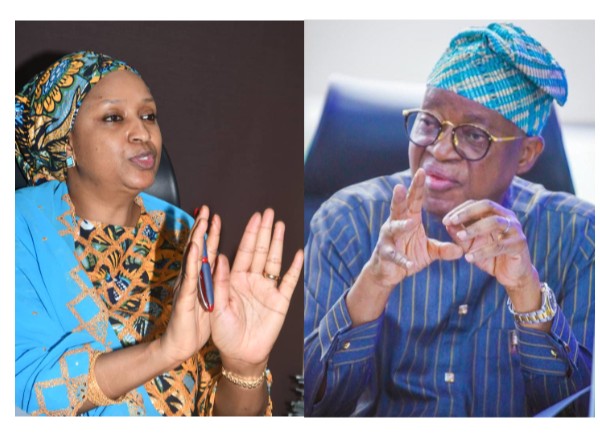
Delivering the keynote address, Hadiza Bala Usman, former Managing Director of the Nigerian Ports Authority and Special Adviser to the President on Policy Coordination, stated that port modernisation must improve cargo movement, speed up vessel and truck turnaround times, cut logistics costs, and boost export capacity.
She outlined six pillars of modernisation: upgrading infrastructure, adopting modern equipment, accelerating digitalization, reforming institutions, developing human capital, and optimizing commercial services like tariffs and concessions.
Because Nigerian seaports process more than four-fifths of all physical imports and exports, Usman emphasised that port efficiency directly drives national economic growth.
“When port costs are high, they travel into the price of rice on the trader’s stall, the landed cost of raw materials for the manufacturer and into the exchange rate pressure created when importers pay dollar-denominated charges on top of naira-denominated uncertainties,” she said.
Global Port Performance Index:
President Tinubu’s Special Adviser praised the remarkable progress of Nigerian ports between 2020 and 2025. She highlighted the Container Port Performance Index by the World Bank and S&P Global Market Intelligence, which ranked Tin Can Island Port 10th and the Lagos Port Complex in Apapa 12th among the world’s most improved container ports.
Usman noted that this success stems from clear signs of progress, including: Higher cargo volumes handled at the port and the repairs made to key port facilities.
She warned that these gains require ongoing investment, strict rules, and clear performance standards to last.
Usman also noted that port projects—such as rebuilding Apapa and Tin Can Island, fixing Eastern ports, and expanding the Lekki Deep Sea Port—will fall short of their economic goals without strong road, rail, barge, inland logistics, and dry-port connections.
“A port cannot be globally competitive if its hinterland is not competitive,” she said.
Need to Review Port Tariff Structure:
The former NPA boss called for a comprehensive review of Nigeria’s port tariff structure, arguing that the focus should shift from isolated charges to the total cost of moving cargo through the supply chain.
She expressed concern over reports that clearing a standard 20-foot container at Apapa can cost between N14 million and N15 million, which is significantly higher than competing West African ports.
However, Usman noted that this overall expense encompasses statutory port tariffs, terminal handling charges, shipping-line fees, detention, demurrage, haulage, documentation, and clearing costs
She argued that cutting duplicate charges, obsolete fees, and unnecessary regulations could significantly lower the cost of doing business at Nigerian ports
“Charges cannot remain frozen indefinitely while infrastructure deteriorates, but neither can users be required to pay any amount demanded. Tariffs must be linked to value and performance,” she said.
Call for Annual Port Economic Performance Report:
She pushed for a tariff system that is predictable, transparent, and driven by performance—ensuring any rate adjustments are backed by clear data, global benchmarks, and real service upgrades.
Usman also proposed launching an annual Port Economic Performance Report. This report would measure everything from vessel turnaround and cargo productivity to total logistics costs, digital transactions, and customer satisfaction.
Nigeria Eyes Maritime Hub for West and Central Africa:
The Minister of Marine and Blue Economy, Adegboyega Oyetola, said the country aims to become the top maritime hub in West and Central Africa through a major upgrade of its port infrastructure.
Speaking for Oyetola, Nigerian Ports Authority representative Seyi Iyawe stated that the the federal government has approved full modernisations for the Apapa, Tin Can Island, and other ports.
Oyetola stressed that this project is a complete structural rebuild rather than a simple surface fix.
According to the Minister, the initiative will upgrade critical infrastructure, deepen channels for larger ships, replace outdated equipment, and modernize port operations..
“Our objective is to create ports that can move cargo, accommodate larger vessels, reduce turnaround time and lower the cost per unit of cargo handled,” the Minister said.
He stated that developing deep-sea ports is vital for Nigeria to ease pressure on traditional facilities, decentralise cargo flows, and build new economic corridors.
To boost vessel movement, safety, and efficiency, Oyetola cited ongoing investments in tugboats, mooring boats, and pilot boats.
The Minister added that maritime security is central to this competitiveness strategy, highlighting Nigeria’s achievement of zero piracy in its territorial waters for four straight years
Establishment of NPERA by the Fed Govt:
The establishment of the Nigerian Ports Economic Regulatory Agency (NPERA) is a key reform to strengthen economic oversight in the port sector, according to Oyetola.
He noted that the new agency will enforce service rules, track fees, encourage fair competition, and protect users from unfair or surprise charges.
“The more competitive our ports become, the greater the volume of legitimate trade they will attract. The more efficient our ports become, the more attractive Nigeria becomes to investors,” he said.
According to the Minister, the government’s objective is to steer the maritime sector away from simply collecting fees and toward actively generating value.
In his address, Capt. Dr. Warredi Enisuoh, Executive Director of Operations and Technical at Tantita Security Services Nigeria Limited, cautioned that modernizing ports is futile without upgrading cargo evacuation systems.
“You cannot modernize a port without modernizing your exit point,” he noted.
He called on the government for the creation of a seamless network combining roads, rail, waterways, and truck management to accelerate cargo evacuation and wipe out bottleneck checkpoints.
Enisuoh used the Port of Lomé in Togo as a prime example of how investing in deeper channels and cutting red tape sharpens a port’s competitive edge.
With modern container mega-ships now topping 20,000 TEUs, Dr. Enisuoh warned that ports must become deeper and more efficient just to stay relevant.
To build a coordinated national maritime strategy, Enisuoh urged the Federal Government to expand port development beyond Lagos.
He explained that upgrading alternative coastline ports would optimise cargo distribution, relieve pressure on Lagos, and open smoother trade routes inland.
He also cautioned that poor surrounding infrastructure could cancel out major investments made directly into the Lagos ports.
“If city infrastructure is poor, spend all the millions of dollars you want to maintain the port. It’s not going to work. You will still get congestion,” Enisuoh said.


Cabotage Enforcement is My Priority: DG NIMASA

Customs Renovates Ife Girls’ School, Pledges University Scholarships

Tinubu Applauds Coca-Cola’s Planned $1b Investment

2027: Northern Muslim Women Declare Support for President Tinubu

Dakuku Peterside: Weak Institutions Stall Nigeria’s Wealth, Prosperity

Inside Nigeria’s Sea Power: The Rise of NPA as a Maritime Powerhouse

Adebayo Williams At 75: A Missing Honour — By Femi Macaulay

High Hopes as Dangote Launches ₦2.15 Trillion IPO

2027: LP chieftain sues WAEC, UNN, NYSC over Obi’s credentials

Tension in Osun as Masked Gunmen Kill Adeleke’s Ally ‘Emir’ at Peace Meeting

Tribute to a Colossus: The Eternal Legacy of Alhaji Bamanga Tukur (1935–2026)

US Praises Nigeria for Ending 12-Year Maritime Restrictions; Oyetola Credits President Tinubu

Environmental sanitation resumes in Lagos tomorrow

Tribute to a Legal Icon and Master Administrator: Alhaji Yahaya Bukar-Gana

Panel recommends 60-month timeline on State Police inauguration

Customs smashes smuggling ring at Tin-Can port, seizes illicit drugs worth ₦18.9b

Customs nets ₦178b at PTML, Miko resumes office

NIMASA Calls on The Media to Help Drive Blue Economy Growth

NIMASA Partners Malta to Fast-Track Full Automation of Nigerian Ship Registry

History as Customs CG Adeniyi bags First NIJ alumnus fellowship

“A Blueprint for Prosperity: How Amb. (Engr.) Omar Suleiman Will Transform Adamawa State”

Apapa Customs Intercepts ₦12.7b ‘Canadian Loud’, Expired Drugs in Lagos

Misclassified Levies: Senate Clears Customs of ₦62.2bn Under-Remittance Claim
