
News
PETROAN calls for urgent boost to Nigeria’s refining capacity amid global tensions

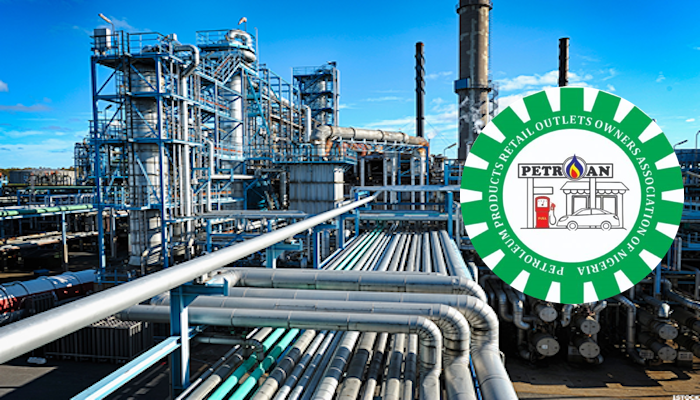
The Petroleum Products Retail Outlets Owners Association of Nigeria has reiterated the importance of strengthening Nigeria’s local refining industry through a reliable and adequate supply of crude oil.
Speaking on Tuesday in Abuja, PETROAN’s National President, Billy Gillis-Harry, addressed the issue while responding to rising military tensions involving the United States, Iran, Israel and their allies.
Gillis-Harry said the unfolding Middle East crisis makes it critical for Nigeria to adopt proactive strategies to shield its petroleum sector from external shocks. He explained that the conflict carries significant consequences for the global energy market, with ripple effects likely to be felt in Nigeria.
According to him, escalating hostilities in the Middle East, especially around the strategic Strait of Hormuz, have heightened geopolitical strain and disrupted international energy supply chains.
He said the situation had already sparked considerable instability in global oil prices and raised fresh concerns about the reliability of energy supplies worldwide.
“In response to the strikes, maritime traffic operations at the Ras Tanura refinery in Saudi Arabia, with a capacity of 550,000 barrels per day, were halted. Production of LNG in Qatar has been suspended at Ras Laffan and Mesaieed due to the conflict, causing European gas benchmarks to surge by as much as 50 per cent.
“Brent crude surged toward $80 per barrel, with analysts warning that a prolonged closure of the Strait could push prices well above the $100 mark. For Nigeria, these developments underscore the fragility of the domestic market’s reliance on imported refined products,” he said.
Reaffirming PETROAN’s position, Gillis-Harry noted that global disruptions of this nature pose direct risks to fuel pump prices and the country’s foreign exchange stability. He stressed the pressing need to fully activate Nigeria’s domestic refining capacity.
He warned that any sustained rise in global crude prices would ultimately reflect at filling stations across the country.
“If the crisis continues, the impact will extend beyond pump prices to affect foreign exchange stability, domestic fuel pricing structures, and overall inflation levels within the country.
“In view of these developments, PETROAN calls for urgent and strategic actions to safeguard the Nigerian energy sector. This includes prioritising local refineries by ensuring a steady crude oil supply and creating enabling policies that support optimal operations.
“We also want the federal government to sustain and strengthen the naira-for-crude policy to reduce pressure on foreign exchange and stabilise domestic fuel pricing,” he said.
Gillis-Harry also emphasised the necessity of rehabilitating Nigeria’s four state-owned refineries, urging authorities to restore them to full functionality in order to cut down reliance on imported petroleum products.


Cabotage Enforcement is My Priority: DG NIMASA

Customs Renovates Ife Girls’ School, Pledges University Scholarships

Tinubu Applauds Coca-Cola’s Planned $1b Investment

2027: Northern Muslim Women Declare Support for President Tinubu

Dakuku Peterside: Weak Institutions Stall Nigeria’s Wealth, Prosperity

Inside Nigeria’s Sea Power: The Rise of NPA as a Maritime Powerhouse

Adebayo Williams At 75: A Missing Honour — By Femi Macaulay

High Hopes as Dangote Launches ₦2.15 Trillion IPO

2027: LP chieftain sues WAEC, UNN, NYSC over Obi’s credentials

Tension in Osun as Masked Gunmen Kill Adeleke’s Ally ‘Emir’ at Peace Meeting

Tribute to a Colossus: The Eternal Legacy of Alhaji Bamanga Tukur (1935–2026)

US Praises Nigeria for Ending 12-Year Maritime Restrictions; Oyetola Credits President Tinubu

Environmental sanitation resumes in Lagos tomorrow

Tribute to a Legal Icon and Master Administrator: Alhaji Yahaya Bukar-Gana

Panel recommends 60-month timeline on State Police inauguration

Customs smashes smuggling ring at Tin-Can port, seizes illicit drugs worth ₦18.9b

Customs nets ₦178b at PTML, Miko resumes office

NIMASA Calls on The Media to Help Drive Blue Economy Growth

NIMASA Partners Malta to Fast-Track Full Automation of Nigerian Ship Registry

History as Customs CG Adeniyi bags First NIJ alumnus fellowship

“A Blueprint for Prosperity: How Amb. (Engr.) Omar Suleiman Will Transform Adamawa State”

Apapa Customs Intercepts ₦12.7b ‘Canadian Loud’, Expired Drugs in Lagos

Misclassified Levies: Senate Clears Customs of ₦62.2bn Under-Remittance Claim
